APIs para pesquisa e impurezas
Subcategorias de "APIs para pesquisa e impurezas"
- Aminoácidos e Derivados(12.440 produtos)
- Antraquinonas e Derivados(407 produtos)
- Derivados de Benzimidazol e Imidazol(10.465 produtos)
- Derivados das Benzodiazepinas(335 produtos)
- Carboidratos e Glicoconjugados(5.388 produtos)
- Ésteres e Derivados(42.306 produtos)
- Ácidos Graxos e Derivados Lipídicos(32.487 produtos)
- Flavonoides e Polifenóis(17.101 produtos)
- Radicais Livres e Agentes Oxidantes/Redutores(214 produtos)
- Cetonas e Derivados(2.692 produtos)
- Antibióticos Naturais e Semissintéticos(6.410 produtos)
- Nitrilas e Derivados Ciano(3.070 produtos)
- Nitrosaminas e Derivados(55 produtos)
- Nucleosídeos e Nucleotídeos(3.492 produtos)
- Fosfatos e Fosfonatos Orgânicos(1.205 produtos)
- Sulfonatos e Sulfatos Orgânicos(10.451 produtos)
- Compostos Organometálicos(4.425 produtos)
- Outros(6.340 produtos)
- Peptídeos e Proteínas(3.163 produtos)
- Polímeros e Derivados(100 produtos)
- Derivados de Purinas e Pirimidinas(8.975 produtos)
- Derivados de Quinazolina e Quinolina(66.222 produtos)
- Quinonas e Derivados(24.379 produtos)
- Sais e Derivados de API(92.956 produtos)
- Esteroides e Derivados(4.987 produtos)
- Sulfonamidas e Derivados(2.607 produtos)
- Terpenoides e Derivados(3.860 produtos)
- Tiazolidinedionas e Tiopiranos(2.755 produtos)
- Compostos β-Adrenérgicos(231 produtos)
Foram encontrados 66881 produtos de "APIs para pesquisa e impurezas"
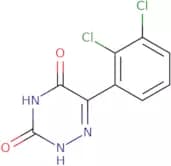
6-(2,3-Dichlorophenyl)-1,2,4-triazine-3,5(2H,4H)-dione
CAS:6-(2,3-Dichlorophenyl)-1,2,4-triazine-3,5(2H,4H)-dione is a chlorinating agent that converts alcohols to alkyl chlorides. It is used for the conversion of diazotizable aromatic compounds to diazo compounds. This compound has been shown to be neuroprotective in animal models and provides protection against glutamate excitotoxicity. 6-(2,3-Dichlorophenyl)-1,2,4-triazine-3,5(2H,4H)-dione also reacts with nitrite ions to form the corresponding nitroso derivatives. These derivatives can cause DNA damage and are mutagenic. 6-(2,3-Dichlorophenyl)-1,2,4-triazine-3,5(2H,4H)-dione has been shown to react with aminoguanidine to produce a chromatFórmula:C9H5Cl2N3O2Pureza:Min. 95%Cor e Forma:PowderPeso molecular:258.06 g/molN-[2-[[[5(Dimethylamino)methyl]-2-furanyl]thio]ethyl]-N'-methyl-2-nitro-2,2-ethendiamine, S-oxide
CAS:N-[2-[[[5(Dimethylamino)methyl]-2-furanyl]thio]ethyl]-N'-methyl-2,2-ethendiamine, S-oxide is a chemical compound that has been shown to be an effective inhibitor of the metabolism of many drugs in rat liver microsomes. This drug is used as an analytical method in urine samples to study the clinical relevance of n-oxide metabolites and their effects on drug interactions. N-[2-[[[5(Dimethylamino)methyl]-2-furanyl]thio]ethyl]-N'-methyl-2,2-ethendiamine, S-oxide has been shown to have optimum concentration at 0.1 mM in wastewater treatment systems. The kinetic data for this compound were obtained using a model system with low bioavailability.Fórmula:C13H22N4O4SPureza:Min. 95%Cor e Forma:PowderPeso molecular:330.4 g/molAfatinib Impurity 2
CAS:Afatinib Impurity 2 is a synthetic API impurity that is used as an HPLC standard in the pharmaceutical industry. It is also a metabolite of afatinib, which is used as a drug product. This impurity has niche applications in drug development and research and development. Afatinib Impurity 2 has been synthesized from natural sources and can be custom-synthesized to meet customer needs.Pureza:Min. 95%Olmesartan medoxomil
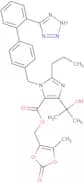
CAS:Olmesartan is a drug that belongs to the class of angiotensin II receptor antagonists. It is used for the treatment of high blood pressure, heart failure, and kidney disease. The therapeutic effect of olmesartan can be increased by concomitant use with other drugs if it is being used as a combination therapy. This drug interacts with many other drugs, including diuretics and ACE inhibitors. Drugs that are known to interact with olmesartan include furosemide, hydrochlorothiazide, amiloride, spironolactone, triamterene, chlorothiazide and quinethazone. Blood sampling is often required during therapy in order to monitor the efficacy of this drug.
Fórmula:C29H30N6O6Pureza:Min. 95%Cor e Forma:White PowderPeso molecular:558.59 g/molL-138,037
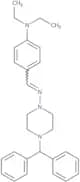
CAS:Please enquire for more information about L-138,037 including the price, delivery time and more detailed product information at the technical inquiry form on this pageFórmula:C28H34N4Pureza:Min. 95%Cor e Forma:PowderPeso molecular:426.6 g/molN,N-Dimethyl-2-ene-3-(4-methylbenzoyl)-propionamide
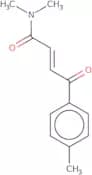
CAS:Dimethyl-2-ene-3-(4-methylbenzoyl)propionamide is an impurity that is found in N,N-dimethyl-3-(4-methylbenzoyl)-propionamide. It is a white solid and has a melting point of 132°C. Dimethyl-2-ene-3-(4-methylbenzoyl)propionamide is not soluble in water or ethanol. This compound is used as a high purity, API impurity, HPLC standard, niche, pharmacopoeia, Custom synthesis, Drug development, analytical and Synthetic drug product. Dimethyl-2-ene-3-(4-methylbenzoyl)propionamide can be metabolized by the liver to 2-[(2E)-1H-[1]benzopyran--5(6H)-ylidene]-N,N'-dimethylethane--3(2H)-carboxFórmula:C13H15NO2Pureza:Min. 95%Cor e Forma:PowderPeso molecular:217.26 g/molEmpagliflozin R-furanose
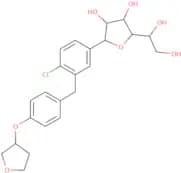
CAS:Empagliflozin R-furanose is a drug product that belongs to the class of drugs for treatment of type II diabetes. It is a synthetic derivative of Empagliflozin, which is a natural compound found in plants. Empagliflozin R-furanose has been shown to inhibit the activity of dipeptidyl peptidase 4 (DPP-4) and reduce postprandial glucose levels in healthy subjects. This drug product has also been shown to be safe and effective in lowering blood sugar and hemoglobin A1c levels in patients with type II diabetes mellitus or impaired glucose tolerance.Fórmula:C23H27ClO7Pureza:Min. 95%Cor e Forma:PowderPeso molecular:450.91 g/mol5,6-Dichloro-1,4-dihydro-2-quinazolinamine
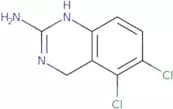
CAS:5,6-Dichloro-1,4-dihydro-2-quinazolinamine (5,6-DCQ) is a small molecule that has been used in vitro to study postnatal development. 5,6-DCQ binds to magnesium and forms a cation complex. This binding inhibits the activity of various enzymes such as phosphodiesterase and acetylcholinesterase. 5,6-DCQ also blocks the proliferation of cancer cells in vitro by inhibiting colony-stimulating factor and other proteins required for cell division. 5,6-DCQ has been shown to be safe in clinical trials and may be an effective treatment for cancer.Fórmula:C8H7Cl2N3Pureza:Min. 95%Peso molecular:216.07 g/molOlanzapine ketolactam
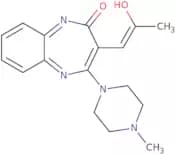
CAS:Olanzapine Ketolactam is a drug product that can be custom synthesized. It has a purity of at least 98% and is identified by its CAS number, 1017241-34-7. The metabolite of Olanzapine ketolactam is olanzapine N-oxide, which can be found in the urine of patients who have taken Olanzapine ketolactam. Metabolism studies have been conducted on this drug product to determine how it may affect the body. This drug product is also used in natural or synthetic drug development, pharmacopoeia, and analytical research.
Fórmula:C17H20N4O2Pureza:Min. 95%Cor e Forma:PowderPeso molecular:312.37 g/mol6-(2,4-Dichlorophenyl)-1,2,4-triazine-3,5-diamine
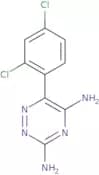
CAS:6-(2,4-Dichlorophenyl)-1,2,4-triazine-3,5-diamine is a metabolite that can be found in the urine and blood of humans. It has been shown to have cytotoxic effects on human lymphocytes and erythrocytes. 6-(2,4-Dichlorophenyl)-1,2,4-triazine-3,5-diamine is used as an impurity standard for HPLC analysis and as a reference compound for pharmacopoeia. This chemical is also used in the synthesis of some drugs. 6-(2,4-Dichlorophenyl)-1,2,4-triazine-3,5-diamine is not listed in any pharmacopoeia or natural product database.
Fórmula:C9H7Cl2N5Pureza:Min. 95%Cor e Forma:White PowderPeso molecular:256.09 g/molN-[1-(S)-(-)-(1-Naphthyl)ethyl]-3-[3-(trifluoromethyl)phenyl]-1-aminopropane hydrochloride
CAS:N-[1-(S)-(-)-(1-Naphthyl)ethyl]-3-[3-(trifluoromethyl)phenyl]-1-aminopropane hydrochloride is an analytical reagent that is used in biological and pharmaceutical research. It is a potent inhibitor of parathyroid hormone release and has been shown to be a potential biomarker for hyperparathyroidism. The drug is also used as a control analysis in polymerase chain reaction experiments. When administered to animals, it has been shown to reduce the thermal expansion of cartilage tissue and increase the rate of bone resorption. There are no known drug interactions with this drug, but it can interact with other drugs that have similar metabolic effects such as calcium or vitamin D.Fórmula:C22H22F3N·HClPureza:Min. 95%Cor e Forma:White PowderPeso molecular:393.87 g/mol3,4-Dihydroxybenzoic acid 3-o-sulfate sodium salt
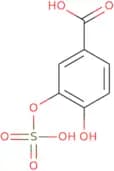
CAS:3,4-Dihydroxybenzoic acid 3-O-sulfate sodium salt is an active compound that has been shown to have potential as a cancer inhibitor. It acts by inhibiting the activity of mutant cells and cancer cells, making it a promising candidate for cancer treatment. This compound has been tested on human cell lines and analogs, demonstrating its ability to inhibit tumor growth and prevent the progression of cancer cells. Additionally, 3,4-Dihydroxybenzoic acid 3-O-sulfate sodium salt has been identified as one of the active agents in Chinese medicine that can regulate protein expression and cell cycle progression by targeting kinases. Its potent anti-cancer properties make it a promising therapeutic agent for the treatment of various forms of cancer.Fórmula:C7H6O7SPureza:Min. 95%Cor e Forma:PowderPeso molecular:234.19 g/molRisedronate sodium hydrate
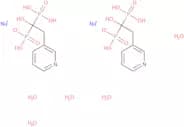
CAS:Risedronate sodium hydrate is a polymorphic, water-soluble salt of risedronate. It has been used in the treatment of osteoporosis and Paget's disease of bone. Risedronate sodium hydrate binds to calcium ions in the body and prevents them from being deposited in bone tissue. This drug also cross-links collagen fibers in the bone matrix, which increases mineralization and decreases the risk of fracture by strengthening the bones. The monosodium salt form of risedronate is soluble in water and is used as an analytical reagent for determining ionic strength or pH. It has been shown to inhibit ionotropic gelation, which may be due to its polyphosphoric acid content. Risedronate sodium hydrate is a polymorphic, water-soluble salt of risedronate that has been used in the treatment of osteoporosis and Paget's disease of bone. Risedronate sodium hyd
Fórmula:C7H10NNaO7P2·xH2OPureza:Min. 98 Area-%Cor e Forma:PowderPeso molecular:350.13 g/mol2-Hydroxybenzimidazole
CAS:2-Hydroxybenzimidazole is a benzimidazole compound that is used in the treatment of nervous system diseases. It has been shown to have anti-inflammatory properties and can be used in the treatment of syncytial virus infection. 2-Hydroxybenzimidazole inhibits the production of reactive oxygen species and nitric oxide, which are involved in neurodegenerative disorders. The mechanism of action for 2-Hydroxybenzimidazole involves the formation of hydrogen bonds with hydroxyl groups on proteins. It also has been shown to reduce locomotor activity and increase sleep time in mice, which may be due to inhibition of acetylcholine release from cholinergic neurons.Fórmula:C7H6N2OPureza:Min. 97.5 Area-%Cor e Forma:Off-White PowderPeso molecular:134.14 g/molClarithromycin EP Impurity K
CAS:Clarithromycin EP Impurity K is an impurity standard for Clarithromycin in the form of a crystalline white powder. It is a synthetic compound which has been used as a drug product and as an analytical standard. This compound can be synthesized from erythromycin A, but it is not active against bacteria. Clarithromycin EP Impurity K has been shown to have metabolite properties in animals and humans, including metabolism studies with HPLC standards.
Fórmula:C30H51NO8Pureza:Min. 95 Area-%Cor e Forma:PowderPeso molecular:553.73 g/mol7-(4-Bromobutoxy)-3,4-dihydroquinolin-2-one
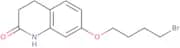
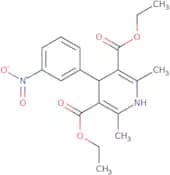
CAS:7-(4-Bromobutoxy)-3,4-dihydroquinolin-2-one is a palladium catalyst that can be used in a Buchwald reaction. This reaction is an industrially scalable process that has been developed to produce high yields of valuable organic compounds from inexpensive starting materials. The catalytic cycle involves the formation of the palladium species Pd(0) followed by its oxidative addition to an alkyl halide. This addition leads to the formation of a palladium(II) species and subsequent reductive elimination of hydrogen halide. 7-(4-Bromobutoxy)-3,4-dihydroquinolin-2-one is used as a catalyst in this process because it selectively reacts with electron rich aromatic substrates to form substituted benzoquinones or phenols. The product distribution is determined by the reactivity of the substrate and the relative rates of competing reactions. Impurities are formed during synthesis due toFórmula:C13H16BrNO2Pureza:Min. 95%Peso molecular:298.18 g/mol1,4-Dihydro-2,6-dimethyl-4-(3-nitrophenyl)-3,5-pyridinedicarboxylic acid diethyl ester
CAS:1,4-Dihydro-2,6-dimethyl-4-(3-nitrophenyl)-3,5-pyridinedicarboxylic acid diethyl ester is an API impurity. It is a white or cream powder with a melting point of about 135°C. This impurity can be used as an impurity standard for HPLC applications to determine the purity of drug products. It is also suitable for use as a pharmacopoeia analytical reference material and as a synthetic intermediate in research and development (R&D) studies.Fórmula:C19H22N2O6Pureza:Min. 95%Cor e Forma:Yellow PowderPeso molecular:374.39 g/molBis{2-[(2S-trans)-Methyl 7-chloro-6,7,8-trideoxy-6-[((1-methyl-4-propyl-2-pyrrolidinyl)-carbonyl)amino]-1-thio-L-threo-a-D-galacto-o ctopyranoside]} pyrophosphate
CAS:CAS No. 37450-78-5, drug product, Custom synthesis, High purity, analytical, Metabolism studies, Natural, Drug development, pharmacopoeia, Metabolite, niche, SyntheticFórmula:C36H66Cl2N4O15P2S2Pureza:Min. 95%Peso molecular:991.91 g/mol2-(3-Hydroxy-2,2-Dimethylpropoxy)-1-(6-Hydroxy-2-Naphthyl)Propan-1-One
The following is a description of an impurity standard for the metabolite 2-(3-Hydroxy-2,2-Dimethylpropoxy)-1-(6-Hydroxy-2-Naphthyl)Propan-1-One:
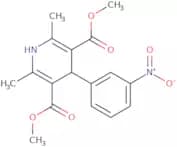
Pureza:Min. 95%1,4-Dihydro-2,6-dimethyl-4-(3-nitrophenyl)-3.5-pyridinecarboxylic acid dimethyl ester
CAS:1,4-Dihydro-2,6-dimethyl-4-(3-nitrophenyl)-3.5-pyridinecarboxylic acid dimethyl ester is a creatine kinase inhibitor that blocks the synthesis of creatine phosphate, which is an important energy source for muscle contraction. Creatine kinase inhibitors are used in the treatment of congestive heart failure and myocardial infarct. They also have vasodilatory effects on blood vessels and can be used to treat hypertension. The elimination rate of 1,4-dihydro-2,6-dimethyl-4-(3-nitrophenyl)-3.5-pyridinecarboxylic acid dimethyl ester depends on its formulation: solid dispersions have a half life of about 3 hours whereas orally administered doses have a half life of about 8 hours.Fórmula:C17H18N2O6Pureza:Min. 95%Cor e Forma:Yellow PowderPeso molecular:346.33 g/mol

![N-[2-[[[5(Dimethylamino)methyl]-2-furanyl]thio]ethyl]-N'-methyl-2-nitro-2,2-ethendiamine, S-oxide](/_next/image/?url=https%3A%2Fstatic.cymitquimica.com%2Fproducts%2F3D%2Fthumb-webp%2FID57862.webp&w=3840&q=75)
![N-[1-(S)-(-)-(1-Naphthyl)ethyl]-3-[3-(trifluoromethyl)phenyl]-1-aminopropane hydrochloride](/_next/image/?url=https%3A%2Fstatic.cymitquimica.com%2Fproducts%2F3D%2Fthumb-webp%2FIN58179.webp&w=3840&q=75)