APIs para pesquisa e impurezas
Subcategorias de "APIs para pesquisa e impurezas"
- Aminoácidos e Derivados(12.440 produtos)
- Antraquinonas e Derivados(407 produtos)
- Derivados de Benzimidazol e Imidazol(10.465 produtos)
- Derivados das Benzodiazepinas(335 produtos)
- Carboidratos e Glicoconjugados(5.388 produtos)
- Ésteres e Derivados(42.306 produtos)
- Ácidos Graxos e Derivados Lipídicos(32.487 produtos)
- Flavonoides e Polifenóis(17.101 produtos)
- Radicais Livres e Agentes Oxidantes/Redutores(214 produtos)
- Cetonas e Derivados(2.692 produtos)
- Antibióticos Naturais e Semissintéticos(6.410 produtos)
- Nitrilas e Derivados Ciano(3.070 produtos)
- Nitrosaminas e Derivados(55 produtos)
- Nucleosídeos e Nucleotídeos(3.492 produtos)
- Fosfatos e Fosfonatos Orgânicos(1.205 produtos)
- Sulfonatos e Sulfatos Orgânicos(10.451 produtos)
- Compostos Organometálicos(4.425 produtos)
- Outros(6.340 produtos)
- Peptídeos e Proteínas(3.163 produtos)
- Polímeros e Derivados(100 produtos)
- Derivados de Purinas e Pirimidinas(8.975 produtos)
- Derivados de Quinazolina e Quinolina(66.222 produtos)
- Quinonas e Derivados(24.379 produtos)
- Sais e Derivados de API(92.956 produtos)
- Esteroides e Derivados(4.987 produtos)
- Sulfonamidas e Derivados(2.607 produtos)
- Terpenoides e Derivados(3.860 produtos)
- Tiazolidinedionas e Tiopiranos(2.755 produtos)
- Compostos β-Adrenérgicos(231 produtos)
Foram encontrados 66881 produtos de "APIs para pesquisa e impurezas"
2-[[[(4-Methoxypropoxy)-3-methyl-2-pyridinyl]methyl]sulfonyl]-1H-benzimidazole
CAS:2-[[[(4-Methoxypropoxy)-3-methyl-2-pyridinyl]methyl]sulfonyl]-1H-benzimidazole is a protonated sulfonamide that is used as an analytical method to detect the presence of other drugs in human liver tissue. It has been shown to inhibit the activity of cytochrome P450 3A4 (CYP3A4), one of the enzymes responsible for metabolizing many drugs. Bromoenol lactone and powder diffraction spectrum are two additional analytical methods that can be used to detect 2-[([(4-methoxypropoxy)-3-methyl-2-pyridinyl]methyl]sulfonyl]-1H-benzimidazole.
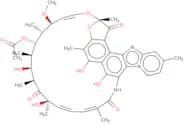
Fórmula:C18H21N3O4SPureza:Min. 95%Cor e Forma:White/Off-White SolidPeso molecular:375.44 g/molRifaximin EP Impurity D
Rifaximin EP Impurity D is an analytical impurity that has been identified as a metabolite of the drug Rifaximin. It is a white crystalline powder with no characteristic odor. This product can be used as an HPLC standard, niche compound, or pharmacopoeia impurity. It can also be custom synthesized to meet the needs of your research and development project.
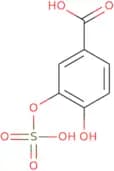
Pureza:Min. 95%3,4-Dihydroxybenzoic acid 3-o-sulfate sodium salt
CAS:3,4-Dihydroxybenzoic acid 3-O-sulfate sodium salt is an active compound that has been shown to have potential as a cancer inhibitor. It acts by inhibiting the activity of mutant cells and cancer cells, making it a promising candidate for cancer treatment. This compound has been tested on human cell lines and analogs, demonstrating its ability to inhibit tumor growth and prevent the progression of cancer cells. Additionally, 3,4-Dihydroxybenzoic acid 3-O-sulfate sodium salt has been identified as one of the active agents in Chinese medicine that can regulate protein expression and cell cycle progression by targeting kinases. Its potent anti-cancer properties make it a promising therapeutic agent for the treatment of various forms of cancer.Fórmula:C7H6O7SPureza:Min. 95%Cor e Forma:PowderPeso molecular:234.19 g/mol4-(1-Hydroxy-1-methylethyl)-2-propyl-1-[[2'-[1-(triphenylmethyl)-1H-tetrazol-5-yl][1,1'-biphenyl]-4-yl]methyl]-1H-imidazole-5-carbox ylic acid sodium salt
CAS:4-(1-Hydroxy-1-methylethyl)-2-propyl-1-[[2'-[1-(triphenylmethyl)-1H-tetrazol-5-yl][1,1'-biphenyl]-4-yl]methyl]-1H-imidazole-5-carbox ylic acid sodium salt is a research and development compound that is synthesized using the drug product synthesis method. This compound belongs to the class of Impurity standards, which are used for quality control in analytical chemistry. The CAS number for this compound is 879097–59–3, and the molecular formula is C26H34N6O4S. The molecular weight of this compound is 564.49 g/mol. 4-(1-Hydroxy-1-methylethyl)-2-propyl-[1-[2'-[(1,3,5 -tris(triphenylmethylFórmula:C43H39N6O3·NaPureza:Min. 95%Peso molecular:710.8 g/molOlanzapine N-oxide
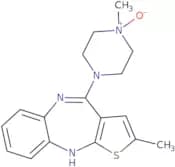
CAS:Olanzapine N-oxide is a metabolite of olanzapine. It is produced by the oxidative deamination of olanzapine, which is catalyzed by cytochrome P450 enzymes. Olanzapine N-oxide has been shown to be responsible for some of the side effects associated with olanzapine, such as weight gain and sedation. The presence of olanzapine N-oxide in human plasma has been shown to increase with age and in women, which may be due to its higher affinity for α1-acid glycoprotein. Olanzapine N-oxide can be detected in urine or faeces using gas chromatography/mass spectrometry (GC/MS) or liquid chromatography with tandem mass spectrometry (LC/MS).Fórmula:C17H20N4OSPureza:Min. 95%Cor e Forma:PowderPeso molecular:328.43 g/molMethyl 2-disazobenzoate hydrochloride
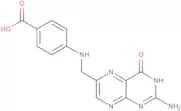
CAS:Methyl 2-disazobenzoate hydrochloride is a drug product that is used as an HPLC standard and as a metabolite in the development of drugs. It has been found to be naturally occurring and is a research and development metabolite. Methyl 2-disazobenzoate hydrochloride is also an impurity of API, which can be quantified in analytical studies. It is a synthetic compound with CAS No. 35358-78-2 and it can be used to manufacture high purity pharmaceuticals. Methyl 2-disazobenzoate hydrochloride has been shown to have niche pharmacological effects, such as anti-inflammatory activities.Fórmula:C8H7N2O2ClPureza:Min. 95%Peso molecular:198.61 g/molPteroic acid - 60%
CAS:Pteroic acid is a synthetic compound that is an analog of the natural amino acid phenylalanine. It has been shown to inhibit protein synthesis and may be useful for the treatment of cancer. Pteroic acid can be activated by the addition of trifluoroacetic acid and reacts with metal ions such as nickel, cobalt, copper, and zinc. It also binds to receptors on tubule cells in kidney tissue. This binding inhibits the enzyme carbonic anhydrase II, which catalyzes the conversion of carbon dioxide to bicarbonate in these cells. The inhibition of this enzyme results in a decrease in bicarbonate concentration within these cells, leading to cell death.Fórmula:C14H12N6O3Pureza:Min. 93 Area-%Cor e Forma:PowderPeso molecular:312.28 g/molMontelukast ketone impurity
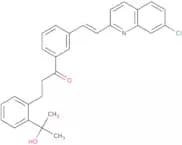
CAS:The impurity (2,6-dichlorobenzaldehyde) is a metabolite of montelukast. It is an analytical impurity that has been quantified in the drug product and has also been found to be present in the synthetic process. The impurity standard was developed using HPLC. It can be used as a high purity reference material for pharmacopoeia and custom synthesis.Fórmula:C29H26ClNO2Pureza:Min. 95%Cor e Forma:PowderPeso molecular:455.97 g/molBis-[[2-aminoethyl]thio]methane
CAS:Bis-[[2-aminoethyl]thio]methane is a custom synthesis, drug product, niche, Metabolite, Drug development, Natural, pharmacopoeia and API impurity. This chemical is CAS No. 22907-27-3 and has the molecular weight of 249.00 g/mol. It can be synthesized in the laboratory using the following methods: HPLC standard, Research and Development and Impurity standard. The chemical is an analytical standard with a purity of 99%. This chemical can be used as analytical reagent or in research and development of drugs.Fórmula:C5H14N2S2Pureza:Min. 95%Cor e Forma:Clear LiquidPeso molecular:166.31 g/mol(1,2-Dimethylpropyl)benzene
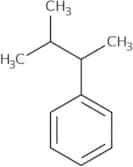
CAS:1,2-Dimethylpropylbenzene is an alkenylbenzene that is used as a precursor to other chemicals. It can be synthesized by the dehydrogenation of 1,2-dimethylethylbenzene with a nickel catalyst or by the formylation of benzene with formaldehyde and potassium hydroxide. The cyclohexenyl group in 1,2-dimethylpropylbenzene can be converted to an alkene group by alkylation with acetylene. The linear regression analysis showed that the toolkit of 1,2-dimethylpropylbenzene isomerization reactions are useful for the synthesis of many different compounds and provide a better understanding of their reactivity.Fórmula:C11H16Pureza:Min. 95%Cor e Forma:Clear LiquidPeso molecular:148.24 g/molEurycomanol
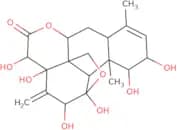
CAS:Eurycomanol is a potent anticancer compound that has been extensively studied for its medicinal properties. It is an analog of the Chinese herb Tongkat Ali, which has traditionally been used to treat a variety of ailments. Eurycomanol works by inhibiting specific kinases and proteins that are involved in cancer cell growth and proliferation. This inhibition leads to apoptosis, or programmed cell death, in tumor cells. Eurycomanol has been shown to be effective against a range of human cancers and cancer cell lines, making it a promising candidate for future cancer treatments. Additionally, eurycomanol can be detected in urine samples, making it a potential biomarker for cancer diagnosis and monitoring.Fórmula:C20H26O9Pureza:Min. 95%Peso molecular:410.4 g/molBis{2-[(2S-trans)-Methyl 7-chloro-6,7,8-trideoxy-6-[((1-methyl-4-propyl-2-pyrrolidinyl)-carbonyl)amino]-1-thio-L-threo-a-D-galacto-o ctopyranoside]} pyrophosphate
CAS:CAS No. 37450-78-5, drug product, Custom synthesis, High purity, analytical, Metabolism studies, Natural, Drug development, pharmacopoeia, Metabolite, niche, SyntheticFórmula:C36H66Cl2N4O15P2S2Pureza:Min. 95%Peso molecular:991.91 g/molAtorvastatin lactam sodium salt impurity
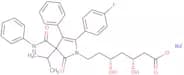
CAS:Atorvastatin is a drug used for the treatment of hypercholesterolemia and cardiovascular diseases. Atorvastatin lactam, which is an impurity formed during the synthesis of atorvastatin, has been shown to inhibit cholesterol biosynthesis in a rat model. The in vivo metabolism of atorvastatin lactam was studied by HPLC-MS/MS and was found to be identical to that of the parent molecule. This impurity may be useful as a research and development or custom synthesis product, or as an impurity standard for HPLC analysis.
Fórmula:C33H34FN2NaO6Pureza:Min. 95%Cor e Forma:White PowderPeso molecular:596.62 g/molAlbendazole sulfoxide
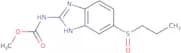
CAS:Albendazole sulfoxide is a sulfoxide of albendazole. The molecular docking analysis of the two molecules showed that the sulfoxide group is located in the same position as the hydroxyl group on albendazole. It has been shown that this replacement of hydroxyl with a sulfoxide group increases the solubility and stability of albendazole, which may be due to hydrogen bonding interactions between these groups. Albendazole sulfoxide has been shown to be an effective treatment for infections caused by parasites such as helminths. However, it should not be used in combination with drugs that are metabolized by cytochrome P450 enzymes because it can inhibit their activity.
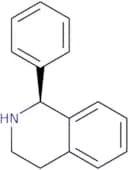
Fórmula:C12H15N3O3SPureza:Min. 97 Area-%Cor e Forma:White PowderPeso molecular:281.33 g/mol(1S)-1-Phenyl-1,2,3,4-tetrahydroisoquinoline
CAS:(1S)-1-Phenyl-1,2,3,4-tetrahydroisoquinoline is a drug used to treat depression. It is an antidepressant drug that inhibits the reuptake of serotonin and norepinephrine in the brain by blocking their transport into the nerve cells. The drug acts as a weak inhibitor of monoamine oxidase (MAO). It also has an effect on bladder function. This compound is synthesized from 1-phenyl-2,5-dihydrothiazole by way of a sequence of reactions that includes the formation of an amine salt via reaction with phosphorus pentoxide and chloroacetic acid followed by conversion to the chloride with thionyl chloride.Fórmula:C15H15NPureza:Min. 95%Cor e Forma:White PowderPeso molecular:209.29 g/molBisoprolol impurity K
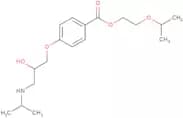
CAS:Bisoprolol impurity K is a drug product that is an analytical standard used for the detection and identification of bisoprolol in pharmaceutical products. It is a synthetic impurity with CAS No. 864544-37-6 that does not have any pharmacological activity. Bisoprolol impurity K is a high purity HPLC standard that can be used to develop analytical methods for the determination of bisoprolol in pharmaceutical products.
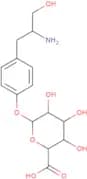
Fórmula:C18H29NO5Pureza:Min. 95%Cor e Forma:White PowderPeso molecular:339.43 g/molTyrosol glucuronide
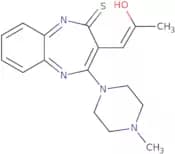
CAS:Tyrosol is a phenolic compound found in olive oil and other plant sources. It has been shown to have antioxidant, anti-inflammatory, and anti-cancer activities. Tyrosol glucuronide is the main form of tyrosol found in urine samples. The absorption process of tyrosols is due to their uptake by the liver cells, where they are converted into fatty acids and then conjugated with glucuronic acid. Tyrosols are also metabolized through a number of metabolic transformations, including hydrolysis by esterases or glucuronidases, oxidation by cytochrome P450 enzymes, reduction by glutathione reductase, or conjugation with glucuronic acid. Studies have shown that tyrosols can help lower blood pressure and improve insulin resistance in women.Fórmula:C14H18O8Pureza:Min. 95%Cor e Forma:PowderPeso molecular:314.29 g/molOlanzapine thiolactam impurity
CAS:Degradation product of olanzapineFórmula:C17H20N4OSPureza:Min. 98.0 Area-%Cor e Forma:Yellow PowderPeso molecular:328.43 g/molN-Methyl-3-(1-naphthalenyloxy)-3-(3-thienyl) propanamine tartrate
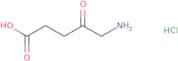
N-Methyl-3-(1-naphthalenyloxy)-3-(3-thienyl) propanamine tartrate is an impurity standard used for the quantitative analysis of norephedrine in pharmaceutical products. It is also a metabolite of methamphetamine, which has been shown to have anti-inflammatory activities.Fórmula:C18H19NOS·C4H6O6Pureza:Min. 95%Peso molecular:447.5 g/mol5-Aminolevulinic acid hydrochloride
CAS:Photodynamic Therapy of Actinic Keratosis. Porphobilinogen synthase substrate that produces endogenous porphyrins useful for sensitizing cells in photodynamic therapy. Intermediate in heme and chlorophyll biosynthesis. Estimation of 5-aminolevulinic acid dehydratase. PBG formed in the assay is determined spectrophotometrically with Ehrlich's reagent. Used in Porphyrin test for differentiation of Haemophilus species. Enzymes that convert ALA to porphyrins in the biosynthesis of hemin (X factor) are not produced by H. influenzae, H.aegyptius and H. canis. These enzymes are produced by H. parainfluenzae, H. parahaemolyticus, H. gallinarum, H. parasuis, H. parahaemolyticus and H. aphrophilus. A positive reaction is indicated by an orange-red fluorescence.Fórmula:C5H10ClNO3Pureza:Min. 98.0 Area-%Peso molecular:167.59 g/mol
![2-[[[(4-Methoxypropoxy)-3-methyl-2-pyridinyl]methyl]sulfonyl]-1H-benzimidazole](/_next/image/?url=https%3A%2Fstatic.cymitquimica.com%2Fproducts%2F3D%2Fthumb-webp%2FIM57866.webp&w=3840&q=75)

![4-(1-Hydroxy-1-methylethyl)-2-propyl-1-[[2'-[1-(triphenylmethyl)-1H-tetrazol-5-yl][1,1'-biphenyl]-…](/_next/image/?url=https%3A%2Fstatic.cymitquimica.com%2Fproducts%2F3D%2Fthumb-webp%2FIH159138.webp&w=3840&q=75)

![Bis-[[2-aminoethyl]thio]methane](/_next/image/?url=https%3A%2Fstatic.cymitquimica.com%2Fproducts%2F3D%2Fthumb-webp%2FIB57858.webp&w=3840&q=75)