APIs para pesquisa e impurezas
Subcategorias de "APIs para pesquisa e impurezas"
- Aminoácidos e Derivados(12.439 produtos)
- Antraquinonas e Derivados(407 produtos)
- Derivados de Benzimidazol e Imidazol(10.464 produtos)
- Derivados das Benzodiazepinas(335 produtos)
- Carboidratos e Glicoconjugados(5.389 produtos)
- Ésteres e Derivados(42.306 produtos)
- Ácidos Graxos e Derivados Lipídicos(32.486 produtos)
- Flavonoides e Polifenóis(17.100 produtos)
- Radicais Livres e Agentes Oxidantes/Redutores(214 produtos)
- Cetonas e Derivados(2.693 produtos)
- Antibióticos Naturais e Semissintéticos(6.406 produtos)
- Nitrilas e Derivados Ciano(3.070 produtos)
- Nitrosaminas e Derivados(55 produtos)
- Nucleosídeos e Nucleotídeos(3.491 produtos)
- Fosfatos e Fosfonatos Orgânicos(1.203 produtos)
- Sulfonatos e Sulfatos Orgânicos(10.450 produtos)
- Compostos Organometálicos(4.425 produtos)
- Outros(6.338 produtos)
- Peptídeos e Proteínas(3.164 produtos)
- Polímeros e Derivados(100 produtos)
- Derivados de Purinas e Pirimidinas(8.972 produtos)
- Derivados de Quinazolina e Quinolina(66.194 produtos)
- Quinonas e Derivados(24.378 produtos)
- Sais e Derivados de API(92.808 produtos)
- Esteroides e Derivados(4.986 produtos)
- Sulfonamidas e Derivados(2.607 produtos)
- Terpenoides e Derivados(3.860 produtos)
- Tiazolidinedionas e Tiopiranos(2.755 produtos)
- Compostos β-Adrenérgicos(231 produtos)
Foram encontrados 66898 produtos de "APIs para pesquisa e impurezas"
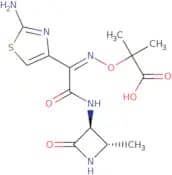
Aztreonam impurity D
CAS:Aztreonam impurity D is a metabolite of aztreonam. Aztreonam impurity D is an impurity standard for the pharmacopoeia and API industry, as well as for drug development and research. It has been shown that this compound inhibits bacterial growth by binding to DNA-dependent RNA polymerase, thereby preventing transcription and replication. The high frequency of human activity has been shown using a patch-clamp technique on human erythrocytes. This active form is metabolized through a number of metabolic transformations, including hydrolysis by esterases or glucuronidases, oxidation by cytochrome P450 enzymes, reduction by glutathione reductase, or conjugation with glucuronic acid. Aztreonam impurity D also specifically binds to markers expressed at high levels in Mycobacterium tuberculosis strains (e.g., ESX-1 secretion system protein) and inhibits cell growth in culture.Fórmula:C13H17N5O5SPureza:Min. 95 Area-%Cor e Forma:PowderPeso molecular:355.37 g/mol4-[[(2,4-Diamino-6-pteridinyl)methyl]methylamino]benzoic acid
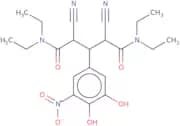
CAS:4-[[(2,4-Diamino-6-pteridinyl)methyl]methylamino]benzoic acid is a drug with low bioavailability. It is used to treat leishmaniasis, an infection caused by the parasite Leishmania. 4-[[(2,4-Diamino-6-pteridinyl)methyl]methylamino]benzoic acid inhibits the synthesis of folic acid by blocking the enzyme dihydrofolate reductase in the bacteria. This drug also has been shown to be effective against autoimmune diseases and inflammatory bowel disease. The terminal half-life of 4-[(2,4-diamino6 pteridinyl)methyl]methylamino benzoic acid is approximately 5 hours and it can be detected in urine for up to 12 hours after administration.Fórmula:C15H15N7O2Pureza:(1H-Nmr) Min. 95 Area-%Cor e Forma:Brown Yellow PowderPeso molecular:325.33 g/mol2,4-Dicyano-3-(3,4-dihydroxy-5-nitrophenyl)-N1,N1,N5,N5-tetraethylpentanediamide
2,4-Dicyano-3-(3,4-dihydroxy-5-nitrophenyl)-N1,N1,N5,N5-tetraethylpentanediamide is a white crystalline solid that is used as an analytical reference standard in HPLC. It is used for the determination of purity and impurities in pharmaceuticals and drug products. This compound can be custom synthesized or obtained from natural sources. It can be found in the USP Drug Impurity Standards and the European Pharmacopoeia.Fórmula:C21H27N5O6Pureza:Min. 95%Peso molecular:445.47 g/molLisinopril EP Impurity E
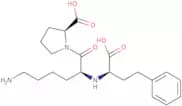
CAS:Lisinopril EP Impurity E is an impurity of lisinopril, which is a prescription drug used to treat high blood pressure. This impurity was found in a preparative high performance liquid chromatography (HPLC) and mass spectroscopy analysis of the drug. The molecular weight of Lisinopril EP Impurity E was determined to be 317.2 amu, which corresponds to the molecular formula C7H13NO2. The FT-IR spectrum showed that this impurity has an ammonium group at 1859 cm-1 and butanoic acid at 1647 cm-1.Fórmula:C21H31N3O5Pureza:Min. 98 Area-%Cor e Forma:PowderPeso molecular:405.49 g/molBicalutamide sulfide
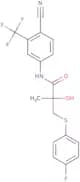
CAS:Bicalutamide sulfide is a synthetic, phosphotungstic acid-reactive, bifunctional reagent that is synthesized from the reaction of bicalutamide and trifluoroacetic acid. This product can be used for the separation of fatty acids in environmental pollutants. The product has been shown to be useful for the analysis of fatty acid esters in recycled oils and fats. Bicalutamide sulfide is also used as an intermediate in the synthesis of pharmaceuticals, such as phosphotungstitane derivatives.Fórmula:C18H14F4N2O2SPureza:Min. 95%Cor e Forma:White To Off-White SolidPeso molecular:398.37 g/mol(S)-6-(Ethyl(2-(thiophen-2-yl)ethyl)amino)-5,6,7,8-tetrahydronaphthalen-1-ol hydrochloride
CAS:(S)-6-(Ethyl(2-(thiophen-2-yl)ethyl)amino)-5,6,7,8-tetrahydronaphthalen-1-ol hydrochloride is a synthetic compound that has been designed for use as an impurity standard in the validation of analytical methods. It is a custom synthesis product and is not commercially available. It is a white crystalline solid with a melting point of 170°C and its molecular formula is C14H12N2O3S. (S)-6-(Ethyl(2-(thiophen-2-yl)ethyl)amino)-5,6,7,8-tetrahydronaphthalen-1-ol hydrochloride has been shown to have no biological activity in rats.Fórmula:C18H24ClNOSPureza:Min. 95%Peso molecular:337.9 g/mol5-Aminolevulinic acid methyl ester hydrochloride
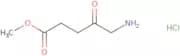
CAS:5-Aminolevulinic acid methyl ester hydrochloride is a drug that is used to treat skin conditions such as psoriasis, dermatitis, and vitiligo. It is used to treat skin cancer and inflammatory diseases such as lupus erythematosus. 5-Aminolevulinic acid methyl ester hydrochloride works by targeting the mitochondria of skin cells. This drug causes mitochondrial membrane depolarization in vitro. The clinical response to this drug is variable and may depend on the severity of the condition being treated. In vivo studies with human subjects show low bioavailability for this drug.
Fórmula:C6H11NO3·HClPureza:Min. 95%Cor e Forma:PowderPeso molecular:181.62 g/molCimetidine
CAS:Cimetidine is a histamine-2 receptor antagonist that inhibits gastric acid secretion and reduces the activity of stomach enzymes. It is used to treat peptic ulcers, gastroesophageal reflux disease, and Zollinger-Ellison syndrome. Cimetidine has been shown to inhibit the activity of drug-metabolizing enzymes such as cytochrome P450. Cimetidine also inhibits the transport protein P-glycoprotein (P-gp), which leads to increased concentrations of some drugs in the blood and tissues. This inhibition may lead to an increase in cardiac effects with certain drugs, such as x-ray diffraction data with taxol or h1 antagonists.
Fórmula:C10H16N6SPureza:Min. 95%Cor e Forma:White PowderPeso molecular:252.34 g/mol4-(1-Hydroxy-1-methylethyl)-2-propyl-1-[[2'-[1-(triphenylmethyl)-1H-tetrazol-5-yl][1,1'-biphenyl]-4-yl]methyl]-1H-imidazole-5-carbox ylic acid sodium salt
CAS:4-(1-Hydroxy-1-methylethyl)-2-propyl-1-[[2'-[1-(triphenylmethyl)-1H-tetrazol-5-yl][1,1'-biphenyl]-4-yl]methyl]-1H-imidazole-5-carbox ylic acid sodium salt is a research and development compound that is synthesized using the drug product synthesis method. This compound belongs to the class of Impurity standards, which are used for quality control in analytical chemistry. The CAS number for this compound is 879097–59–3, and the molecular formula is C26H34N6O4S. The molecular weight of this compound is 564.49 g/mol. 4-(1-Hydroxy-1-methylethyl)-2-propyl-[1-[2'-[(1,3,5 -tris(triphenylmethylFórmula:C43H39N6O3·NaPureza:Min. 95%Peso molecular:710.8 g/molDihydro-α-ergocryptine mesylate
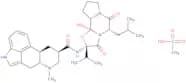
CAS:Dihydro-alpha-ergocryptine mesylate is a drug that inhibits the effects of ergotamine and other drugs. It is used in animals to treat drug reactions, such as those caused by morphine and penicillin. Dihydro-alpha-ergocryptine mesylate can be detected in urine samples for up to 72 hours after administration. The pharmacokinetic properties of this drug are not well understood, but there is a linear relationship between dose and plasma concentration. The clinical response to dihydro-alpha-ergocryptine mesylate has been shown to be dose dependent. This drug also has dopaminergic properties, which may be due to its ability to bind with dopamine receptors in the central nervous system. There are several symptoms that may be related to taking this drug, including drowsiness or fatigue, nausea or vomiting, dry mouth, muscle spasms, and involuntary shaking of a part of the body (tremor).Fórmula:C33H47N5O8SPureza:Min. 95%Peso molecular:673.82 g/molDesmethyl tacrolimus
CAS:Tacrolimus is a macrolide antibiotic that binds to the calcineurin receptor and inhibits the production of cytokines. It is used to treat certain types of autoimmunity and hyperproliferation in patients with cancer, organ transplant recipients, and those who have undergone radiation therapy. The drug is available in two forms: tacrolimus (the natural form) and desmethyl tacrolimus (a metabolite). Desmethyl tacrolimus is produced by microbial transformation, which converts the natural form into a more water-soluble derivative. This conversion can be prevented by adding additives such as proton pump inhibitors or pde5 inhibitors. Symptoms of tacrolimus include hyperglycemia, hyperlipidemia, gastrointestinal disturbances, headache, fever, skin rash, diarrhea, and anemia. Tacrolimus has been shown to inhibit the activity of fk506-binding proteins in vitro and in vivo through competitive inhibition.Fórmula:C43H67NO12Pureza:Min. 90 Area-%Cor e Forma:White PowderPeso molecular:789.99 g/molLisdexamfetamine dimesylate impurity C
Lisdexamfetamine dimesylate impurity C is a research and development chemical with CAS No. 1207-0284-00-6 that belongs to the class of drugs. It is a custom synthesis, high purity, pharmacopoeia grade drug product that exhibits analytical properties similar to the drug product. Lisdexamfetamine dimesylate impurity C has been shown to be a metabolite of lisdexamfetamine dimesylate and is used for metabolism studies.Pureza:Min. 95%Bis-[[2-[(diaminomethylene)amino]thiazol-4-yl]methyl]disulfide
CAS:Bis-[[2-[(diaminomethylene)amino]thiazol-4-yl]methyl]disulfide is a disulfide derivative of famotidine. It has been used as an analytical reagent for the determination of impurities in famotidine and other related compounds. Bis-[[2-[(diaminomethylene)amino]thiazol-4-yl]methyl]disulfide is soluble in methanol, ethanol and water, but not in acetone. The compound can be prepared by reacting 4-(dimethylamino)-1H-1,2,3-benzothiadiazole with 2-[(diaminomethylene)amino]-4-(N'-methoxycarbonylthio)benzaldehyde and then reductive amination with sodium bisulfite.
Fórmula:C10H14N8S4Pureza:Min. 95%Cor e Forma:PowderPeso molecular:374.54 g/molTenofovir isoproxil monoester
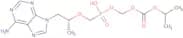
CAS:Tenofovir isoproxil monoester is a prodrug of Tenofovir, which is an antiviral drug. Tenofovir prevents the growth of HIV by interfering with the synthesis of viral DNA. The process development stage involves converting Tenofovir to its disoproxil monoester form, which has been shown to have greater antiviral activity than Tenofovir alone. This conversion process involves condensing one molecule of fumarate with two molecules of tenofovir, forming tenofovir disoproxil fumarate (TFD). TFD can be converted back to Tenofovir using hydrolysis and hydrogenation. Impurities in TFD include isopropyl tenofovir and unidentified impurities that are not present in the parent drug, tenofovir. Tenofovir Disoproxil Fumarate was also shown to be more potent than TFD and is undergoing clinical trials forFórmula:C14H22N5O7PPureza:Min. 97 Area-%Cor e Forma:White/Off-White SolidPeso molecular:403.33 g/molbeta-Epoxyabiraterone acetate
CAS:Beta-Epoxyabiraterone acetate is a synthetic and natural metabolite of abiraterone that is used as an API impurity in the synthesis of abiraterone acetate. The drug product is a niche compound with CAS No. 52464-96-6. The Metabolite is an impurity found in the synthesis of beta-epoxyabiraterone acetate. Drug development research and development, analytical methods, and pharmacopoeia are all involved in the production of this compound.Fórmula:C26H33NO3Pureza:Min. 90 Area-%Cor e Forma:White Off-White PowderPeso molecular:407.55 g/mol3-o-Methyl colterol
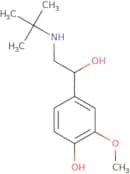
CAS:3-o-Methyl colterol is a synthetic drug product. It is an impurity found in the natural product colterol, which is used as a drug for the treatment of high blood pressure. 3-o-Methyl colterol can be prepared by reacting its dihydropyridine with methyl iodide and hydrochloric acid. The compound has been found to be an impurity in colterol, which prevents its use as a therapeutic agent. 3-o-Methyl colterol has been studied in Metabolism studies and has shown no toxic effects on animals or humans.Fórmula:C13H21NO3Pureza:Min. 95%Peso molecular:239.31 g/molOlmesartan medoxomil
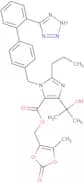
CAS:Olmesartan is a drug that belongs to the class of angiotensin II receptor antagonists. It is used for the treatment of high blood pressure, heart failure, and kidney disease. The therapeutic effect of olmesartan can be increased by concomitant use with other drugs if it is being used as a combination therapy. This drug interacts with many other drugs, including diuretics and ACE inhibitors. Drugs that are known to interact with olmesartan include furosemide, hydrochlorothiazide, amiloride, spironolactone, triamterene, chlorothiazide and quinethazone. Blood sampling is often required during therapy in order to monitor the efficacy of this drug.
Fórmula:C29H30N6O6Pureza:Min. 95%Cor e Forma:White PowderPeso molecular:558.59 g/molEthyl 3-aminopyrazole-4-carboxylate
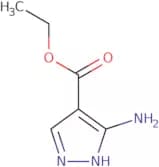
CAS:Ethyl 3-aminopyrazole-4-carboxylate is an anticancer drug that inhibits the growth of cancer cells by inhibiting protein synthesis. It has been shown to inhibit the activity of dpp-iv and pde5, which are enzymes involved in cellular proliferation. Ethyl 3-aminopyrazole-4-carboxylate has also been shown to have antiinflammatory properties, which may be due to inhibition of prostaglandin synthesis.
Ethyl 3-aminopyrazole-4-carboxylate is a multinuclear compound that reacts with nitrogen atoms from the pyrazoles to form a stable molecule. Dimethylformamide is used as a solvent for this reaction. The synthesis of ethyl 3-aminopyrazole-4-carboxylate starts with acetylation, which converts the carboxylic acid group into an acetic acid group. The acetic acid group reacts with ammonia and hydrogen cyanFórmula:C6H9N3O2Pureza:Min. 95%Cor e Forma:PowderPeso molecular:155.16 g/molS-Methyl-N-cyano-N'-[2-[(5-methyl-1H-imidazol-4-yl)methylthio]ethyl]isothiourea
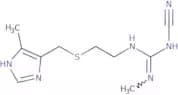
CAS:Methylisothiourea is a label that can be used to identify cells in vivo. It is a fluorescent molecule that is activated by the presence of cytokines, such as IL-1β and TNF-α. Methylisothiourea has been used to evaluate corneal epithelial cells for their response to injury. The effect of Methylisothiourea on the tissue was assessed by histology and evaluated by the presence of cytokine concordance with the fluorescence intensity. Reconstitution experiments were conducted in vitro using human tissues. It was found that Methylisothiourea was not toxic at concentrations up to 500 μM and that it did not interfere with DNA synthesis or cell division at concentrations up to 10 mM.
Fórmula:C10H15N5S2Pureza:Min. 95%Cor e Forma:White PowderPeso molecular:269.39 g/mol3-Amino-4-carbamoylpyrazole hemisulfate
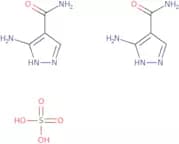
CAS:3-Amino-4-carbamoylpyrazole hemisulfate is a white to yellowish crystalline powder that is soluble in water and methanol. It is a condensation product of allopurinol and ethyl orthoformate with a molecular weight of 312.4. 3-Amino-4-carbamoylpyrazole hemisulfate can be used as an anti-inflammatory agent, but it has not been approved for medical use in the United States.Fórmula:C4H6N4OH2O4SPureza:Min. 95%Cor e Forma:White PowderPeso molecular:175.16 g/mol

![4-[[(2,4-Diamino-6-pteridinyl)methyl]methylamino]benzoic acid](/_next/image/?url=https%3A%2Fstatic.cymitquimica.com%2Fproducts%2F3D%2Fthumb-webp%2FID20780.webp&w=3840&q=75)
![4-(1-Hydroxy-1-methylethyl)-2-propyl-1-[[2'-[1-(triphenylmethyl)-1H-tetrazol-5-yl][1,1'-biphenyl]-…](/_next/image/?url=https%3A%2Fstatic.cymitquimica.com%2Fproducts%2F3D%2Fthumb-webp%2FIH159138.webp&w=3840&q=75)

![Bis-[[2-[(diaminomethylene)amino]thiazol-4-yl]methyl]disulfide](/_next/image/?url=https%3A%2Fstatic.cymitquimica.com%2Fproducts%2F3D%2Fthumb-webp%2FIB58076.webp&w=3840&q=75)
![S-Methyl-N-cyano-N'-[2-[(5-methyl-1H-imidazol-4-yl)methylthio]ethyl]isothiourea](/_next/image/?url=https%3A%2Fstatic.cymitquimica.com%2Fproducts%2F3D%2Fthumb-webp%2FIM58264.webp&w=3840&q=75)