Aminoácidos (AA)
Subcategorias de "Aminoácidos (AA)"
- Derivados de Aminoácidos(4.000 produtos)
- Compostos Aminoácidos e Compostos Relacionados com Aminoácidos(3.487 produtos)
- Aminoácidos com Oxigénio ou Enxofre(168 produtos)
- Boc- Aminoácidos(351 produtos)
- Aminoácidos com Grupos Protectores(1.710 produtos)
Foram encontrados 38353 produtos de "Aminoácidos (AA)"
3-Acetylthio-2-methylpropanoic Acid-d5
CAS:Produto ControladoApplications 3-Acetylthio-2-methylpropanoic Acid-d5 (cas# 1189969-31-0) is a compound useful in organic synthesis.
Fórmula:C6H5D5O3SCor e Forma:NeatPeso molecular:167.241-Boc-azetidine-3-yl-methanol
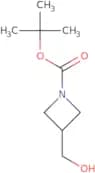
CAS:Stable under physiological and chemical conditions, 1-Boc-azetidine-3-yl-methanol is a linker that forms permanent bonds in conjugates, particularly in antibody-drug conjugates (ADCs) and as a linker in PROTAC (PROteolysis TArgeting Chimera) molecules for targeted protein degradation. It is also a versatile chemical intermediate used to synthesize complex organic molecules, particularly in pharmaceuticals, agrochemicals, and research chemicals.
Fórmula:C9H17NO3Pureza:Min. 95%Cor e Forma:White PowderPeso molecular:187.24 g/molRef: 3D-FB11553
Produto descontinuadoL-Leucine ethyl ester hydrochloride
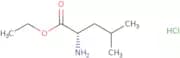
CAS:L-Leucine ethyl ester hydrochloride (L-LEE) is a hydroxylated form of leucine, which is an essential amino acid. LEE has been shown to have anti-inflammatory effects, which may be due to its ability to inhibit the formation of proinflammatory cytokines. It also has been shown to have antioxidant and anti-atherogenic properties, as well as the ability to reduce cholesterol levels in rats. This product has been shown effective in treating bowel disease and metabolic disorders such as hepatic steatosis, fatty liver disease, and metabolic syndrome. LEE also can activate aryl hydrocarbon receptor ligand (AhR), which is involved in the regulation of genes that control inflammation and immune responses.
Fórmula:C8H17NO2•HClPureza:Min. 95 Area-%Cor e Forma:PowderPeso molecular:195.69 g/molRef: 3D-FL37378
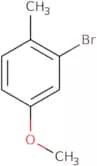
Produto descontinuado3-Bromo-4-methylanisole
CAS:3-Bromo-4-methylanisole is a natural product that has been shown to selectively activate the transcription factor, proliferator activated receptor γ (PPARγ), which plays a central role in cell differentiation and lipid metabolism. 3-Bromo-4-methylanisole is a competitive inhibitor of the catalytic site of PPARγ and also inhibits the activity of other transcriptional factors. This compound has been shown to stimulate the production of peroxisomes, which are organelles involved in lipid metabolism. 3-Bromo-4-methylanisole can be synthesized from toluene by a two step process involving electrolysis followed by chlorination. It can also be prepared from magnolol, a natural product isolated from Magnolia officinalis, by oxidation with potassium dichromate and sodium bisulfite.
Fórmula:C8H9BrOPureza:Min. 95%Cor e Forma:PowderPeso molecular:201.06 g/molRef: 3D-FB10592
Produto descontinuado1-Phenyl-3-oxabicyclo[3.1.0]hexan-2-one
CAS:1-Phenyl-3-oxabicyclo[3.1.0]hexan-2-one (1POX) is a monomer that belongs to the class of cyclopropane compounds and can be used in the synthesis of polymers. It has been shown to react with benzene, irradiation, monoxide, oxiranyl, acetonitrile and trimeric dyes to form reactive intermediates such as ketones and carboxylic acids. These intermediates can undergo photolysis to produce products such as ketones and carboxylic acids. The wavelength of the light used for photolysis can influence the product formation. 1POX is also a substrate for cyclopropane ring formation reactions, which are known for their high reactivity due to the stability of this ring system. The carbonyl group on 1POX is electron withdrawing and stabilizes the planar geometry of 1POX.
Fórmula:C11H10O2Pureza:Min. 95%Cor e Forma:PowderPeso molecular:174.2 g/molRef: 3D-FP16068
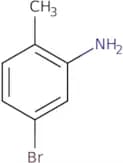
Produto descontinuado5-Bromo-2-methylaniline
CAS:5-Bromo-2-methylaniline (5BMA) is a nonsteroidal, insecticidal compound. It is an alkylating agent that reacts with nucleophilic sites such as DNA and proteins to form covalent bonds. 5BMA has been shown to act as a surfactant in the synthesis of carbinols. It can also be used as an additive or a coupling reagent for the synthesis of other compounds. The bromine atom in 5BMA is electron-rich and has high affinity for electrophiles, which makes it useful for reactions involving nucleophiles such as DNA, proteins, or phosphines. The functional groups on 5BMA are fluorine and two methoxy groups. It can bind to DNA by forming hydrogen bonds with the phosphate backbone. Hybridization occurs when 5BMA binds to its complementary strand of DNA; this process prevents transcription and replication of genetic material.
Fórmula:C7H8BrNPureza:Min. 95%Peso molecular:186.05 g/molRef: 3D-FB05935
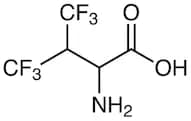
Produto descontinuado4,4,4,4',4',4'-Hexafluoro-DL-valine
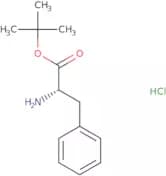
CAS:Fórmula:C5H5F6NO2Pureza:>98.0%(T)Cor e Forma:White to Almost white powder to crystalPeso molecular:225.09(S)-3-Phenylalanine t-butyl ester HCl
CAS:(S)-3-Phenylalanine t-butyl ester HCl is a solute with the molecular formula of C9H11NO2. It is an ester that has been hydrochloride to produce a solute that is soluble in water and alcohols. (S)-3-Phenylalanine t-butyl ester HCl is also a provitamin, which means it can be converted into vitamin B6 in the body. This compound has been shown to reduce the viscosity of fluids at high temperatures and low pressure, making it useful in thermally labile solutes. The solubility of (S)-3-phenylalanine t-butyl ester HCl in various solvents depends on its concentration. The fluorescence properties of this compound depend on the concentration and temperature. These properties have been used for deconvolution purposes in amide studies.
Fórmula:C13H19NO2·HClPureza:Min. 95%Cor e Forma:White PowderPeso molecular:257.76 g/molRef: 3D-FP40262
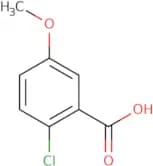
Produto descontinuado2-Chloro-5-methoxybenzoic acid
CAS:2-Chloro-5-methoxybenzoic acid (2CMB) is a copper chelator that has been shown to have antagonistic properties against microglia cells. 2CMB is synthesized from 2,5-dichlorobenzoic acid and methoxylamine. It has been shown to inhibit the synthesis of inflammatory mediators in rat spinal cord microglia cells by inhibiting the activity of polyphosphoric acid, anions and additives. 2CMB also has a high affinity for chloride ions and can be used as a tracer to measure chloride profiles. 2CMB reacts with copper ions at a slow rate and can be used as an indicator for the presence of microglia cells.
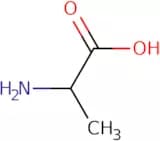
Fórmula:C8H7ClO3Pureza:Min. 95%Peso molecular:186.59 g/molDL-Alanine
CAS:DL-Alanine is a small molecule drug that has been used as a fluorescence probe for the detection of human hepatitis B virus (HBV) DNA. DL-Alanine has also been shown to be an inhibitor of the polymerase chain reaction, which is a technique used for amplifying DNA. The fluorescence of DL-alanine is quenched by HBV, and the intensity of this interaction can be measured using an ultraviolet spectrophotometer. DL-Alanine was found to inhibit HBV replication in a model system when it was added at concentrations between 1 and 10 mM. The inhibition was attributed to its ability to scavenge anion radicals generated during the course of HBV replication. DL-Alanine inhibits both wild type and mutant strains of HBV, with no significant difference in potency between them.
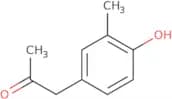
Fórmula:C3H7NO2Pureza:(Titration) Min. 98.5%Cor e Forma:PowderPeso molecular:89.09 g/mol(4-Hydroxy-3-methylphenyl)acetone
CAS:(4-Hydroxy-3-methylphenyl)acetone is a high quality, reagent that has been used in the synthesis of complex compounds. It is also a useful intermediate for the production of fine chemicals, useful scaffolds, and useful building blocks. The compound can be used as a speciality chemical in research and is versatile as a building block for reactions. (4-Hydroxy-3-methylphenyl)acetone has been shown to react with various organic compounds, such as alcohols, amines, and carboxylic acids.
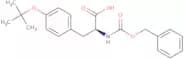
Fórmula:C10H12O2Pureza:Min. 98 Area-%Cor e Forma:PowderPeso molecular:164.2 g/molZ-O-tert-Butyl-L-tyrosine
CAS:Z-O-tert-Butyl-L-tyrosine is a fine chemical that is soluble in water and has a wide range of uses. It is a versatile scaffold for the synthesis of complex compounds, and can be used as a building block or reaction component in research chemicals. Z-O-tert-Butyl-L-tyrosine is an important reagent for organic synthesis, especially when combined with other chemicals. This chemical can also be used as a speciality chemical to produce high quality products.
Fórmula:C21H25NO5Pureza:Min. 95%Cor e Forma:White PowderPeso molecular:371.43 g/molRef: 3D-FB49847
Produto descontinuado6-Methyl-4-hydroxycoumarin
CAS:6-Methyl-4-hydroxycoumarin is a coumarin derivative that has been shown to have potent inhibitory activity against both Gram-positive and Gram-negative bacteria. It also inhibits the growth of leukemia cells and shows anti-inflammatory properties. The photophysical studies of this molecule show that it has absorption bands in the visible region, which may be attributed to its hydroxyl group. 6-Methyl-4-hydroxycoumarin has also been shown to be an effective inhibitor of LPS (lipopolysaccharide)-stimulated RAW 264.7 cells, as well as benzofuran derivatives that have been shown to have inflammatory propertys.
Fórmula:C10H8O3Pureza:Min. 95%Cor e Forma:PowderPeso molecular:176.17 g/molRef: 3D-FM12567
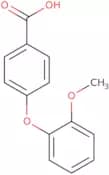
Produto descontinuado4-(2-Methoxyphenoxy)benzoic acid
CAS:4-(2-Methoxyphenoxy)benzoic acid is a white crystalline solid with a melting point of 50°C. It is soluble in water, ethanol, ether, and chloroform. 4-(2-Methoxyphenoxy)benzoic acid has been used as a starting material for the synthesis of pharmaceuticals such as carbamazepine (Tegretol). The compound has two methoxy groups on the phenyl ring that are susceptible to nucleophilic attack by strong bases. This reaction occurs at room temperature and can be reversed by heating the solution to 150°C. The compound also undergoes polycondensation reactions when heated in the presence of an oxidizing agent.
Fórmula:C14H12O4Pureza:Min. 95%Cor e Forma:White PowderPeso molecular:244.24 g/molRef: 3D-FM52928
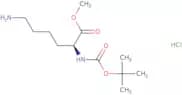
Produto descontinuadoBoc-Lys-OMe HCl
CAS:Boc-Lys-OMe HCl is an ester hydrochloride of N-Boc-Lysine. It is a macrocyclic compound that has been used in the laboratory as an acidifying agent to convert sodium borohydride to methyl ester hydrochloride. Boc-Lys-OMe HCl is also used in the synthesis of macrocyclic compounds, such as n-boc-l-lysine and other polyamino compounds.
Fórmula:C12H24N2O4·HClPureza:Min. 95%Cor e Forma:White PowderPeso molecular:296.79 g/molRef: 3D-FB36993
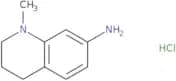
Produto descontinuado1-Methyl-1,2,3,4-tetrahydroquinolin-7-amine hydrochloride
CAS:1-Methyl-1,2,3,4-tetrahydroquinolin-7-amine hydrochloride (MQ) is a fluorescent probe that has been used to study the photostability of cisplatin in real time. MQ was synthesized by reacting 3-(2'-bromoacetyl)-7-methoxy-1,2,3,4-tetrahydroquinolin with 7-aminoquinaldine. The emission spectrum of MQ peaks at 615 nm and has an extinction coefficient at 615 nm of 12.5 mM/cm. This probe has been shown to be photostable for long periods of time and can be used to visualize DNA polymerase activity in living cells.Fórmula:C10H15ClN2Pureza:Min. 95%Cor e Forma:Off-White PowderPeso molecular:198.69 g/molRef: 3D-FM117303
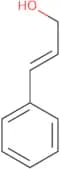
Produto descontinuado3-Phenyl-2-propen-1-ol
CAS:3-Phenyl-2-propen-1-ol is a cinnamyl compound that is found in plants, such as cinnamon and cassia. It has been shown to have an inhibitory effect on the enzyme activities of sorbitol dehydrogenase, which is involved in the synthesis of polysaccharides. 3-Phenyl-2-propen-1-ol also has a transcriptional regulatory effect on genes that encode enzymes involved in the synthesis of polymers. The reaction mechanism for this reaction has been proposed to be through an initial nucleophilic attack by the hydroxyl group on the electrophilic carbonyl carbon atom followed by protonation and elimination of water.
3-Phenyl-2-propen-1-ol has also been shown to be a signal peptide, which is used to identify proteins for transport within cells. This polymerase chain reaction (PCR) model system can be used to determineFórmula:C9H10OPureza:Min. 95%Cor e Forma:PowderPeso molecular:134.18 g/molRef: 3D-FP159401
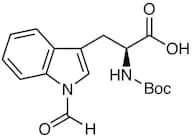
Produto descontinuadoNα-(tert-Butoxycarbonyl)-N1-formyl-L-tryptophan
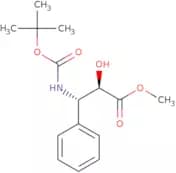
CAS:Fórmula:C17H20N2O5Pureza:>98.0%(T)Cor e Forma:White to Light gray to Light yellow powder to crystalPeso molecular:332.36Methyl (2R,3S)-N-boc-3-phenylisoserine
CAS:Methyl (2R,3S)-N-boc-3-phenylisoserine is a fine chemical that has been used as a building block for the synthesis of complex compounds with high quality. It reacts with other molecules to form various useful compounds and has been used in research chemicals and as a reaction component. Methyl (2R,3S)-N-boc-3-phenylisoserine is also used as a reagent and is an important intermediate for the production of many speciality chemicals.Fórmula:C15H21NO5Pureza:Min. 95%Cor e Forma:PowderPeso molecular:295.33 g/molRef: 3D-FM32204
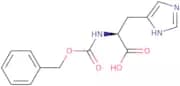
Produto descontinuadoN-alpha-Z-L-histidine
CAS:N-alpha-Z-L-histidine is a nitrogenous compound that is an amide formed by the reaction of histidine and trifluoroacetic acid. It has been shown to be anticancer and to have an effect on tumor vasculature, with efficacy against solid tumors. N-alpha-Z-L-histidine inhibits the cell cycle at the G1 phase and blocks DNA synthesis, which arrests cells in the M phase. This drug also inhibits tumor angiogenesis by blocking vascular endothelial growth factor (VEGF) signaling. N-alpha-Z-L-histidine is a molecule that has been synthesized using solid phase chemistry and purified by high performance liquid chromatography.
Fórmula:C14H15N3O4Pureza:Min. 95%Cor e Forma:PowderPeso molecular:289.29 g/mol



![1-Phenyl-3-oxabicyclo[3.1.0]hexan-2-one](/_next/image/?url=https%3A%2Fstatic.cymitquimica.com%2Fproducts%2F3D%2Fthumb-webp%2FFP16068.webp&w=3840&q=75)