Substratos enzimáticos
Substratos enzimáticos são moléculas sobre as quais as enzimas atuam para catalisar reações químicas. O substrato liga-se ao sítio ativo da enzima, onde passa por uma transformação específica para formar o produto da reação. Os substratos enzimáticos são ferramentas essenciais na pesquisa para estudar a cinética enzimática, especificidade e mecanismo de ação. Eles também são usados em ensaios diagnósticos e estudos bioquímicos. Na CymitQuimica, oferecemos uma seleção diversificada de substratos enzimáticos de alta qualidade para apoiar suas pesquisas em enzimologia e bioquímica.
Subcategorias de "Substratos enzimáticos"
Foram encontrados 1529 produtos de "Substratos enzimáticos"
Ordenar por
Pureza (%)
0
100
|
0
|
50
|
90
|
95
|
100
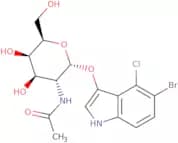
5-Bromo-4-chloro-3-indolyl 2-Acetamido-2-deoxy-α-D-galactopyranoside
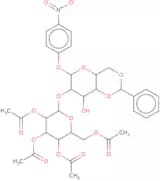
CAS:Produto Controlado<p>Applications A histochemical substrate for a-N-acetyl-galactosaminidase.<br>References Zhu, et al.: Gene, 137, 309 (1994)<br></p>Fórmula:C16H18BrClN2O6Cor e Forma:NeatPeso molecular:449.684-Nitrophenyl 2-O-(2,3,4,6-tri-O-acetyl-a-D-mannopyranosyl)-4,6-O-benzylidene-a-D-mannopyranoside
4-Nitrophenyl 2-O-(2,3,4,6-tri-O-acetyl-a-D-mannopyranosyl)-4,6-O-benzylidene-a-D-mannopyranoside is a fluorogenic substrate that is used for the detection of alpha amylase activity in food testing. It is also used as a chromogenic substrate for the detection of beta amylase activity. 4NP2ODM is a conjugate that can be used for the detection of alpha or beta amylases in environmental testing. This compound has high purity and quality and CAS No. 90105037.Pureza:Min. 95%Peso molecular:719.64 g/mol6-Chloro-4-(trifluoromethyl)umbelliferyl b-D-cellotetraoside
<p>6-Chloro-4-(trifluoromethyl)umbelliferyl b-D-cellotetraoside is a fluorescent substrate that is used to measure the activity of the enzyme beta-glucuronidase. It is a chemiluminescent compound that emits light when hydrolyzed by an enzyme. 6-Chloro-4-(trifluoromethyl)umbelliferyl b-D-cellotetraoside has been shown to be a high quality and environmentally friendly product, as it does not cause any significant change in pH or turbidity in water samples. It has also been shown to be nontoxic and nonmutagenic at concentrations up to 400 ppm. This product can be used for a variety of purposes, including diagnostic tests for bacterial infections or food testing.</p>Pureza:Min. 95%Peso molecular:913.15 g/molLuciferin-choline phosphate, sodium salt
<p>Luciferin-choline phosphate, sodium salt is a chemical compound used for the detection of phosphatases and esterases. This compound is also used for the detection of bacteria and fungi in food testing and environmental testing. Luciferin-choline phosphate, sodium salt is a chromogenic substrate that can be detected using bioluminescence or fluorogenic substrates. It has an absorbance maximum at around 420 nm.</p>Fórmula:C16H17N3NaO6PS2Pureza:Min. 95 Area-%Peso molecular:465.41 g/mol4-Nitrophenyl 2-acetamido-2-deoxy-4,6-O-benzylidene-b-D-glucopyranoside
CAS:<p>4-Nitrophenyl 2-acetamido-2-deoxy-4,6-O-benzylidene-b-D-glucopyranoside is a fluorescent substrate for beta amylase and other glycosidases. It has been used as a fluorogenic substrate for food testing and as a chromogenic substrate for environmental testing. 4NPB has also been used in diagnostic applications such as enzyme substrates, ligands, and chemiluminescent substrates. This product is of high purity and quality with a conjugate that can be used in biotechnology applications.</p>Pureza:Min. 95%Peso molecular:430.41 g/mol5-Bromo-4-chloro-3-indolyl 2-acetamido-2-deoxy-a-D-galactopyranoside
CAS:<p>Substrate for a-N-acetyl-galactosaminidase</p>Fórmula:C16H18BrClN2O6Pureza:Min. 95%Cor e Forma:White to off-white solid.Peso molecular:449.68 g/mol4-Methyl-2-nitrophenyl b-D-galactopyranoside
<p>4-Methyl-2-nitrophenyl b-D-galactopyranoside is a fluorogenic substrate for β-galactosidase. It has a high purity and is of high quality. 4-Methyl-2-nitrophenyl b-D-galactopyranoside is used as an enzyme substrate in diagnostics, as a chromogenic substrate in staining, and as a conjugate in chemiluminescence. It can be used for the detection of β-galactosidase in culture media and for the detection of β-galactosidase in environmental testing. This chemical also has bioluminescent properties that make it useful for food testing.</p>Pureza:Min. 95%Peso molecular:315.28 g/molDnp-pyaywmr trifluoroacetate
CAS:Dnp-pyaywmr trifluoroacetate is a fluorogenic substrate that can be used in the detection of enzymes. It has a CAS number of 135662-06-5 and an EC number of 231-610-7. This chemical is not intended for human or animal use, but it can be used to detect the presence of specific enzymes in food testing, environmental testing, and diagnostics. Dnp-pyaywmr trifluoroacetate is also used as a ligand for fluorescent probes. Chemiluminescence and bioluminescence are two forms of light emission that can occur when this chemical is added to a solution containing a living cell.Fórmula:C56H66F3N13O16SPureza:Min. 95%Peso molecular:1,266.3 g/mol4-Nitrophenyl trimethylacetate
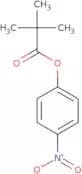
CAS:<p>4-Nitrophenyl trimethylacetate is a cytosolic proteinase inhibitor. It binds to the active site of trypsin and other enzymes that hydrolyze peptide bonds, thereby inhibiting the activity of these enzymes. 4-Nitrophenyl trimethylacetate has been shown to inhibit soybean trypsin, which has led to its use as a model system for studying enzyme inhibition. The binding site on 4-Nitrophenyl trimethylacetate is competitive with respect to substrate binding but not with respect to the enzyme's catalytic triad. This inhibitor also has a high buffer capacity and can be used in low pH systems.</p>Pureza:Min. 95%Peso molecular:223.23 g/mol4-Methylumbelliferyl 2,3-di-O-benzoyl-4,6-O-benzylidene-b-D-galactopyranoside
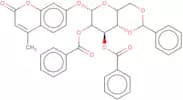
<p>4-Methylumbelliferyl 2,3-di-O-benzoyl-4,6-O-benzylidene-b-D-galactopyranoside is a fluorogenic substrate that is used in the detection of β-galactosidase activity. This product is a white to off white powder that has a purity of 99.2%. It has been given CAS number 53654–95–1 and it can be found in the Diagnostics section of Acros Organics.</p>Pureza:Min. 95%Peso molecular:634.63 g/mol2-Nitrophenyl 2-acetamido-3,4,6-tri-O-acetyl-2-deoxy-a-D-glucopyranoside
CAS:2-Nitrophenyl 2-acetamido-3,4,6-tri-O-acetyl-2-deoxy-a-D-glucopyranoside is a chromogenic substrate commonly used in enzyme assays for the detection and quantification of enzyme activity. It is a colorless substrate that is enzymatically converted into a yellowish product, the intensity of which is directly proportional to the enzyme activity present in the sample.Pureza:Min. 95%Peso molecular:468.41 g/mol4-Nitrophenyl 2-acetamido-3-O-(2,3,4,6-tetra-O-acetyl-b-D-galactopyranosyl)-2-deoxy-a-D-galactopyranoside
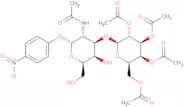
CAS:<p>4-Nitrophenyl 2-acetamido-3-O-(2,3,4,6-tetra-O-acetyl-b-D-galactopyranosyl)-2-deoxy-a-D-galactopyranoside is a chromogenic substrate designed for the detection and quantification of enzyme activity. This tetra-acetylated compound is specifically designed to be cleaved by enzymes, releasing a yellow 4-nitrophenol product that can be easily measured spectrophotometrically, allowing for accurate and sensitive analysis of enzyme kinetics and inhibition studies.</p>Pureza:Min. 95%Peso molecular:672.59 g/molAquaSpark® H2S probe, TFA salt, Ramot at Tel-Aviv University Ltd. Patent family WO 2017/130191
AquaSpark® H2S probe is a chemiluminescent probe for the detection of hydrogen sulfide (H2S), with excellent selectivity for sulfide over thiols. The AquaSpark® H2S probe is ~760-fold more selective for Na2S than to L-cysteine, and ~380-fold more selective for Na2S than for glutathione. AquaSpark® H2S probe was used in a study identifying antibiotic-resistant bacterial strains by detecting the beta-lactamase-driven hydrolysis of beta-lactam antibiotics, where hydrogen sulfide is a biodegradation metabolite (Popat Gholap et al, 2021).Fórmula:C35H31ClF3NO9SSePureza:Min. 95%Peso molecular:813.1 g/mol2-Naphthyl 2,3,4,6-tetra-O-acetyl-b-D-glucopyranoside
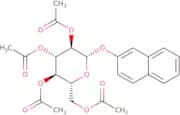
CAS:<p>2-Naphthyl 2,3,4,6-tetra-O-acetyl-b-D-glucopyranoside (NAG tetra acetate) is a chromogenic enzyme substrate commonly used in the detection of β-galactosidase activity. Upon hydrolysis by the enzyme, it produces a yellow product that can be detected by spectrophotometry or visually. It is frequently used in bacterial assays to monitor gene expression or as a tool for screening potential inhibitors of the enzyme.</p>Pureza:Min. 95%Peso molecular:474.47 g/molResorufin ethyl ether
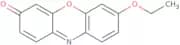
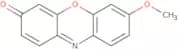
CAS:<p>Resorufin ethyl ether is a fluorescent substrate that is used to measure the activity of cytochrome P450 enzymes. It can be used in vitro to study the effects of drugs on enzyme activities and in vivo to study liver lesions. Resorufin ethyl ether is also used as a model system for studying synchronous fluorescence, which is the emission of light by two or more substances at the same time. The nitrogen atoms in resorufin ethyl ether can be substituted with other atoms such as magnesium or zinc, which will affect its activity and fluorescence properties. Resorufin ethyl ether binds to cytochrome P450 enzymes and therefore inhibits their activity. This inhibition is reversible, and it can be reversed by adding a substance that competes with the substrate for binding sites on the enzyme.</p>Pureza:Min. 95%Peso molecular:241.24 g/molBenzocaine fructoside
CAS:<p>Benzocaine fructoside is a synthetic carbohydrate that is used as a local anesthetic. It is synthesized from benzocaine to produce a glycosylated form of the drug. This compound has been modified to include fluorine atoms, and it has been methylated with primary amines. The modification of this compound has produced a high-purity product that can be used for click chemistry.</p>Pureza:Min. 95%Resorufin methyl ether
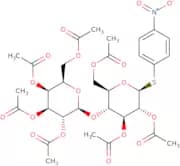
CAS:<p>Fluorogenic substrate used to differentiate cytochrome P450 monooxygenases</p>Fórmula:C13H9NO3Pureza:Min. 95%Cor e Forma:PowderPeso molecular:227.22 g/mol4-Nitrophenyl 4-O-(2,3,4,6-tetra-O-acetyl-b-D-galactopyranosyl)-2,3,6-tri-O-acetyl-b-D-thioglucopyranoside
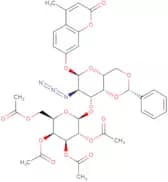
CAS:4-Nitrophenyl 4-O-(2,3,4,6-tetra-O-acetyl-b-D-galactopyranosyl)-2,3,6-tri-O-acetyl-b-D-thioglucopyranoside is a superior chromogenic substrate for the detection of enzymes. Specifically designed for optimal performance, it provides exquisite sensitivity and definitive results in enzyme assays. Its exceptional properties make it a top choice among researchers and professionals in biochemistry, enabling accurate analysis and quantification of enzymatic activities.Pureza:Min. 95%Peso molecular:773.71 g/mol4-Methylumbelliferyl 2-azido-2-deoxy-3-O-(tetra-O-acetyl-b-D-galactopyranosyl)-4,6-O-benzylidene-a-D-galactopyranoside
CAS:<p>4-Methylumbelliferyl 2-azido-2-deoxy-3-O-(tetra-O-acetyl-b-D-galactopyranosyl)-4,6-O-benzylidene a D galactopyranoside is a chemiluminescent substrate for detecting ligands. It has been used to detect the presence of bacteria, fungi, and parasites in food samples and as an indicator for enzymatic activity. This product is an excellent fluorescent substrate for the detection of nucleic acids such as DNA. This product is a conjugate with high purity, which makes it suitable for use in various types of applications.</p>Fórmula:C37H39N3O16Pureza:Min. 95%Peso molecular:781.72 g/molLuc-B.cereus Na
<p>Bacillus cereus is a rod-shaped β hemolytic bacterium commonly found in food and soil. Some strains can be associated with food intoxications, mainly from raw meat and poultry products. One example is the so called “fried rice syndrome”, that occurs when dishes containing cooked rice are left for several hours at room temperature. Typical symptoms of the infection include severe nausea, vomiting and diarrhea. Some strains of Bacillus cereus on the contrary are not harmful at all and they are used as probiotics food additives in animal farming to reduce the presence of other pathogens like Salmonella in the cecum end intestine. Bacillus cereus expresses phosphatidyl-choline specific phospholipase C (PC-PLC), encoded by the plc gene, which is regulated by PlcR. In addition, the expression of PlcR is dependent on the growth medium. Luc-B.cereus Na (L-8275) is a synthetic chemiluminescent substrate for the phosphatidyl-choline specific phospholipase C. The enzyme cleaves off phosphocholine from L-8275, leading to the release of D-Luc, and consequent strong light emission B. cereus culture exhibited strong luminescence, while RLU values were much lower for samples with B. thuringiensis.</p>Fórmula:C16H17N3NaO6PS2Pureza:Min. 95 Area-%Peso molecular:465.41 g/mol