Moduladores enzimáticos
Subcategorias de "Moduladores enzimáticos"
Foram encontrados 693 produtos de "Moduladores enzimáticos"
Cilastatin
CAS:Cilastatin is a renal dehydropeptidase inhibitor, which is a compound sourced from synthetic processes designed to augment the pharmacokinetic profile of certain beta-lactam antibiotics. Its primary mode of action is to inhibit the enzyme dehydropeptidase I (DHP-I), located in the renal brush border. This enzyme typically degrades antibiotics, like imipenem, within the renal tubules. By inhibiting DHP-I, cilastatin prevents the inactivation of these antibiotics, thereby prolonging their active presence in the body and enhancing their antimicrobial efficacy.Fórmula:C16H26N2O5SPureza:Min. 95%Cor e Forma:PowderPeso molecular:358.45 g/molJTZ 951
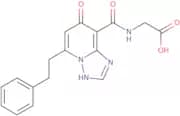
CAS:Inhibitor of HIF prolyl hydroxylaseFórmula:C17H16N4O4Pureza:Min. 98 Area-%Cor e Forma:PowderPeso molecular:340.33 g/molPD 98059
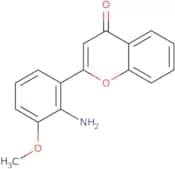
CAS:MAP kinase kinase (MEK) inhibitor. Binds to MEK-1, preventing phosphorylation and activation by Raf or MEK kinase. PD 098059 enhances self-renewal in stem cells. Has anti-growth and anti-proliferative effects on AML cells. Anti-apoptotic effect on AML cells observed in synergy with Nutlin-3a.
Fórmula:C16H13O3NPureza:Min. 95%Cor e Forma:Off-White PowderPeso molecular:267.28 g/molLRRKtide amide
LRRKtide (also called moesin) is a peptide substrate for leucine-rich repeat kinase 2 (LRRK2). The sequence of LRRKtide has been derived from the ERM proteins: Ezrin (amino acids 561-573), radixin (amino acids 558-570) and moesin (amino acids 539-553). These proteins influence cytoskeletal dynamics by anchoring the cytoskeleton to the plasma membrane. LRRK2 phosphorylates LRRKtide at its Thr558 site.LRRK2 is a large, ubiquitous protein of unknown function. LRRK2 has GTPase and kinase activity, and is located in multiple areas of the cell where it is found associated with intracellular membranes and vesicular structures. Its multiple cellular locations suggest that LRRK2 may be involved in several cellular pathways. LRRK2 is also found in most organs and mutations in LRRK2 have been identified in Parkinson's disease.This peptides has an amidated C-terminal end.Pureza:Min. 95%Peso molecular:1,929.1 g/molPARP1 (487-496)
Amino acids 487-496 of Poly(ADP-ribose) polymerase 1 (PARP1). PARP1 is a nuclear DNA repair enzyme that binds to DNA when damage is detected. PARP1 coordinates double and single strand break repair by first cleaving NAD+ into nicotinamide and ADP-ribose, and then synthesising poly-(ADP-ribose) (PAR) chains from ADP-ribose on target proteins (PARylation). PARylation of histone proteins mediates relaxation of the chromatin and recruitment of DNA-break repair enzymes.PARP1 can also act as a transcriptional co-activator, modulating the expression of itself and many other genes by direct binding to or PARylation of enhancers and promoters. PARP1 is also involved in maintaining mtDNA.PARP1 belongs to the PARP family which has 7 known and 10 putative members. PARP1 accounts for >85% of the PARP activity in cellular systems.Pureza:Min. 95%Peso molecular:1,065.6 g/molVeliparib
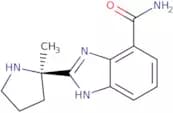
CAS:Potently inhibits PARP-1 and PARP-2 enzymes, orally bioavailable and crosses blood-brain barrier. Sensitises cancer cells to DNA-damaging chemotherapy and radiotherapy. Combination therapies investigated in clinical trials for solid and blood malignancies.
Fórmula:C13H16N4OPureza:Min. 95%Cor e Forma:White PowderPeso molecular:244.29 g/molCilastatin sodium salt - Bio-X ™
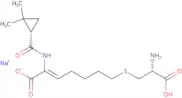
CAS:Cilastatin is a renal dehydropeptidase inhibitor drug that is used to prevent degradation of imipenem. It is used to treat a variety of infections in combination with imipenem. This drug blocks the mechanism of imipenem which is hydrolyzed by dehydropeptidase-I.
Fórmula:C16H26N2O5S•NaPureza:Min. 95%Cor e Forma:PowderPeso molecular:381.44 g/molT 3364366
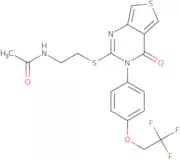
CAS:A potent, reversible and slow-binding inhibitor of delta-5 desaturases (D5Ds), by binding to the desaturase domain. Inhibiting D5D has therapeutic applications in inflammatory diseases. This is due to the increase in anti-inflammatory DGLA-derived eicosanoids and decrease in pro-inflammatory AA-derived eicosanoids.
Fórmula:C18H16F3N3O3S2Pureza:Min. 95%Cor e Forma:SolidPeso molecular:443.47 g/mol1,3,4,6-Tetra-O-acetyl-2-deoxy-2-(2,2,2-trifluoroacetylamino)-D-glucopyranoside
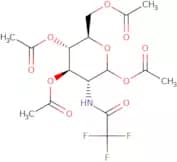
CAS:Potent, selective and cell-permeable tool for modulation of O-GlcNAcylation. Ac4GlcNAcF3 is a dual modulator of O-GlcNAc transferase (OGT) and O-GlcNAcase (OGA). Ac4GlcNAcF3 perturbates the GlcNAc cycling as OGT can incorporate GlcNAcF3 onto proteins but subsequently, it cannot be removed by OGA. In a mouse embryogenic fibroblast cell line, Ac4GlcNAcF3 increased the level of protein O-GlcNAcylation.Fórmula:C16H20F3NO10Pureza:Min. 95%Cor e Forma:PowderPeso molecular:443.33 g/molDaun02
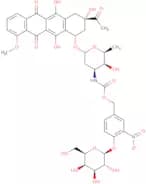
CAS:A prodrug of the DNA-intercalating agent daunorubicin with anti-tumoral activity, used for suicide gene therapy and activity-dependent ablation of cells. Daun02 is an inactive form of the toxin, which gets activated upon cleavage with prodrug-activating enzyme β-galactosidase, yielding daunorubicin. Genetic constructs have been designed carrying the lacZ gene, coding for β-galactosidase, under control of application-specific promoters. The cells expressing the β-gal undergo cell death since the enzyme hydrolizes the prodrug into the active toxin.Fórmula:C41H44N2O20Pureza:Min. 95%Cor e Forma:Red To Brown SolidPeso molecular:884.24874Sildenafil - Bio-X ™
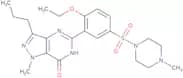
CAS:Sildenafil is a potent inhibitor of cyclic guanosine monophosphate (cGMP) specific phosphodiesterase type 5 (PDE5), consequently preventing the degradation of cGMP in the smooth muscle cells of the pulmonary vasculature and penis. For this reason Sildenafil can be used to increase blood flow, decrease inflammation and mucus production in the lungs and also can be used in the treatment of erectile dysfunction in men. This is largely due to the increased availability of cGMP which can cause the relaxation of the smooth muscles to be prolonged.
Fórmula:C22H30N6O4SPureza:(%) Min. 95%Cor e Forma:PowderPeso molecular:474.58 g/molBortezomib
CAS:Selective and reversible inhibitor of the multicatalytic 26S proteasome. The inhibition of protein breakdown affects several metabolic pathways and leads to cell death. The compound is effective in treating multiple myeloma because it prevents the binding of myeloma cells to bone marrow stroma and inhibits osteoclast differentiation.Fórmula:C19H25BN4O4Pureza:Min. 95%Cor e Forma:White PowderPeso molecular:384.24 g/mol[CGG]-GSK3B (Human 359-409)
Amino acids 359-409 of human glycogen synthase kinase 3 β (GSKβ), a multifunctional serine/threonine kinase widely expressed in most mammalian cells. GSKβ is highly active under basal conditions and acts downstream of phosphoinositide 3-kinase (PI3K) signalling. PI3K activation results in Akt phosphorylation and the subsequent phosphorylation of GSKβ at serine-9 and its inactivation. GSKβ in turn activates the production of pro-inflammatory cytokines including IL-1β, IL-6, IL-12, IL-17, TNFalpha and IFNγ, and supresses the production of IL-10, IL-1Ra, and IFNβ by immune cells. Under resting conditions, GSKβ is constitutively active due to tyrosine-216 phosphorylation, and it phosphorylates and inhibits a diverse group of pro-oncogenic substrates, such as: β-catenin- cyclin D1- c-Jun- c-Myc and CREB. GSKβ is also involved in Wnt signalling pathways.Aberrant expression of GSKβ has been shown to promote cell growth in some cancers and to suppress it in others. GSKβ inhibition leads to the accumulation of β-catenin in the nucleus, enhancing the progression of many cancers. However the inhibition of GSKβ also induces apoptosis in various types of cancers, such as pancreatic, colorectal and bladder cancer. Inhibition of GSKβ can also have neuroprotective effects on dopaminergic neurons such as in Parkinson's disease.Pureza:Min. 95%Cor e Forma:PowderPeso molecular:1,658.8 g/molAutocamtide-2 Related Inhibitory Peptide
Autocamtide-2-related inhibitory peptide is a calmodulin-dependent protein kinase II (CaMKII) inhibitor.CAMK represents a class of Ca2+/calmodulin-dependent protein kinase enzymes. CAMKs are activated by increases in the concentration of intracellular calcium ions (Ca2+) and transfers phosphates from ATP to defined serine or threonine residues in other proteins. Activated CAMK is involved in the phosphorylation of transcription factors and therefore, in the regulation of expression of responding genes.Pureza:Min. 95%Cor e Forma:PowderPeso molecular:1,707.1 g/molPTP1B Substrate
Substrate peptide for protein tyrosine phosphatase 1B (PTP1B)- an ubiquitously expressed non-receptor tyrosine phosphatase. PTP1B negatively regulates signalling pathways controlling metabolic homeostasis, cell proliferation and immunity (such as leptin and insulin receptor signalling), making PTP1B an interesting target for type 2 diabetes mellitus (T2DM) and obesity treatment. PTP1B also has important leptin-independent metabolic effects, playing a critical role in the regulation of inflammation, cell proliferation, differentiation and invasion. Therefore PTP1B is also interesting as a therapeutic target for inflammatory and autoimmune diseases and cancer.-For application data please see: Figure 2 supplement 1C.Pureza:Min. 95%Peso molecular:1,327.5 g/molZaltoprofen
CAS:Cyclooxygenase inhibitor; anti-inflammatory; antipyretic; analgesicFórmula:C17H14O3SPureza:Min. 95%Peso molecular:298.36 g/molKetoprofen - Bio-X ™
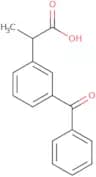
CAS:Ketoprofen is a non-steroidal anti-inflammatory drug (NSAID) that has been used to treat pain and inflammation. Ketoprofen inhibits the production of inflammatory prostaglandins, which are released by platelets in response to injury or infection. The main mechanism of action is inhibition of cyclooxygenase enzymes COX 1 and COX 2 at the level of transcriptional activation. This results in decreased levels of prostaglandins that mediate pain, fever and inflammation.Fórmula:C16H14O3Pureza:Min. 95%Cor e Forma:PowderPeso molecular:254.28 g/molPhosphorylated LRRKtide
LRRKtide (also called moesin) is a peptide substrate for leucine-rich repeat kinase 2 (LRRK2). The sequence of LRRKtide has been derived from the ERM proteins: Ezrin (amino acids 561-573), radixin (amino acids 558-570) and moesin (amino acids 539-553). These proteins influence cytoskeletal dynamics by anchoring the cytoskeleton to the plasma membrane. LRRK2 phosphorylates LRRKtide at its Thr558 site. This peptide contains the phosphorylated threonine residue.LRRK2 is a large, ubiquitous protein of unknown function. LRRK2 has GTPase and kinase activity, and is located in multiple areas of the cell, associated with intracellular membranes and vesicular structures- suggesting LRRK2 may be involved in several cellular pathways. LRRK2 is also found in most organs and mutations in LRRK2 have been identified in Parkinson's disease.The threonine residue at position 9 of this peptide has been phosphorylated.Pureza:Min. 95%Cor e Forma:PowderPeso molecular:2,009.1 g/molNeratinib - Bio-X ™
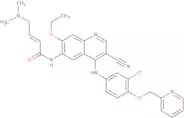
CAS:Neratinib is a protein kinase inhibitor that is used in the treatment of breast cancer. This drug binds to and inhibits EGFR, HER2 and HER4. As a result of this, it prevents autophosphorylation of tyrosine residues and reduces oncogenic signalling.Fórmula:C30H29ClN6O3Pureza:Min. 95%Cor e Forma:PowderPeso molecular:557.04 g/molPARP1 (487-496) peptide
Amino acids 487-496 of Poly(ADP-ribose) polymerase 1 (PARP1). PARP1 is a nuclear DNA repair enzyme that binds to DNA when damage is detected. PARP1 coordinates double and single strand break repair by first cleaving NAD+ into nicotinamide and ADP-ribose, and then synthesising poly-(ADP-ribose) (PAR) chains from ADP-ribose on target proteins (PARylation). PARylation of histone proteins mediates relaxation of the chromatin and recruitment of DNA-break repair enzymes.PARP1 can also act as a transcriptional co-activator, modulating the expression of itself and many other genes by direct binding to or PARylation of enhancers and promoters. PARP1 is also involved in maintaining mtDNA.PARP1 belongs to the PARP family which has 7 known and 10 putative members. PARP1 accounts for >85% of the PARP activity in cellular systems.Pureza:Min. 95%Cor e Forma:PowderPeso molecular:1,106.6 g/mol




![[CGG]-GSK3B (Human 359-409)](/_next/image/?url=https%3A%2Fstatic.cymitquimica.com%2Fproducts%2F3D%2Fthumb-webp%2FCRB1000551.webp&w=3840&q=75)