CAS 100-71-0
:2-Ethylpyridine
Description:
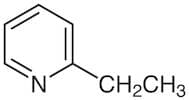
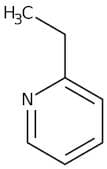
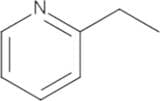
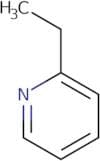
2-Ethylpyridine is an organic compound with the molecular formula C9H11N, belonging to the class of pyridine derivatives. It features a six-membered aromatic ring containing one nitrogen atom, with an ethyl group attached to the second carbon of the ring. This compound is a colorless to pale yellow liquid at room temperature, exhibiting a characteristic aromatic odor. It is moderately soluble in water and highly soluble in organic solvents such as ethanol and ether. 2-Ethylpyridine is known for its use as a building block in organic synthesis and as a solvent in various chemical reactions. It can also serve as a ligand in coordination chemistry. The compound has a relatively low toxicity profile, but like many organic solvents, it should be handled with care to avoid inhalation or skin contact. Its chemical properties include basicity due to the nitrogen atom, allowing it to participate in various chemical reactions, including alkylation and acylation. Overall, 2-Ethylpyridine is a versatile compound with applications in both industrial and research settings.
Formula:C7H9N
InChI:InChI=1S/C7H9N/c1-2-7-5-3-4-6-8-7/h3-6H,2H2,1H3
InChI key:InChIKey=NRGGMCIBEHEAIL-UHFFFAOYSA-N
SMILES:C(C)C1=CC=CC=N1
Synonyms:- Nsc 964
- Pyridine, 2-ethyl-
- alpha-Ethylpyridine
- α-Ethylpyridine
- 2-Ethylpyridine
Sort by
Purity (%)
0
100
|
0
|
50
|
90
|
95
|
100
Found 9 products.
2-Ethylpyridine
CAS:Formula:C7H9NPurity:>98.0%(GC)(T)Color and Shape:Colorless to Almost colorless clear liquidMolecular weight:107.162-Ethylpyridine, 98%
CAS:2-Ethylpyridine is used to study its effect on the proliferation and survival of human umbilical vein endothelial cells (HUVECs), HMVECs from lung, and NIH 3T3 cells. 2-Ethylpyridine linked with silica is a popular stationary phase for chiral and achiral separations in supercritical fluid chromatogrFormula:C7H9NPurity:98%Color and Shape:Clear colorless to pale yellow, LiquidMolecular weight:107.162-Ethylpyridine
CAS:2-EthylpyridineFormula:C7H9NPurity:≥95%Color and Shape:LiquidMolecular weight:107.152-Ethylpyridine
CAS:Controlled ProductApplications 2-Ethylpyridine can be used to prepare Dimethindene Maleate (D460460). It is also used to study its effect on the proliferation and survival of human umbilical vein endothelial cells (HUVECs), HMVECs from lung, and NIH 3T3 cells.2-Ethylpyridine linked with silica is a popular stationary phase for chiral and achiral separations in supercritical fluid chromatography.
Not a dangerous good if item is equal to or less than 1g/ml and there is less than 100g/ml in the package
References Richard, Y., et al.: Toxicol. Sci., 93, 82 (2006); Speybrouck, D., et a.: Curr. Topics in Med. Chem., 12, 1250(2012)Formula:C7H9NColor and Shape:NeatMolecular weight:107.152-Ethylpyridine
CAS:2-Ethylpyridine is a chemical compound that can be derived from sodium succinate, 2-ethylpyridine, and trifluoroacetic acid. It has been shown to have biological properties such as the inhibition of mitochondrial membrane potential, which is the driving force for ATP synthesis in mitochondria. This drug also inhibits the production of hydrogen peroxide and nitric oxide by reacting with hydrochloric acid or nitrogen atoms. 2-Ethylpyridine can be used as a solid catalyst for reactions involving hydrogen bond formation or intermolecular hydrogen bond formation. 2-Ethylpyridine reacts with protocatechuic acid to form an intramolecular hydrogen bond and a group p2 type of reaction mechanism.Formula:C7H9NPurity:Min. 95%Color and Shape:Colorless Clear LiquidMolecular weight:107.15 g/mol