CAS 1000-82-4
:(Hydroxymethyl)urea
Description:
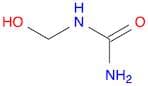
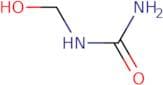
(Hydroxymethyl)urea, with the CAS number 1000-82-4, is an organic compound characterized by the presence of both hydroxymethyl and urea functional groups. It typically appears as a white crystalline solid and is soluble in water due to its polar nature. The compound is known for its ability to form hydrogen bonds, which contributes to its solubility and reactivity. (Hydroxymethyl)urea is often utilized in various chemical syntheses and as an intermediate in the production of pharmaceuticals and agrochemicals. Its structure allows it to participate in reactions typical of urea derivatives, such as condensation and substitution reactions. Additionally, it may exhibit biological activity, making it of interest in medicinal chemistry. Safety data indicates that, like many urea derivatives, it should be handled with care, as it may pose health risks upon exposure. Overall, (Hydroxymethyl)urea serves as a versatile compound in both industrial and research applications.
Formula:C2H6N2O2
InChI:InChI=1S/C2H6N2O2/c3-2(6)4-1-5/h5H,1H2,(H3,3,4,6)
InChI key:InChIKey=VGGLHLAESQEWCR-UHFFFAOYSA-N
SMILES:N(C(N)=O)CO
Synonyms:- (Hydroxymethyl)urea
- N-(Hydroxymethyl)urea
- 1-(Hydroxymethyl)urea
- Hsdb 5776
- Methylolurea
- Mono(hydroxymethyl)urea
- Monomethylolurea
- N-Methylolurea
- Nsc 13181
- Urea, (hydroxymethyl)-
- Urea, N-(hydroxymethyl)-
- Methylol urea
- Methylolureas
- See more synonyms
Sort by
Purity (%)
0
100
|
0
|
50
|
90
|
95
|
100
Found 3 products.
(Hydroxymethyl)urea
CAS:Hydroxymethyl)urea is a food additive that has been found to be an efficient polarizer in the form of a substrate film. It is also used as a reagent for organic synthesis and analysis, including the determination of nitrogen atoms in food products. Hydroxymethyl)urea can act as both a hydroxyl group donor and acceptor. In the presence of an inorganic acid (e.g., sulfuric acid), it can react with formaldehyde to produce urea and formaldehyde-hydroxymethyl)urea complex. The reaction mechanism involves the formation of hydroxyl ions through the hydrolysis of sodium carbonate, which then reacts with zirconium oxide to produce hydrogen gas and zirconium hydroxide, which finally reacts with monosodium salt to produce urea.
Formula:C2H6N2O2Purity:Min. 95 Area-%Color and Shape:White PowderMolecular weight:90.08 g/mol