CAS 10025-99-7
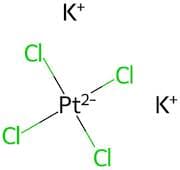
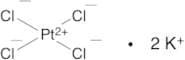
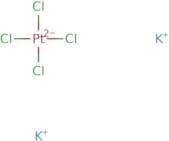
:Dipotassium tetrachloroplatinate
- Dikaliumtetrachloroplatinat
- Dipotassium Tetrachloroplatinate
- Dipotassium platinum tetrachloride
- Dipotassium tetrachloroplatinate(2-)
- Dipotassium tetrachloroplatinate(II)
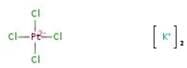
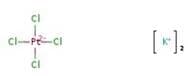
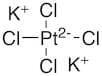
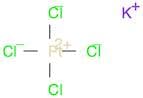
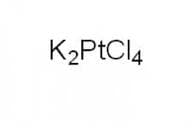
- K<sub>2</sub>PtCl<sub>4</sub>
- Nsc 175496
- Platinate(2-), tetrachloro-, dihydrogen, hexahydrate, (SP-4-1)-
- Platinate(2-), tetrachloro-, dipotassium
- Platinate(2-), tetrachloro-, potassium (1:2), (SP-4-1)-
- Platinous potassium chloride
- Platinum potassium chloride (PtK<sub>2</sub>Cl<sub>4</sub>)
- Potassium Chloroplatinate
- Potassium chloroplatinate (K2PtCl4)
- Potassium chloroplatinate (K<sub>2</sub>PtCl<sub>4</sub>)
- Potassium chloroplatinate(II)
- Potassium chloroplatinoate
- Potassium platinochloride
- Potassium platinous chloride
- Potassium platinum(II) tetrachloride
- Potassium tetrachloroplatinate
- Potassium tetrachloroplatinate K2PtCl4
- Potassium tetrachloroplatinate K<sub>2</sub>PtCl<sub>4</sub>
- Potassium tetrachloroplatinate(2-)
- Potassium tetrachloroplatinate(II)
- Potassium tetrachloroplatinum(II)
- Tetrachloroplatinate de dipotassium
- Tetrachloroplatinum(II) acid potassium salt
- Tetracloroplatinato De Dipotasio
- platinum(4+) tetrachloride
- platinum(+2) cation tetrachloride
- See more synonyms
Potassium tetrachloroplatinate(II), Premion™, 99.99% (metals basis), Pt 46.4% min
CAS:Potassium tetrachloroplatinate(II) is used as important reagent for the preparation of other coordination complexes of platinum. It is also used in the induction of apoptosis in human breast cancer cells. Also used in the preparation of camptothecin-linked platinum anticancer agents. This Thermo SciFormula:Cl4H4K2PtPurity:99.99%Molecular weight:419.11Potassium tetrachloroplatinate(II), 99.9% (metals basis), Pt 46.0% min
CAS:Potassium tetrachloroplatinate solution is used in the preparation of platinum (Pt) nanoparticles. Ligands like ammonia or triphenyl phosphine can able to replace the chloride ligands to afford various derivatives. The replacement by ammonia results in the preparation of cisplatin, which is used inFormula:Cl4H4K2PtPurity:99.9%Color and Shape:Red, Crystals or crystalline powderMolecular weight:419.11Potassium tetrachloroplatinate(II) (99.9%-Pt)
CAS:Potassium tetrachloroplatinate(II) (99.9%-Pt)
Formula:K2PtCl4Purity:(99.9%-Pt)Color and Shape:pink to red pwdr.Molecular weight:415.11Dipotassium tetrachloroplatinate
CAS:Formula:Cl4K2PtPurity:98%Color and Shape:SolidMolecular weight:415.0866Dipotassium tetrachloroplatinate
CAS:Dipotassium tetrachloroplatinate shows antitumor properties, serves in cancer treatment, and boosts radiation and thermotherapy effects.Formula:Cl4K2PtPurity:98%Color and Shape:SolidMolecular weight:415.09Dipotassium tetrachloroplatinate
CAS:Dipotassium tetrachloroplatinatePurity:≥98%Molecular weight:415.09g/molPotassium tetrachloroplatinate(II)
CAS:Potassium tetrachloroplatinate(II)Formula:Cl4Pt·2KPurity:98%Color and Shape: dark red crystalline powderMolecular weight:415.09g/molPotassium tetrachloroplatinate(II); 99.95% (metals basis)
CAS:Formula:K2PtCl4Purity:≥ 99.95%Color and Shape:Orange to red-brown powder or crystalsMolecular weight:415.11Potassium Tetrachloroplatinum(II)
CAS:Applications Potassium Tetrachloroplatinum is used in the induction of apoptosis in human breast cancer cells. Also used in the preparation of camptothecin-linked platinum anticancer agents.
Not a dangerous good if item is equal to or less than 1g/ml and there is less than 100g/ml in the package
References Bielawski, K. et al.: Env. Toxicol. Pharm., 35, 254 (2013); Cincinelli, R. et al.: Eur. J. Med. Chem., 63, 387 (2013);Formula:Cl4Pt·2KColor and Shape:NeatMolecular weight:415.09Potassium tetrachloroplatinate(II)
CAS:Formula:Cl4K2PtPurity:98%Color and Shape:Solid, PowderMolecular weight:415.08Potassium tetrachloroplatinate(II)
CAS:Potassium tetrachloroplatinate(II) is a metal chelate of potassium and platinum. It can be used as a catalyst for organic syntheses, such as hydrogenation reactions. Potassium tetrachloroplatinate(II) has a high affinity for the amide ligands in substrates, which allows it to be used for hydrogenation reactions. The reaction mechanism of this compound has been investigated by x-ray crystal structures and in vitro experiments. The reaction mechanism primarily involves the formation of an organometallic intermediate that subsequently reacts with the substrate via an addition-elimination process. This compound also emits light when heated and produces a dark red color due to its ability to absorb visible light.
Formula:K2PtCl4Purity:Min. 95%Color and Shape:PowderMolecular weight:415.09 g/molPotassium Tetrachloroplatinate (II) pure, 47% Pt
CAS:Formula:K2PtCl4Color and Shape:Dark orange to dark red, Crystalline powderMolecular weight:415.26