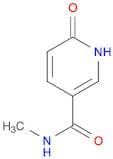
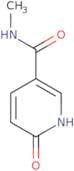
CAS 1007-18-7
:1,6-Dihydro-N-methyl-6-oxo-3-pyridinecarboxamide
Description:
1,6-Dihydro-N-methyl-6-oxo-3-pyridinecarboxamide, with the CAS number 1007-18-7, is a chemical compound that belongs to the class of pyridine derivatives. It features a pyridine ring, which is a six-membered aromatic ring containing one nitrogen atom. The compound is characterized by the presence of a carboxamide functional group, which contributes to its potential solubility in polar solvents. The "1,6-dihydro" designation indicates that the compound has two hydrogen atoms added to the pyridine ring, resulting in a saturated structure at those positions. The N-methyl group suggests the presence of a methyl substituent on the nitrogen atom, which can influence the compound's reactivity and biological activity. This compound may exhibit various pharmacological properties, making it of interest in medicinal chemistry. Its specific applications and interactions would depend on further studies, including its synthesis, stability, and potential therapeutic uses. Overall, the structural features of this compound suggest it could play a role in various chemical and biological processes.
Formula:C7H8N2O2
InChI:InChI=1S/C7H8N2O2/c1-8-7(11)5-2-3-6(10)9-4-5/h2-4H,1H3,(H,8,11)(H,9,10)
InChI key:InChIKey=NBUNJDAKVMXXEF-UHFFFAOYSA-N
SMILES:C(NC)(=O)C=1C=CC(=O)NC1
Synonyms:- N′-Methyl-2-pyridone-5-carboxamide
- 3-Pyridinecarboxamide, 1,6-dihydro-N-methyl-6-oxo-
- Nicotinamide, 1,6-dihydro-N-methyl-6-oxo-
- 1,6-Dihydro-N-methyl-6-oxo-3-pyridinecarboxamide
Sort by
Purity (%)
0
100
|
0
|
50
|
90
|
95
|
100
Found 2 products.
N-Methyl-6-oxo-1,6-dihydropyridine-3-carboxamide
CAS:N-Methyl-6-oxo-1,6-dihydropyridine-3-carboxamide (NDH) is a water soluble polymer that is synthesized from the reaction of fatty acids and formaldehyde. It can be used as a coagulant to remove suspended particles in wastewater. NDH has shown synergistic effects with other coagulant agents such as aluminium sulphate and ferric chloride. This polymer has been shown to have electrothermal treatment capabilities, which are able to remove organic matter from wastewater on an on-line basis. The kinetic energy of the vibrations in the polymer molecule leads to an increase in its solubility in water, allowing for easier removal of pollutants. This polymer also shows a significant reduction in the amount of dissolved oxygen during treatment, which leads to an increased rate of oxidation and decomposition.Formula:C7H8N2O2Purity:Min. 95%Molecular weight:152.15 g/mol