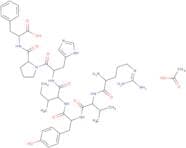
CAS 100900-06-9
:ANGIOTENSIN III
Description:
Angiotensin III is a peptide hormone that plays a crucial role in the regulation of blood pressure and fluid balance within the body. It is derived from angiotensin II through the action of specific enzymes. Angiotensin III primarily functions by binding to angiotensin receptors, leading to vasoconstriction and increased secretion of aldosterone, which promotes sodium retention and potassium excretion by the kidneys. This peptide is characterized by its relatively short chain of amino acids, typically consisting of eight residues, and is part of the renin-angiotensin system, which is vital for cardiovascular homeostasis. Its structure and activity are closely related to those of angiotensin II, but it exhibits different affinities for the angiotensin receptors. Angiotensin III is also involved in various physiological processes, including stimulating thirst and influencing the release of antidiuretic hormone (ADH). Due to its significant role in cardiovascular health, angiotensin III is a target for pharmacological interventions aimed at treating hypertension and heart failure.
Formula:C46H66N12O9·2C2H4O2·4H2O
Synonyms:- [Synonyms]
Sort by
Purity (%)
0
100
|
0
|
50
|
90
|
95
|
100
Found 1 products.
Angiotensin III, human
CAS:Controlled ProductAngiotensin III, human is a peptide hormone that acts as an important regulator of blood pressure and fluid balance. It binds to angiotensin receptors on vascular smooth muscle cells, which leads to vasoconstriction and an increase in the permeability of small blood vessels. Angiotensin III also stimulates the release of aldosterone from the adrenal gland, which leads to increased sodium retention and increased water reabsorption by the kidneys. Angiotensin III is used as a treatment for congestive heart failure and pulmonary edema. It has been shown to be effective in preventing myocardial infarction in animal models. The effects of Angiotensin III are mediated by its binding to specific receptors on the surface of cells, leading to changes in cell activity. These effects can be blocked with receptor antagonists such as losartan or valsartan.Formula:C46H66N12O9•2CH3COOH•4H2OPurity:Min. 95%Molecular weight:1,123.26 g/mol