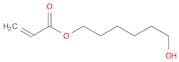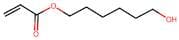
CAS 10095-14-4
:6-Hydroxyhexyl acrylate
Description:
6-Hydroxyhexyl acrylate is an organic compound classified as an acrylate ester, characterized by the presence of both a hydroxyl group and an acrylate functional group. Its molecular structure features a six-carbon alkyl chain with a hydroxyl group at the sixth carbon, which contributes to its hydrophilicity and reactivity. This compound is typically a colorless to pale yellow liquid with a characteristic acrylate odor. It is soluble in organic solvents and exhibits moderate solubility in water due to the hydroxyl group. 6-Hydroxyhexyl acrylate is known for its ability to participate in free radical polymerization, making it valuable in the production of polymers and copolymers for various applications, including coatings, adhesives, and sealants. Additionally, its hydroxyl functionality allows for further chemical modifications, enhancing its utility in formulating materials with specific properties. Safety considerations include handling it in well-ventilated areas and using appropriate personal protective equipment, as it may cause skin and eye irritation.
Formula:C9H16O3
InChI:InChI=1S/C9H16O3/c1-2-9(11)12-8-6-4-3-5-7-10/h2,10H,1,3-8H2
InChI key:InChIKey=OCIFJWVZZUDMRL-UHFFFAOYSA-N
SMILES:C(COC(C=C)=O)CCCCO
Synonyms:- SYA 006
- 2-Propenoic acid, 6-hydroxyhexyl ester
- 6-Hydroxyhexyl acrylate
- 1,6-Hexanediol monoacrylate
Sort by
Purity (%)
0
100
|
0
|
50
|
90
|
95
|
100
Found 4 products.
2-Propenoic acid, 6-hydroxyhexyl ester
CAS:Formula:C9H16O3Purity:95%Color and Shape:LiquidMolecular weight:172.2215SYA 006
CAS:SYA 006 可用于制作眼科手术的粘合剂。Formula:C9H16O3Purity:≥98%Color and Shape:SolidMolecular weight:172.226-Hydroxyhexyl prop-2-enoate
CAS:6-Hydroxyhexyl prop-2-enoate is a fatty acid that is used as a biomarker for oxidative injury. It is also known to induce growth factor and reactive oxygen species (ROS) production in human serum, which can lead to inflammatory diseases. 6-Hydroxyhexyl prop-2-enoate has been shown to react with Toll-like receptors (TLRs), causing mitochondrial membrane potential changes and the release of proinflammatory cytokines. This compound has been used as a diagnostic marker for choroidal neovascularization, which is characterized by light exposure and an increase in growth factors such as vascular endothelial growth factor (VEGF).
Formula:C9H16O3Purity:Min. 95%Molecular weight:172.22 g/molRef: 3D-KAA09514
Discontinued product