CAS 101-60-0
:Porphyrin
Description:
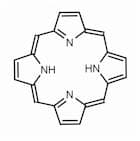
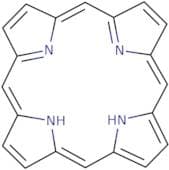
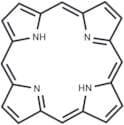
Porphyrin, with the CAS number 101-60-0, is a cyclic organic compound characterized by its large, planar structure composed of four pyrrole rings interconnected by methine bridges. This unique arrangement allows porphyrins to coordinate with metal ions, forming metalloporphyrins, which are crucial in biological systems, such as hemoglobin and chlorophyll. Porphyrins exhibit strong absorption in the visible region of the electromagnetic spectrum, leading to their vibrant colors, which are often used in dyes and pigments. They are typically soluble in organic solvents and exhibit a high degree of stability under various conditions. Additionally, porphyrins can participate in various chemical reactions, including oxidation and reduction, making them valuable in catalysis and photodynamic therapy. Their ability to form complexes with metals also underpins their role in various biochemical processes, including electron transfer and oxygen transport. Overall, porphyrins are significant in both biological and industrial applications due to their versatile chemical properties and structural characteristics.
Formula:C20H14N4
InChI:InChI=1S/C20H14N4/c1-2-14-10-16-5-6-18(23-16)12-20-8-7-19(24-20)11-17-4-3-15(22-17)9-13(1)21-14/h1-12,21,24H/b13-9-,14-10-,15-9?,16-10?,17-11-,18-12-,19-11?,20-12?
InChI key:InChIKey=RKCAIXNGYQCCAL-YYOYBPFYSA-N
SMILES:C1=2C=C3N=C(C=C3)C=C4NC(=CC5=NC(=CC(N1)=CC2)C=C5)C=C4
Synonyms:- 21,22,23,24-Tetraazapentacyclo[16.2.1.13,6.18,11.113,16]tetracosa-1,3,5,7,9,11(23),12,14,16,18(21),19-undecaene
- 21,22,23,24-Tetraazapentacyclo[16.2.1.1<sup>3,6</sup>.1<sup>8,11</sup>.1<sup>13,16</sup>]tetracosa-1,3,5,7,9,11(23),12,14,16,18(21),19-undecaene
- 21H,23H-Porphin
- 21H,23H-Porphine
- 21H,23H-porfina
- Porphine
- Porphyrin
- Porphin
Sort by
Purity (%)
0
100
|
0
|
50
|
90
|
95
|
100
Found 4 products.
21H,23H-Porphine
CAS:21H,23H-Porphine is a porphyrin that is structurally similar to chlorin. It has been shown to have antimicrobial activity and redox potentials. Porphyrins are synthesized by bacteria and used as an electron sink in photosynthesis. 21H,23H-Porphine has been shown to produce light emission upon reaction with nitric acid and it reacts with nitrogen atoms in the cell nucleus. 21H,23H-Porphine is a model system for studying the reaction mechanism of porphyrins.
Formula:C20H14N4Purity:Min. 95%Color and Shape:PowderMolecular weight:310.35 g/molPorphine
CAS:Porphine (Porphyrin), the parent compound of the porphyrin family, plays a crucial role within biological systems.Formula:C20H14N4Color and Shape:SolidMolecular weight:310.35