CAS 101020-89-7
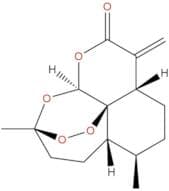
:artemisitene
- 3,12-Epoxy-12H-pyrano(4,3-j)-1,2-benzodioxepin-10(3H)-one, octahydro-3,6-dimethyl-9-methylene-, (3R-(3alpha,5abeta,6beta,8abeta,12beta,12aR*))-
- (3R,5aS,6R,12S,12aR)-3,6-dimethyl-9-methylideneoctahydro-3,12-epoxy[1,2]dioxepino[4,3-i]isochromen-10(3H)-one
- Artemisitene
- Methyl Artemisinin
- 3,12-Epoxy-12H-pyrano[4,3-j]-1,2-benzodioxepin-10(3H)-one, octahydro-3,6-dimethyl-9-methylene-, (3R,5aS,6R,8aS,12S,12aR)-
- Artemisiten
- (3R,5aS,6R,8aS,12S,12aR)-Octahydro-3,6-diMethyl-9-Methylene-3,12-epoxy-12H-pyrano[4,3-j]-1,2-benzodioxepin-10(3H)-one
- ArteMisitene (Methyl ArteMisinin)
- Dehydroqinghaosu
- Artemisinin and Piperaquine Tablets Impurity Ⅰ:(artemisitene)(3R,5aS,6R,8aS,12S,12aR)-Octahydro-3,6-diMethyl-9-Methylene-3,12-epoxy-12H-pyrano[4,3-j]-1,2-benzodioxepin-10(3H)-oneChemicalBook
Artemisitene (Methyl Artemisinin)
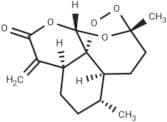
CAS:Formula:C15H20O5Color and Shape:White To Off-White SolidMolecular weight:280.32Artemisitene
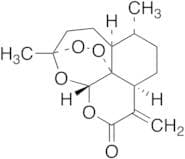
CAS:Artemisitene, an oxidized antimalarial derivative of Artemisinin, stems from precursors like Artemisinin B and Artemisinic acid.Formula:C15H20O5Purity:99.58%Color and Shape:SolidMolecular weight:280.32Ref: TM-T21065
1mg95.00€5mg187.00€1mL*10mM (DMSO)281.00€10mg329.00€25mg560.00€50mg800.00€100mg1,103.00€Artemisitene
CAS:Applications Artemisitene, the oxidized form of Artemisinin (A777500), exists as a minor constituent in an American variant of Artemisia annua. Artemisinin precursors are the important basic substances for biosynthesis of Artemisinin, including Artemisinic acid, Artemisinin B, Artemisitene, etc. An antimalarial agent.
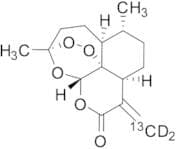
References Li, Y., et al.: Curr. Med. Chem., 10, 2197 (2003), Marrero-Ponce, Y., et al.: Bioorg. Med. Chem., 13, 1293 (2005), McMichael, A., et al.: Lancet, 367, 859 (2006),Formula:C15H20O5Color and Shape:NeatMolecular weight:280.329-Methylene-13C-D2 Artemisitene
CAS:Controlled ProductFormula:CC14D2H18O5Color and Shape:NeatMolecular weight:283.321Artemisitene
CAS:Artemisitene is a sesquiterpene lactone that has been used as an anti-infective agent. It has shown cytotoxic activity against human lung cells, and also inhibits the growth of human cervical cancer cells in tissue culture. Artemisitene is metabolized to artemisinin, which is the active form that binds to DNA and blocks cellular replication. Artemisitene's cytotoxic activity is due to its ability to inhibit the synthesis of DNA, RNA, and proteins by binding to ribosomes. Artemisitene can be administered orally or intravenously and shows good bioavailability following oral administration.
Formula:C15H20O5Purity:Min. 95%Color and Shape:PowderMolecular weight:280.32 g/mol