

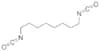
CAS 10124-86-4
:Octamethylene diisocyanate
Description:
Octamethylene diisocyanate (OMDI) is a chemical compound characterized by its two isocyanate functional groups attached to an octamethylene chain. It is a colorless to pale yellow liquid with a pungent odor, commonly used in the production of polyurethane elastomers, coatings, and adhesives. OMDI is known for its reactivity, particularly with nucleophiles such as alcohols and amines, leading to the formation of urethane linkages. This compound is typically handled with caution due to its potential health hazards, including respiratory irritation and sensitization. It is also classified as a hazardous material, necessitating appropriate safety measures during storage and handling. OMDI's unique structure allows for the development of materials with desirable mechanical properties and thermal stability, making it valuable in various industrial applications. Additionally, it is important to note that proper environmental controls should be in place to mitigate any risks associated with its use, as isocyanates can contribute to air pollution and have adverse effects on human health and the environment.
Formula:C10H16N2O2
InChI:InChI=1S/C10H16N2O2/c13-9-11-7-5-3-1-2-4-6-8-12-10-14/h1-8H2
InChI key:InChIKey=QUPKOUOXSNGVLB-UHFFFAOYSA-N
SMILES:C(CCCCN=C=O)CCCN=C=O
Synonyms:- 1,8-Diisocyanatooctane 98%
- 1,8-Octamethylene diisocyanate
- 1,8-Octanediyl diisocyanate
- 1,8-Octyldiisocyanate, GC 98%
- Isocyanic acid, octamethylene ester
- Octamethylene Diisocyanate
- Octane, 1,8-diisocyanato-
- 1,8-Diisocyanatooctane
Sort by
Purity (%)
0
100
|
0
|
50
|
90
|
95
|
100
Found 1 products.
1,8-Octyldiisocyanate
CAS:1,8-Octyldiisocyanate (DIDC) is a molecule that has both hydrophobic and hydrophilic properties. DIDC is a divalent hydrocarbon that can form hydrogen bonds and coordinate covalently with metal ions. The hydroxy group in the molecule reacts with oxygen, forming a hydroxyl group and water vapor. DIDC is used as an organic solvent in coatings, adhesives, sealants, and other industrial applications. It is also used to crosslink polymers such as polyurethanes to give them improved chemical resistance and durability. DIDC is also used for radiation protection by acting as a shield against gamma rays, x-rays, alpha particles, beta particles, or ultraviolet light. DIDC has biological properties when it interacts with DNA. It binds to the allyl carbonate group on the DNA backbone and prevents access of enzymes to DNA bases during replication. This inhibits protein synthesis and cell division, leading to cellFormula:C10H16N2O2Purity:Min. 97 Area-%Color and Shape:Clear LiquidMolecular weight:196.25 g/mol

