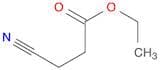
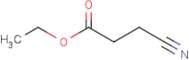
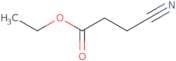
CAS 10137-67-4
:Propanoic acid, 3-cyano-, ethyl ester
Description:
Propanoic acid, 3-cyano-, ethyl ester, also known as ethyl 3-cyano-propanoate, is an organic compound characterized by its ester functional group and a cyano group attached to the propanoic acid backbone. It typically appears as a colorless to pale yellow liquid with a fruity odor. This compound is soluble in organic solvents and exhibits moderate polarity due to the presence of both the ester and cyano groups. Its molecular structure contributes to its reactivity, making it useful in various chemical syntheses, particularly in the production of pharmaceuticals and agrochemicals. The presence of the cyano group enhances its utility in nucleophilic reactions, while the ethyl ester moiety can participate in esterification and transesterification processes. Additionally, propanoic acid derivatives are known for their applications in flavoring and fragrance industries. Safety data indicates that it should be handled with care, as it may cause irritation to the skin and eyes. Overall, this compound is significant in organic synthesis and industrial applications.
Formula:C6H9NO2
InChI:InChI=1S/C6H9NO2/c1-2-9-6(8)4-3-5-7/h2-4H2,1H3
InChI key:InChIKey=BFSBTNGKMMFQNL-UHFFFAOYSA-N
SMILES:C(CCC#N)(OCC)=O
Synonyms:- 3-Cyanopropanoic acid ethyl ester
- 3-Cyanopropionic acid, ethyl ester
- Ethyl 3-cyanopropionate
- NSC 94973
- Propanoic Acid, 3-Cyano-, Ethyl Ester
- Propanoic acid, 3-cyano-, ethyl ester (9CI)
- Propionic acid, 3-cyano-, ethyl ester
- Ethyl 3-cyanopropanoate
Sort by
Purity (%)
0
100
|
0
|
50
|
90
|
95
|
100
Found 4 products.
Propanoic acid, 3-cyano-, ethyl ester
CAS:Formula:C6H9NO2Purity:97%Color and Shape:LiquidMolecular weight:127.1412Ethyl 3-cyanopropanoate
CAS:Ethyl 3-cyanopropanoate is an organic compound with the formula CH3C(O)CH2CN. It is a colorless liquid that boils at 100 °C. It is used in the synthesis of other organic compounds, such as oxazolidinones, cyclopropenes, and quinolizines. The yield can be increased to 98% by using a catalyst such as potassium tert-butoxide or zinc chloride in the reaction. The reaction proceeds through an elimination followed by an acid-catalyzed alkylation to afford the desired product. This process also results in a high yield of ethyl bromoacetate as a side product.Formula:C6H9NO2Purity:Min. 95%Color and Shape:PowderMolecular weight:127.14 g/mol