CAS 101691-27-4
:Barpisoflavone A
Description:
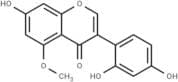
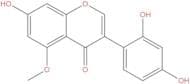
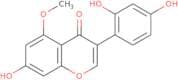
Barpisoflavone A, with the CAS number 101691-27-4, is a naturally occurring flavonoid compound that has garnered interest due to its potential biological activities. This substance is characterized by its flavone structure, which typically includes a chromone backbone with various hydroxyl and methoxy substituents that contribute to its chemical properties and reactivity. Barpisoflavone A is often studied for its antioxidant, anti-inflammatory, and potential anticancer properties, making it a subject of interest in pharmacological research. Its solubility and stability can vary depending on the solvent and environmental conditions, which is crucial for its application in biological systems. Additionally, the compound's interaction with biological targets, such as enzymes and receptors, is an area of ongoing investigation, as it may lead to the development of therapeutic agents. Overall, Barpisoflavone A exemplifies the diverse roles that flavonoids can play in both nature and medicine.
Formula:C16H12O6
InChI:InChI=1S/C16H12O6/c1-21-13-5-9(18)6-14-15(13)16(20)11(7-22-14)10-3-2-8(17)4-12(10)19/h2-7,17-19H,1H3
InChI key:InChIKey=TUTSVLUUGMNALO-UHFFFAOYSA-N
SMILES:O=C1C=2C(OC=C1C3=C(O)C=C(O)C=C3)=CC(O)=CC2OC
Synonyms:- 2-Hydroxyisoprunetin
- 3-(2,4-Dihydroxyphenyl)-7-hydroxy-5-methoxy-4H-1-benzopyran-4-one
- Barpisoflavone A
- BarpisoflavoneA
- 4H-1-Benzopyran-4-one, 3-(2,4-dihydroxyphenyl)-7-hydroxy-5-methoxy-
Sort by
Purity (%)
0
100
|
0
|
50
|
90
|
95
|
100
Found 3 products.
Barpisoflavone A
CAS:Barpisoflavone A possesses moderate estrogen partial agonistic activities and moderate antioxidant activities.Formula:C16H12O6Purity:98%Color and Shape:SolidMolecular weight:300.26Barpisoflavone A
CAS:Formula:C16H12O6Purity:95%~99%Color and Shape:Yellow powderMolecular weight:300.266Barpisoflavone A
CAS:Barpisoflavone A is a naturally derived bioflavonoid, which is an organic compound sourced from specific plant species. As a bioflavonoid, it is part of a diverse group of plant metabolites known for their polyphenolic structures and associated health benefits. Flavonoids like Barpisoflavone A are typically extracted from plant tissues, where they serve roles in UV filtration, symbiotic nitrogen fixation, and floral pigmentation, among other functions.
Formula:C16H12O6Purity:Min. 95%Molecular weight:300.26 g/molRef: 3D-BEA69127
Discontinued product