CAS 102-36-3
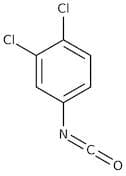
:3,4-Dichlorophenyl isocyanate
Description:
3,4-Dichlorophenyl isocyanate, with the CAS number 102-36-3, is an organic compound characterized by the presence of both isocyanate and dichlorophenyl functional groups. It appears as a colorless to pale yellow liquid with a pungent odor. This compound is known for its reactivity, particularly in forming urethanes and other derivatives through reactions with alcohols and amines. It is moderately soluble in organic solvents but has limited solubility in water. Due to the presence of the isocyanate group, it can be hazardous, exhibiting potential toxicity and irritant properties, particularly to the skin, eyes, and respiratory system. Proper handling and safety precautions are essential when working with this substance, as it can also undergo hydrolysis in the presence of moisture, leading to the formation of 3,4-dichlorophenyl carbamate. Its applications are primarily found in the synthesis of various chemical intermediates and in the production of pesticides and pharmaceuticals.
Formula:C7H3Cl2NO
InChI:InChI=1/C7H3Cl2NO/c8-6-2-1-5(10-4-11)3-7(6)9/h1-3H
InChI key:InChIKey=MFUVCHZWGSJKEQ-UHFFFAOYSA-N
SMILES:N(=C=O)C1=CC(Cl)=C(Cl)C=C1
Synonyms:- 1,2-Dichloro-4-Isocyanato-Benzen
- 1,2-Dichloro-4-isocyanatobenzene
- 1,2-Dichloro-4-phenyl isocyanate
- 3,4-Dichlorfenylisokyanat
- 3,4-Dichloro phenyl isocyanate
- 3,4-Dichlorobenzene isocyanate
- 3,4-Dichloroisocyanatobenzene
- 3,4-Dichlorphenylisocyanate
- Benzene,1,2-Dichloro-4-Isocyanato
- Benzene,1,2-Dichloro-4Isocyanato-
- Dcpi
- Dichlorophenyl-3,4-isocyanate
- Isocyanic acid 3,4-dichlorophenyl ester
- NSC 76605
- 3,4-Dichlorophenyl isocyanate
- 3,4-Dichlorophenyl #niso-cyanate
- 3,4-DICHLOROPHENYLCARBIMIDE
- 3,4-DCPI
- 3,4-DichloroPhenylIsocynate
- Dichloroisocyanatobenzene
- dichlorophenylisocyanate(non-specificname)
- Isocyanicacid-3,4-dichtorophenyl ester
- Phenylisocyanate,dichloro-
- See more synonyms
Sort by
Purity (%)
0
100
|
0
|
50
|
90
|
95
|
100
Found 4 products.
3,4-Dichlorophenyl isocyanate, 97%
CAS:Methyl-labeled diuron was prepared by the reaction of 3,4-dichlorophenyl- isocyanate with C 'labeled dimethylamine.Substituted urea derivatives were prepared by reacting 3,4-dichlorophenyl isocyanate with amino acids, dipeptides, histamine. The R- and S-isomers and RS-racemate of MBPU were synthesizFormula:C7H3Cl2NOPurity:97%Color and Shape:Crystals or fused solid, White to pale creamMolecular weight:188.013,4-Dichlorophenyl isocyanate
CAS:3,4-Dichlorophenyl isocyanateFormula:C7H3Cl2NOPurity:97%Color and Shape: hazy. white liquid/ white low-melting solid fused solidMolecular weight:188.01082g/mol3,4-Dichlorophenyl Isocyanate
CAS:Formula:C7H3Cl2NOPurity:>98.0%(GC)(T)Color and Shape:White to Almost white powder to lumpMolecular weight:188.013,4-Dichlorophenyl isocyanate
CAS:3,4-Dichlorophenyl isocyanate is a reactive intermediate that features a hydroxyl group. 3,4-Dichlorophenyl isocyanate has been found to cause neurotoxicity in rats and mice by inhibiting the enzyme acetylcholinesterase (AChE) and causing an accumulation of acetylcholine (ACh). The activity of this molecule has been demonstrated using monoclonal antibodies against AChE. 3,4-Dichlorophenyl isocyanate reacts with lysine residues on proteins to form acrylate esters. This allows for the formation of crosslinks between proteins and DNA, which can lead to cancer.Formula:C7H3Cl2NOPurity:Min. 95%Color and Shape:PowderMolecular weight:188.01 g/mol