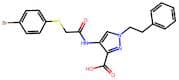
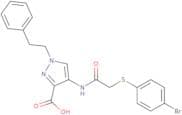
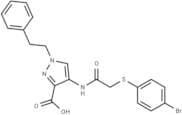
CAS 1021497-97-1
:KR-33494
Description:
KR-33494, identified by its CAS number 1021497-97-1, is a chemical compound that has garnered interest in various fields, particularly in medicinal chemistry. While specific details about its characteristics may not be widely available, compounds like KR-33494 typically exhibit unique structural features that contribute to their biological activity. These may include specific functional groups, stereochemistry, and molecular weight that influence their solubility, stability, and reactivity. Additionally, such compounds are often evaluated for their pharmacological properties, including efficacy, toxicity, and mechanism of action, which are crucial for their potential therapeutic applications. The synthesis and characterization of KR-33494 would involve standard techniques such as NMR spectroscopy, mass spectrometry, and chromatography to confirm its identity and purity. As research progresses, more detailed information regarding its specific applications and characteristics may emerge, contributing to a better understanding of its role in scientific and medical contexts.
Formula:C20H18BrN3O3S
Synonyms:- KR-33494
- 4-[[2-[(4-Bromophenyl)thio]acetyl]amino]-1-(2-phenylethyl)-1H-pyrazole-3-carboxylic acid
- 4-[2-(4-bromo-phenylsulfanyl)-acetylamino]-1-phenethyl-1H-pyrazole-3-carboxylic acid
- KM-819
- 1H-Pyrazole-3-carboxylic acid, 4-[[2-[(4-bromophenyl)thio]acetyl]amino]-1-(2-phenylethyl)-
- KR-33493
- 4-(2-(4-bromophenylthio)acetamido)-1-phenethyl-1H-pyrazole-3-carboxylic acid
- KR33494;KR 33494
- CS-2472
Sort by
Purity (%)
0
100
|
0
|
50
|
90
|
95
|
100
Found 3 products.
KR- 33494
CAS:KR-334 is a small molecule that has been shown to have neuroprotective effects in rats with Parkinson's disease. It is a member of the annexin family and binds to a specific site on the surface of dopaminergic neurons, which may be involved in the death pathway. KR-334 can also inhibit neuronal cell death by inhibiting apoptosis. The most notable effect is an increase in striatal dopamine levels, which has been demonstrated using immunofluorescence and serum biochemistry tests. This drug also activates dopaminergic neurons by increasing the number of dopamine receptors on their surface. KR-334 has been shown to be effective in animal models and should be tested for treatment of human patients with Parkinson's disease.
Formula:C20H18BrN3O3SPurity:Min. 95%Molecular weight:460.35 g/molKR-33493
CAS:KR-33493 is a FAS-associated factor 1 (FAF1) inhibitor and can be used in studies about Parkinson's disease.Formula:C20H18BrN3O3SPurity:99.96%Color and Shape:SolidMolecular weight:460.34