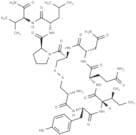
CAS 1021701-88-1
:Oxytocin, 9-L-valinamide-
Description:
Oxytocin, 9-L-valinamide, identified by the CAS number 1021701-88-1, is a synthetic analog of the naturally occurring peptide hormone oxytocin. This compound is characterized by its structural modification, which includes the substitution of the terminal amino acid with L-valinamide, enhancing its stability and bioactivity. Oxytocin itself is a nonapeptide composed of nine amino acids, primarily known for its roles in social bonding, reproduction, and childbirth. The modified version, 9-L-valinamide, is designed to improve pharmacological properties, such as increased resistance to enzymatic degradation and potentially altered receptor binding affinity. This compound may exhibit similar physiological effects to oxytocin, including modulation of social behaviors and emotional responses. Its applications could extend to therapeutic uses in conditions related to social deficits or reproductive health. As with many peptide analogs, the synthesis and characterization of 9-L-valinamide involve careful consideration of its stability, solubility, and biological activity to ensure efficacy in potential clinical applications.
Formula:C46H72N12O12S2
Synonyms:- (Val9)-Oxytocin
- Oxytocin, 9-L-valinamide-
Sort by
Purity (%)
0
100
|
0
|
50
|
90
|
95
|
100
Found 2 products.
(Val⁹)-Oxytocin
CAS:The oxytocin and conopressin T analog OT G9V (or conopressin T L7P/R8L) showed an increased affinity for the V1a receptor and weak V2 receptor binding, whereas native conopressin T (CYIQNCLRV-NH2) binds only to OT and V1a receptors.Formula:C46H72N12O12S2Color and Shape:WhiteMolecular weight:1049.27Val9-Oxytocin
CAS:Val9-Oxytocin, an Oxytocin analog where Gly9 is substituted with Val9 [1], functions as a complete antagonist of the vasopressin (V1a) receptor.Formula:C46H72N12O12S2Purity:98%Color and Shape:SolidMolecular weight:1049.27