CAS 102450-75-9
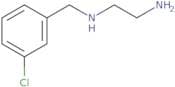
:N-(3-chlorobenzyl)ethane-1,2-diamine
Description:
N-(3-chlorobenzyl)ethane-1,2-diamine is an organic compound characterized by its amine functional groups and a chlorobenzyl substituent. It features a two-carbon ethane backbone with amino groups (-NH2) attached to the first and second carbon atoms, and a 3-chlorobenzyl group linked to the nitrogen atom of the first amine. This structure imparts both hydrophilic and hydrophobic characteristics, making it potentially useful in various chemical applications, including as a building block in pharmaceuticals or agrochemicals. The presence of the chlorine atom enhances its reactivity and may influence its biological activity. The compound is likely to be a solid at room temperature, with moderate solubility in polar solvents due to the amino groups. Its reactivity can be attributed to the amine groups, which can participate in various chemical reactions, such as nucleophilic substitutions or coupling reactions. Safety data should be consulted for handling, as amines can be irritants and may pose health risks.
Sort by
Purity (%)
0
100
|
0
|
50
|
90
|
95
|
100
Found 2 products.
N-(3-Chlorobenzyl)ethane-1,2-diamine
CAS:Cryptosporidium is a parasite that causes cryptosporidiosis, an infection of the small intestine. N-(3-Chlorobenzyl)ethane-1,2-diamine (NCEA) is a drug candidate for cryptosporidiosis treatment. It targets human and animal Cryptosporidium spp., which are zoonotic pathogens that can be found in the environment. NCEA inhibits protein synthesis by binding to transportin and blocking its nuclear localization signal. This drug also has antiviral properties that may be due to its ability to inhibit the activity of human immunodeficiency virus type 1 (HIV-1). The drug discovery process for NCEA includes annotation of the genome sequence, screening for drugs against target proteins, and designing novel vaccines based on sequence data.Formula:C9H13ClN2Purity:Min. 95%Molecular weight:184.67 g/mol