CAS 102645-35-2
:4-Pyridinecarbonitrile, 2,5-dichloro-
Description:
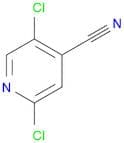
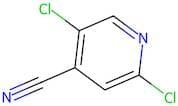
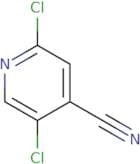
4-Pyridinecarbonitrile, 2,5-dichloro- is an organic compound characterized by its pyridine ring structure substituted with a cyano group and two chlorine atoms. The presence of the cyano group (-C≡N) contributes to its reactivity and potential applications in various chemical syntheses. The chlorine substituents at the 2 and 5 positions of the pyridine ring enhance its electrophilic properties, making it useful in the development of pharmaceuticals and agrochemicals. This compound is typically a solid at room temperature and may exhibit moderate solubility in polar organic solvents. Its molecular structure suggests potential for hydrogen bonding and interactions with other chemical species, which can influence its behavior in reactions. Safety data indicates that, like many chlorinated compounds, it should be handled with care due to potential toxicity and environmental concerns. Overall, 4-Pyridinecarbonitrile, 2,5-dichloro- is a valuable compound in synthetic organic chemistry, particularly in the fields of medicinal chemistry and material science.
Formula:C6H2Cl2N2
Sort by
Purity (%)
0
100
|
0
|
50
|
90
|
95
|
100
Found 4 products.
4-Pyridinecarbonitrile, 2,5-dichloro-
CAS:Formula:C6H2Cl2N2Purity:97%Color and Shape:SolidMolecular weight:172.99952,5-Dichloroisonicotinonitrile
CAS:2,5-DichloroisonicotinonitrilePurity:96%Color and Shape:SolidMolecular weight:173.00g/mol2,5-Dichloroisonicotinonitrile
CAS:2,5-Dichloroisonicotinonitrile is a tyrosine kinase inhibitor that is used to treat autoimmune diseases. The compound inhibits the function of the enzyme tyrosine kinase by binding to its ATP binding site. 2,5-Dichloroisonicotinonitrile is also a potent antibacterial agent with activity against both Gram-positive and Gram-negative bacteria. It has been shown to be active against Mycobacterium tuberculosis, methicillin-resistant Staphylococcus aureus (MRSA), and Clostridium perfringens. The drug can cause adverse effects such as pulmonary fibrosis and thyroiditis in animal studies.Formula:C6H2Cl2N2Purity:Min. 95%Molecular weight:173 g/mol