CAS 10268-69-6
:Benzoic acid, 2-amino-, phenyl ester
Description:
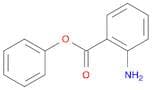
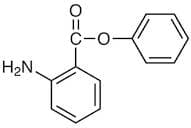
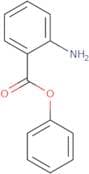
Benzoic acid, 2-amino-, phenyl ester, also known as phenyl 2-amino benzoate, is an organic compound characterized by the presence of both an amino group and an ester functional group. It features a benzene ring attached to a carboxylic acid moiety, where the hydrogen of the carboxylic acid is replaced by a phenyl group. This compound typically appears as a white to off-white crystalline solid and is soluble in organic solvents such as ethanol and ether, but has limited solubility in water due to its hydrophobic aromatic structure. The presence of the amino group can impart basic properties, allowing it to participate in various chemical reactions, including acylation and amidation. Benzoic acid derivatives, including this compound, are often studied for their potential applications in pharmaceuticals, agrochemicals, and as intermediates in organic synthesis. Safety data indicates that, like many organic compounds, it should be handled with care, as it may cause irritation upon contact with skin or eyes.
Formula:C13H11NO2
InChI:InChI=1S/C13H11NO2/c14-12-9-5-4-8-11(12)13(15)16-10-6-2-1-3-7-10/h1-9H,14H2
InChI key:InChIKey=ZBFSYQBEXZGTAX-UHFFFAOYSA-N
SMILES:C(OC1=CC=CC=C1)(=O)C2=C(N)C=CC=C2
Synonyms:- 2-Aminobenzoic acid phenyl ester
- Ai3-36600
- Anthranilic acid, phenyl ester
- Benzoic acid, 2-amino-, phenyl ester
- Phenyl 2-Aminobenzoate
- Phenyl o-aminobenzoate
- Phenyl anthranilate
Sort by
Purity (%)
0
100
|
0
|
50
|
90
|
95
|
100
Found 4 products.
Benzoic acid, 2-amino-, phenyl ester
CAS:Formula:C13H11NO2Purity:95%Color and Shape:SolidMolecular weight:213.2319Phenyl 2-Aminobenzoate
CAS:Formula:C13H11NO2Purity:>98.0%(GC)Color and Shape:White to Orange to Green powder to crystalMolecular weight:213.24Phenyl Anthranilate
CAS:Controlled ProductPhenyl anthranilate is an organic compound with the chemical formula C9H6O2. It is a white solid that is soluble in most organic solvents. Phenyl anthranilate has been shown to have anti-inflammatory effects, which may be due to its ability to inhibit hydroxide-induced inflammatory skin diseases. It also has insulin sensitizing properties and can be used as a potential therapeutic agent for insulin resistance. The synthesis of phenyl anthranilate involves the oxidation of benzene by sodium hydroxide in the presence of chloride ions and metal surfaces, followed by the reduction of the resulting hydroxybenzaldehyde with hydrazine and subsequent decarboxylation of the monocarboxylic acid product.
Formula:C13H11NO2Purity:Min. 95%Molecular weight:213.24 g/mol