CAS 10292-61-2
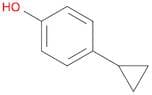
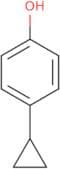
:4-Cyclopropylphenol
Description:
4-Cyclopropylphenol is an organic compound characterized by a phenolic structure with a cyclopropyl group attached to the para position of the benzene ring. Its molecular formula is C10H10O, indicating the presence of ten carbon atoms, ten hydrogen atoms, and one oxygen atom. This compound typically appears as a colorless to pale yellow liquid or solid, depending on the temperature and purity. 4-Cyclopropylphenol exhibits properties typical of phenolic compounds, including moderate solubility in organic solvents and limited solubility in water due to its hydrophobic cyclopropyl group. It is known for its potential applications in the synthesis of pharmaceuticals and agrochemicals, as well as serving as an intermediate in organic synthesis. Additionally, the presence of the cyclopropyl group can influence the compound's reactivity and biological activity, making it of interest in medicinal chemistry. Safety data should be consulted for handling and exposure guidelines, as with any chemical substance.
Formula:C9H10O
InChI:InChI=1S/C9H10O/c10-9-5-3-8(4-6-9)7-1-2-7/h3-7,10H,1-2H2
SMILES:C1CC1c1ccc(cc1)O
Synonyms:- 4-Cyclopropyl phenol
- (4-Hydroxyphenyl)cyclopropane
- Phenol, 4-cyclopropyl-
Sort by
Purity (%)
0
100
|
0
|
50
|
90
|
95
|
100
Found 4 products.
4-Cyclopropylphenol
CAS:4-CyclopropylphenolPurity:98%Color and Shape:SolidMolecular weight:134.18g/mol4-Cyclopropylphenol
CAS:4-Cyclopropylphenol is an antimicrobial agent that belongs to the group of phenols. It has been shown to have mutagenic properties and is used in chemical studies. 4-Cyclopropylphenol is activated by reaction with a benzene molecule, which binds to the functional groups on the phenol, forming a covalent bond. This activation process requires an input of energy in order to break the benzene ring and form the reactive species. The elimination of 4-cyclopropylfhenol from solution also requires energy input as it leaves as a gas. The mutagenic properties of 4-cyclopropylfhenol are due to its ability for interaction with DNA, which is based on thermodynamic and kinetic theory.Formula:C9H10OPurity:Min. 95%Molecular weight:134.18 g/mol