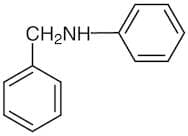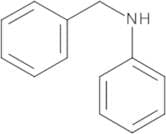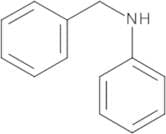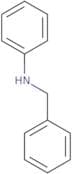
CAS 103-32-2
:Benzylaniline
- Benzenamine, N-(phenylmethyl)-
- Benzylamine, N-Phenyl-
- Benzylaniline
- Benzylphenylamine
- N-Benzyl-N-phenylamine
- N-Benzylanilin
- N-Benzylaniline
- N-Benzylbenzenamine
- N-Benzylphenylamine
- N-Phenyl-N-benzylamine
- N-Phenylbenzenemethanamine
- N-Phenylbenzylamine
- N-bencilanilina
- Nsc 147284
- Phenylbenzylamine
- N-benzylanilinium
- See more synonyms
N-Phenylbenzylamine
CAS:Formula:C13H13NPurity:>98.0%(GC)Color and Shape:White or Colorless to Yellow powder to lump to clear liquidMolecular weight:183.25N-Phenylbenzylamine
CAS:A series of N-Phenylbenzylamine (Benzenemethanamine) as potential cytotoxic and antimitotic agents acting by inhibition of tubulin polymerizationFormula:C13H13NPurity:98.75%Color and Shape:Colorless To Pale Yellow Crystalline PowderMolecular weight:183.25N-Phenylbenzylamine
CAS:N-PhenylbenzylamineFormula:C13H13NPurity:99%Color and Shape:Solid-Low MeltMolecular weight:183.24902N-Benzylaniline
CAS:Controlled ProductApplications N-Benzylaniline is a major metabolite of the antihistaminic Antazoline and other N-substituted benzylanilines.
References Ali, H.M. et al.: J. Chrom., 202, 287 (1980); Kucukguzel, I. et al.: J. Fac. Pharm. Istan. Univ., 32, 69 (1998);Formula:C13H13NColor and Shape:NeatMolecular weight:183.25N-Benzylaniline
CAS:N-Benzylaniline is an oxidation catalyst that has been shown to selectively catalyze the acylation of amines with diethyl succinate in the presence of sodium carbonate. This reaction leads to the formation of diazonium salts, which are then reacted with a hydroxyl group to form a diazo compound. The diazo compounds can be used as intermediates for the synthesis of different organic compounds. N-Benzylaniline has been shown to be a solid catalyst in flow systems, and its use is advantageous because it is less toxic than other catalysts. N-Benzylaniline also has structural features that provide insight into its reactivity, such as intramolecular hydrogen bonds and hydrochloric acid groups.
Formula:C13H13NPurity:Min. 95%Molecular weight:183.25 g/mol