CAS 103145-74-0
:N-cbz-pro-leu-gly hydroxamate
Description:
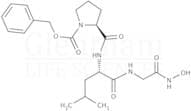
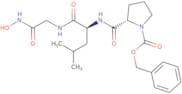
N-Cbz-pro-leu-gly hydroxamate is a chemical compound characterized by its structure, which includes a carbobenzyloxy (Cbz) protecting group, a proline (pro) residue, a leucine (leu) residue, and a glycine (gly) residue, along with a hydroxamate functional group. This compound is typically used in peptide synthesis and medicinal chemistry due to its ability to form stable complexes with metal ions and its potential as a bioactive molecule. The hydroxamate group is known for its chelating properties, which can enhance the compound's biological activity. Additionally, the presence of the Cbz group allows for selective deprotection during synthetic procedures, making it a valuable intermediate in the preparation of more complex peptides or pharmaceutical agents. The compound's solubility, stability, and reactivity can vary depending on the specific conditions, such as pH and solvent, which are crucial for its application in research and development. Overall, N-Cbz-pro-leu-gly hydroxamate represents a versatile building block in organic and medicinal chemistry.
Formula:C21H30N4O6
Synonyms:- Z-Pro-Leu-Gly-NHOH
Sort by
Purity (%)
0
100
|
0
|
50
|
90
|
95
|
100
Found 2 products.
Z-Pro-Leu-Gly-NHOH
CAS:Z-Pro-Leu-Gly-NHOH is a proteolytic enzyme that hydrolyzes collagen, an extracellular matrix protein. It is used in the workstation to extract proteins from biological samples such as mesenteric tissue or holothuria. The immobilized enzyme is prepared and stored on the workstation. The sample is then extracted by adding hydroxamic acids in a liquified state and separating the mixture using size exclusion chromatography. The proteolytic activity of Z-Pro-Leu-Gly-NHOH can be measured by its ability to hydrolyze collagen under alkaline conditions.
Formula:C21H30N4O6Purity:Min. 95%Molecular weight:434.49 g/mol