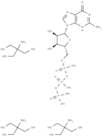
CAS 103192-46-7
:guanosine 5'-triphosphate tris
Description:
Guanosine 5'-triphosphate tris, commonly referred to as GTP tris, is a nucleotide that plays a crucial role in cellular metabolism and signaling. It consists of a guanine base, a ribose sugar, and three phosphate groups, making it a key molecule in energy transfer and protein synthesis. GTP is involved in various biochemical processes, including serving as a substrate for RNA synthesis during transcription and acting as a signaling molecule in G-protein coupled receptor pathways. The "tris" designation indicates the presence of three phosphate groups, which are linked by high-energy bonds, allowing GTP to release energy upon hydrolysis. This compound is also important in the regulation of cellular activities, influencing processes such as cell division and signal transduction. In terms of solubility, GTP is typically soluble in water, facilitating its role in biological systems. Its stability and reactivity are influenced by the presence of the phosphate groups, which can undergo hydrolysis and phosphorylation reactions, making GTP a vital component in the biochemistry of living organisms.
Formula:C10H16N5O14P3
Sort by
The purity filter is not visible because current products do not have associated purity data for filtering.
Found 2 products.
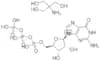
Guanosine triphosphate tritris
CAS:Guanosine triphosphate tritris (GTP tritris) serves as a crucial enhancer in myocyte differentiation, playing an essential role in regulating miRNA-muscle regulatory factors. It promotes the release of exosomes rich in guanine and guanine-derived molecules, and is considered an activation precursor for RNA synthesis. In mitochondrial functionality, GTP is involved in the entry of proteins into the matrix, which is vital for various regulatory pathways. It initiates peptide synthesis by facilitating the binding of formylmethionine-tRNA to the ribosome, and aids in polypeptide chain elongation. Additionally, GTP acts as a carrier for phosphates and pyrophosphates, channeling chemical energy into specific biosynthetic pathways. It activates signal transduction G proteins, regulates cellular processes such as proliferation and differentiation, and its hydrolysis by small GTPases (including Ras and Rho) is indispensable for both proliferation and apoptosis. Furthermore, the small GTPase Rab assists in vesicle docking, fusion, and formation. Beyond signal transduction, GTP is also an energy-rich precursor in the biosynthesis of DNA and RNA enzymes.Formula:C22H49N8O23P3Color and Shape:SolidMolecular weight:886.59Guanosine 5-triphosphate Tritris Salt
CAS:Formula:C10H16N5O14P3C4H11NO3Molecular weight:523.18 : 121.14