CAS 10323-20-3
:D(-)-Arabinose
Description:
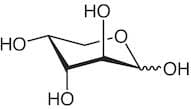
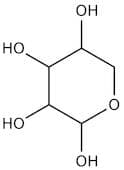
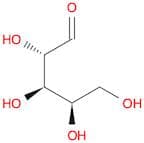
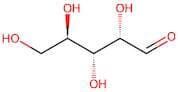
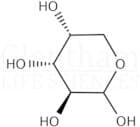
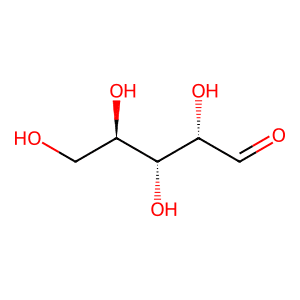
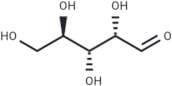
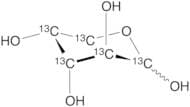
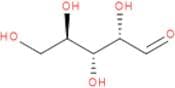
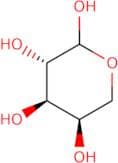
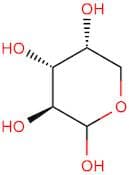
D(-)-Arabinose is a naturally occurring aldopentose sugar, classified as a monosaccharide. It is a white, crystalline solid that is soluble in water, exhibiting a sweet taste. This sugar is an important component in various polysaccharides and is found in some plant gums and hemicelluloses. D(-)-Arabinose has a molecular formula of C5H10O5 and features multiple hydroxyl (-OH) groups, which contribute to its reactivity and solubility. It exists in both linear and cyclic forms, with the cyclic form being predominant in solution. The sugar is known for its role in carbohydrate metabolism and can be utilized in various biochemical applications, including as a substrate in fermentation processes. Additionally, D(-)-Arabinose is of interest in research related to glycoproteins and polysaccharides, as well as in the study of carbohydrate structure and function. Its CAS number, 10323-20-3, is used for identification in chemical databases and regulatory contexts.
Formula:C5H10O5
InChI:InChI=1/C5H10O5/c6-2-1-10-5(9)4(8)3(2)7/h2-9H,1H2/t2-,3-,4+,5-/m0/s1
InChI key:InChIKey=PYMYPHUHKUWMLA-WDCZJNDASA-N
SMILES:[C@@H]([C@@H](CO)O)([C@@H](C=O)O)O
Synonyms:- (-)-Arabinose
- .beta.-D-Arabinopyranose
- <span class="text-smallcaps">D</span>-(-)-Arabinose
- Anhydroarabinose
- Arabinose(D)
- Arabinose, <span class="text-smallcaps">D</span>-
- D-arabinopyranose
- D-arabinosa
- Pectin sugar
- Pectinose
- alpha-D-arabinopyranose
- beta-D-(-)-Arabinose
- beta-L-arabinopyranose
- D-(-)-Arabinose
- D-Arabinose
- D-(-)-Arabinose
- D-Arabinose
- D(-)-Gum sugar D(-)-Pectinose
- D-Arabinose (9CI)
- Pentopyranose
- D-(-)-ABABINOSE
- D(-)-ArabinoseGr
- DGumsugar
- ARABINOSE, D-(-)-(RG)
- DPectinsugar
- DPectinose
- See more synonyms
Sort by
Purity (%)
0
100
|
0
|
50
|
90
|
95
|
100
Found 12 products.
D-(-)-Arabinose
CAS:Formula:C5H10O5Purity:>99.0%(HPLC)Color and Shape:White to Light yellow powder to crystalMolecular weight:150.13D-(-)-Arabinose, 99%
CAS:D-(-)-Arabinose is used in culture media for some bacteria. It serves as a component of biopolymers such as hemicellulose and pectin. In the synthetic biology laboratory, it is employed as a reversible switch for protein expression under the Pbad promoter (i.e. part of plasmids) in E. coli. Further,Formula:C5H10O5Purity:99%Color and Shape:White to cream, PowderMolecular weight:150.13D-Arabinose
CAS:D-ArabinoseFormula:C5H10O5Purity:97%Color and Shape: white solidMolecular weight:150.1299g/molD-Arabinose
CAS:Formula:C5H10O5Purity:(HPLC) ≥ 98.5%Color and Shape:White to almost white powderMolecular weight:150.13D-Arabinose
CAS:Inexpensive starting material for chiral synthesis.Formula:C5H10O5Purity:99.52%Color and Shape:White To Off-White PowderMolecular weight:150.13D-Arabinose
CAS:Controlled ProductStability Hygroscopic
Applications D-Arabinose is a pharmaceutical intermediate and a food addictive. A reducing sugar and pentose analog of D-ribose.
References Chen, X., et al.: Int. J. Biol. Macromol., 104, 1294 (2017); Konuchova, M., et al.: Chemicke Listy, 110, 491 (2016); Pelckmans, M., et al.: ACS Catalysis, 8, 4201 (2018); Haghparast, S., et al.: J. Agric. Sci. Techn., 15, 87 (2013)Formula:C5H10O5Color and Shape:White SolidMolecular weight:150.13D-Arabinose
CAS:The aldopentose D-arabinose also known as aloinose, Aloe sugar, pectinose (Collins, 2006), is not as common in nature as its enantiomer L-arabinose. D-arabinose is a component of the polysaccharide in Aloe (Haynes, 1963) and is present in the unripe (green) tomato (Lycopersicon esculentum) (Chandra, 2009). The major cell wall carbohydrate of Corynebacterineae (a bacterial group that includes tuberculosis, leprosy and diphtheriae) is an arabinogalactan, a branched polysaccharide that is essential for the physiology of these bacteria. The arabinogalactan complex is often referred to as mycolyl-arabinogalactan-peptidoglycan complex. As arabinogalactan is made up of D-arabinofuranosyl and D-galactofuranosyl residues, a complete understanding of their biosynthethic pathways could provide suitable targets for new chemotherapeutics (Meniche, 2008).Formula:C5H10O5Purity:Min. 99 Area-%Color and Shape:PowderMolecular weight:150.13 g/molD-(-)-Arabinose
CAS:Formula:C5H10O5Purity:95%Color and Shape:Solid, White - Very pale reddish yellow powderMolecular weight:150.13D-Arabinose extrapure
CAS:Formula:C5H10O5Color and Shape:White to off white, Crystalline powder, Clear, Colourless to pale yellowMolecular weight:150.13