CAS 1034343-98-0
:Graphene
Description:
Graphene is a single layer of carbon atoms arranged in a two-dimensional honeycomb lattice, renowned for its exceptional properties. It exhibits remarkable electrical conductivity, making it an excellent material for electronic applications. Graphene is also known for its outstanding mechanical strength, being approximately 200 times stronger than steel while remaining lightweight and flexible. Additionally, it has high thermal conductivity, allowing efficient heat dissipation. The substance is transparent, absorbing only a small fraction of light, which makes it suitable for various optical applications. Graphene's large surface area enhances its potential for use in energy storage, such as batteries and supercapacitors. Furthermore, it demonstrates unique chemical reactivity, enabling functionalization for specific applications in nanotechnology and materials science. Its versatility has sparked interest in fields ranging from electronics to biomedicine, although challenges in large-scale production and integration into existing technologies remain. Overall, graphene's unique combination of properties positions it as a transformative material in modern science and engineering.
Formula:C
Synonyms:- Graphene P
- Graphenes
- S 2194
- N 002-001N
- Graphene
Sort by
Purity (%)
0
100
|
0
|
50
|
90
|
95
|
100
Found 28 products.
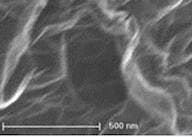
Graphene powder (1-5 layers thick x 0.5-5 microns wide, surface area 650-750 m²/g)
CAS:<p>Graphene powder (1-5 layers thick x 0.5-5 microns wide, surface area 650-750 m2/g)</p>Formula:CColor and Shape:black pwdr.Molecular weight:12.011Graphene film, monolayer, on Si/SiO₂ wafer (1cm x1cm), by CVD
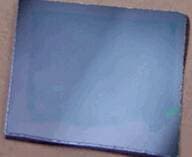
CAS:<p>Graphene film, monolayer, on Si/SiO2 wafer (1cm x1cm), by CVD</p>Formula:CColor and Shape:waferMolecular weight:12.011Monolayer High Strength Metallurgical Graphene, HSMG®, on PMMA (25x25 mm)
CAS:<p>Monolayer High Strength Metallurgical Graphene, HSMG®, on PMMA (25x25 mm)</p>Formula:CColor and Shape:colorless solidMolecular weight:12.011Graphene nanoplatelets, (2-10nm thick x ~5 microns wide)
CAS:<p>Graphene nanoplatelets, (2-10nm thick x ~5 microns wide)</p>Formula:CColor and Shape:black solidMolecular weight:12.0Monolayer High Strength Metallurgical Graphene, HSMG®, on PMMA (10x10 mm)
CAS:<p>Monolayer High Strength Metallurgical Graphene, HSMG®, on PMMA (10x10 mm)</p>Formula:CColor and Shape:colorless solidMolecular weight:12.011Graphene oxide (4mg/ml water dispersion)
CAS:<p>Graphene oxide (4mg/ml water dispersion)</p>Color and Shape:yellow-brown liq dispersionMonolayer High Strength Metallurgical Graphene, HSMG®, on GLASS (10x10 mm)
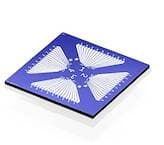
CAS:<p>Monolayer High Strength Metallurgical Graphene, HSMG®, on GLASS (10x10 mm)</p>Formula:CColor and Shape:colorless solidMolecular weight:12.011Graphene Field-Effect Transistor (GFET) Chip - Quadrant pattern
CAS:<p>Graphene Field-Effect Transistor (GFET) Chip - Quadrant pattern</p>Formula:CColor and Shape:chipMolecular weight:12.0Graphene Nanoplatelets 5nm(thick), 135m2/g(surface area), 30µm(diameter)
CAS:Color and Shape:Black powder to lumpGraphene Nanoplatelets 5nm(thick), 170m2/g(surface area), 30µm(diameter)
CAS:Color and Shape:Black powder to lumpGraphene Nanoplatelets 3nm(thick), 800m2/g(surface area), 1.5µm(diameter)
CAS:Color and Shape:Black powder to lumpGraphene Nanoplatelets 5nm(thick), 135m2/g(surface area), 7µm(diameter)
CAS:Color and Shape:Black powder to lumpGraphene Nanoplatelets 5nm(thick), 170m2/g(surface area), 18µm(diameter)
CAS:Color and Shape:Black powder to lumpGraphene Nanoplatelets 5nm(thick), 135m2/g(surface area), 18µm(diameter)
CAS:Color and Shape:Black powder to lumpGraphene Nanoplatelets 5nm(thick), 170m2/g(surface area), 7µm(diameter)
CAS:Color and Shape:Black powder to lumpGraphene Nanoplatelets 2-10nm(thick), 5µm(wide)
CAS:Color and Shape:Light gray to Brown to Black powder to crystalGraphene oxide (4mg/ml water dispersion) - low Mn.
CAS:<p>Graphene oxide (4mg/ml water dispersion) - low Mn.</p>Formula:CColor and Shape:brown liq.Molecular weight:12.0Graphene oxide (0.8-1.2nm thick x 1-15 microns wide, made by the Staudenmaier Method)
CAS:<p>Graphene oxide (0.8-1.2nm thick x 1-15 microns wide, made by the Staudenmaier Method)</p>Color and Shape:black pwdr.Monolayer High Strength Metallurgical Graphene, HSMG®, on PMMA (50x50 mm)
CAS:<p>Monolayer High Strength Metallurgical Graphene, HSMG®, on PMMA (50x50 mm)</p>Formula:CColor and Shape:colorless solidMolecular weight:12.011Monolayer Graphene on Cu (60 mm x 40 mm)
CAS:<p>Monolayer Graphene on Cu (60 mm x 40 mm)</p>Formula:CColor and Shape:waferMolecular weight:12.011Graphene Nanoplatelets Aggregates (sub-micron particles, surface area 500m2/g)
CAS:Color and Shape:Black powder to crystalGraphene Nanoplatelets Aggregates (sub-micron particles, surface area 300m2/g)
CAS:Color and Shape:Black powder to crystalGraphene - Electrical conductivity >1000 S/m, powder
CAS:<p>Graphene is a single layer of graphite that is made up of carbon atoms. Graphene has been shown to be an excellent conductor of electricity, with electrical conductivity greater than 1000 S/m. It has been found to have many potential applications in the field of cancer research, such as the inhibition of tumor growth by destroying cancer cells and stimulating the immune system. Graphene also exhibits strong biocompatibility and can be used to generate biogas from agricultural waste or wastewater treatment. In addition, graphene has been shown to inhibit transfer reactions in enzymes and regulate transcriptional activity. It also exhibits chemical stability due to its high surface area and low reactivity.</p>Formula:CH4Purity:Min. 95%Graphene nanoplatelets aggregates - (sub-micron particles, surface area 500m2/g
CAS:Graphene nanoplatelets aggregates are a reactive material that can be used to make medications. They are also used in the production of lubricants, polymers, and other products. Graphene nanoplatelets aggregates have photocatalytic activity, which means they have the ability to convert light energy into chemical energy. This process is called photo-catalysis. The surface area of graphene nanoplatelets aggregates is 500 m2/g. Graphene nanoplatelets aggregates have a high viscosity and are activated at a temperature of 100 °C. Graphene nanoplatelets aggregates can evaporate quickly and transport rapidly in air because they are gaseous. Graphene nanoplatelets aggregates are combustible due to their flammable additives and ultrafast transport rate.Purity:Min. 95%Color and Shape:Brown PowderGraphene Nanoplatelets Aggregates (sub-micron particles, surface area 750m2/g)
CAS:Color and Shape:Black powder to crystal