CAS 10385-30-5
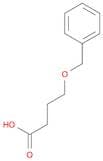
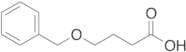
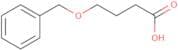
:4-benzyloxybutyric acid
- 4-(Benzyloxy)Butanoic Acid
4-Benzyloxybutyric acid
CAS:Formula:C11H14O3Purity:95%Color and Shape:LiquidMolecular weight:194.22714-(Benzyloxy)butanoic Acid
CAS:Controlled ProductApplications 4-(Benzyloxy)butanoic acid
Formula:C11H14O3Color and Shape:NeatMolecular weight:194.234-(Benzyloxy)butanoic acid
CAS:Controlled Product4-(Benzyloxy)butanoic acid, also known as 4-BABA, is an organic compound that is a white solid. It has a molecular weight of 128.11 and it can be found in the form of its chloride salt. The compound is used in analytical chemistry and has been shown to have potential use in analytical methods. 4-BABA can be synthesized from 2-hydroxyphenylacetic acid which is obtained through alkylation with benzyl bromide. This reaction yields a molecule with one more carbon atom than the starting material, which is called an epoxide. The epoxide reacts with chloride to produce the desired product along with a molecule of hydrogen chloride gas. The process requires catalysts such as palladium(II) acetate and triethylamine or platinum(IV) oxide and triethylamine. 4-(Benzyloxy)butanoic acid has two functional groups: an alcohol group (-OH) and an ether
Formula:C11H14O3Purity:Min. 95%Molecular weight:194.23 g/mol4-(Benzyloxy)butanoic acid
CAS:Formula:C11H14O3Purity:95%Color and Shape:LiquidMolecular weight:194.23Ref: 10-F210237
Discontinued product