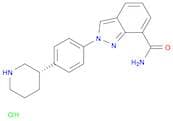
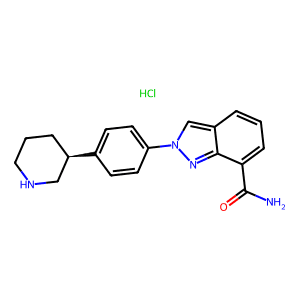
CAS 1038915-64-8
:Niraparib Hydrochloride
Description:
Niraparib Hydrochloride is a small molecule inhibitor primarily used in cancer therapy, particularly for the treatment of ovarian cancer. It functions as a potent and selective inhibitor of poly(ADP-ribose) polymerase (PARP), an enzyme involved in DNA repair processes. By inhibiting PARP, Niraparib disrupts the repair of single-strand breaks in DNA, leading to the accumulation of DNA damage and ultimately inducing apoptosis in cancer cells, especially those with BRCA mutations. The hydrochloride salt form enhances its solubility and stability, facilitating its administration. Niraparib is typically administered orally and has been associated with various side effects, including fatigue, nausea, and hematological toxicities. Its pharmacokinetics indicate a relatively long half-life, allowing for once-daily dosing. The substance is classified as a targeted therapy, representing a significant advancement in personalized medicine for patients with specific genetic profiles in their tumors. As with any medication, its use should be guided by a healthcare professional, considering the individual patient's condition and treatment history.
Sort by
Purity (%)
0
100
|
0
|
50
|
90
|
95
|
100
Found 4 products.
Niraparib hydrochloride
CAS:Niraparib hydrochloride (MK-4827) is a PARP inhibitor with potential cancer treatment effects, causing DNA damage and apoptosis.Formula:C19H21ClN4OPurity:99.26%Color and Shape:SolidMolecular weight:356.85Niraparib hydrochloride
CAS:Niraparib hydrochloride is an inhibitor of poly (ADP-ribose) polymerase, which is a key enzyme in the repair of DNA. It also inhibits the phosphorylation of histone H2AX at serine 139, which leads to cell cycle arrest and apoptosis. Niraparib hydrochloride has been shown to be effective against inflammatory lesions caused by radiation and platinum-resistant ovarian cancer. This drug has a synergistic effect with cisplatin in preclinical models for platinum-resistant ovarian cancer. Niraparib hydrochloride has also been evaluated as a potential biomarker for primary breast cancers by measuring its serum concentration in vivo using fluorescence imaging.
Formula:C19H21ClN4OPurity:Min. 95%Molecular weight:356.85 g/mol