CAS 104339-66-4
:Histatin 5
Description:
Histatin 5 is a peptide that is part of the histatin family, which are histidine-rich proteins primarily found in human saliva. It is known for its antimicrobial properties, particularly against various bacteria and fungi, making it significant in oral health and potential therapeutic applications. The peptide consists of 24 amino acids and is characterized by its high content of histidine, which contributes to its ability to bind metal ions and exhibit antimicrobial activity. Histatin 5 also plays a role in wound healing and has been shown to promote cell proliferation and migration, which are essential processes in tissue repair. Its mechanism of action involves disrupting microbial membranes and interfering with cellular processes in pathogens. Additionally, histatin 5 has been studied for its potential in drug delivery systems and as a model for designing new antimicrobial agents. Overall, its unique properties make it a subject of interest in both microbiology and biochemistry research.
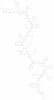
Formula:C133H195N51O33
InChI:InChI=1/C133H195N51O33/c1-71(164-120(206)96(46-76-54-146-65-158-76)181-128(214)103(62-185)183-110(196)84(138)52-108(193)194)109(195)167-86(18-5-9-35-134)113(199)172-91(24-15-41-154-133(143)144)118(204)178-99(49-79-57-149-68-161-79)125(211)176-95(45-75-53-145-64-157-75)112(198)156-60-105(189)165-93(43-73-25-29-82(187)30-26-73)121(207)173-87(19-6-10-36-135)114(200)171-90(23-14-40-153-132(141)142)115(201)169-88(20-7-11-37-136)116(202)175-94(42-72-16-3-2-4-17-72)122(208)179-97(47-77-55-147-66-159-77)124(210)174-92(33-34-107(191)192)119(205)170-89(21-8-12-38-137)117(203)177-100(50-80-58-150-69-162-80)126(212)180-101(51-81-59-151-70-163-81)127(213)184-104(63-186)129(215)182-98(48-78-56-148-67-160-78)123(209)168-85(22-13-39-152-131(139)140)111(197)155-61-106(190)166-102(130(216)217)44-74-27-31-83(188)32-28-74/h2-4,16-17,25-32,53-59,64-71,84-104,185-188H,5-15,18-24,33-52,60-63,134-138H2,1H3,(H,145,157)(H,146,158)(H,147,159)(H,148,160)(H,149,161)(H,150,162)(H,151,163)(H,155,197)(H,156,198)(H,164,206)(H,165,189)(H,166,190)(H,167,195)(H,168,209)(H,169,201)(H,170,205)(H,171,200)(H,172,199)(H,173,207)(H,174,210)(H,175,202)(H,176,211)(H,177,203)(H,178,204)(H,179,208)(H,180,212)(H,181,214)(H,182,215)(H,183,196)(H,184,213)(H,191,192)(H,193,194)(H,216,217)(H4,139,140,152)(H4,141,142,153)(H4,143,144,154)/t71-,84-,85-,86-,87-,88-,89-,90-,91-,92-,93-,94-,95-,96-,97-,98-,99-,100-,101-,102-,103-,104-/m0/s1
SMILES:C[C@@H](C(=N[C@@H](CCCCN)C(=N[C@@H](CCCNC(=N)N)C(=N[C@@H](Cc1cnc[nH]1)C(=N[C@@H](Cc1cnc[nH]1)C(=NCC(=N[C@@H](Cc1ccc(cc1)O)C(=N[C@@H](CCCCN)C(=N[C@@H](CCCNC(=N)N)C(=N[C@@H](CCCCN)C(=N[C@@H](Cc1ccccc1)C(=N[C@@H](Cc1cnc[nH]1)C(=N[C@@H](CCC(=O)O)C(=N[C@@H](CCCCN)C(=N[C@@H](Cc1cnc[nH]1)C(=N[C@@H](Cc1cnc[nH]1)C(=N[C@@H](CO)C(=N[C@@H](Cc1cnc[nH]1)C(=N[C@@H](CCCNC(=N)N)C(=NCC(=N[C@@H](Cc1ccc(cc1)O)C(=O)O)O)O)O)O)O)O)O)O)O)O)O)O)O)O)O)O)O)O)O)O)N=C([C@H](Cc1cnc[nH]1)N=C([C@H](CO)N=C([C@H](CC(=O)O)N)O)O)O
Synonyms:- Histatin-5
Sort by
Purity (%)
0
100
|
0
|
50
|
90
|
95
|
100
Found 3 products.
Histatin 5
CAS:Peptide Histatin 5 is a Research Peptide with significant interest within the field academic and medical research. This peptide is available for purchase at Cymit Quimica in multiple sizes and with a specification of your choice.Formula:C133H195N51O33Molecular weight:3,036.36 g/molHistatin 5
CAS:Custom research peptide; min purity 95%.
Formula:C133H195N51O33Purity:Min. 95%Molecular weight:3,036.36 g/molHistatin 5, human
CAS:As a member of the Histatin family, Histatin 5 is a 24 amino acid, antimicrobial peptide rich in histidine. The Histatin family’s large histidine presence allow Histatins to associate with metal ions through the histidine side chains.Histatin 5 is found naturally in human saliva, and is a proteolytic fragment of Histatin 3. It exhibits antifungal properties and is thus useful in inhibiting the growth of yeast and C. albicans. Histatin 5 contains a functional domain located at amino acids 11 to 24 and this is where the antimicrobial activity of Histatin 5 takes place. It also has a random secondary structure with α-helices which are believed to allow it to enter the cytoplasm of the pathogenic cell. Once it has gained entry into the cells of pathogens, it is known to induce an ATP influx and the production of reactive oxygen species.However it is important to note that while Histatin 5 displays potent antifungal activity, this is reduced when in saliva due to the exposure to interfering metals, proteins and salts.Formula:C133H195N51O33Purity:Min. 95%Molecular weight:3,036.3 g/mol