


CAS 104501-33-9
:Glycine, N-2-propynyl-, hydrochloride
2-[(prop-2-yn-1-yl)amino]acetic acid hydrochloride
CAS:Formula:C5H8ClNO2Purity:95.0%Molecular weight:149.572-[(Prop-2-yn-1-yl)amino]acetic acid hydrochloride
CAS:2-[(Prop-2-yn-1-yl)amino]acetic acid hydrochloride (PAH) is a molecule that is being studied for its potential as a broad-spectrum antimicrobial. PAH has been shown to inhibit the growth of bacteria, fungi, and viruses by binding to the ATP channel on the mitochondrial membrane. This binding inhibits ATP synthesis and prevents cell division. PAH also has antimicrobial activity against Gram negative bacteria through a mechanism that is not yet known. PAH has been shown to decrease muscle cell proliferation in rats by inhibiting protein synthesis and increasing apoptosis. PAH is synthesized from propionic acid and acetamide via asymmetric hydrogenation, which can be accomplished using an organocatalyst such as palladium on carbon or nickel on carbon.
Formula:C5H8ClNO2Purity:Min. 95%Molecular weight:149.57 g/mol
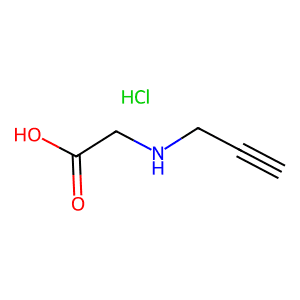

![2-[(prop-2-yn-1-yl)amino]acetic acid hydrochloride](/_next/image/?url=https%3A%2Fstatic.cymitquimica.com%2Fproducts%2F10%2Fthumb%2FF515392.jpg&w=3840&q=75)

![2-[(Prop-2-yn-1-yl)amino]acetic acid hydrochloride](/_next/image/?url=https%3A%2Fstatic.cymitquimica.com%2Fproducts%2F3D%2Fthumb%2FEEA50133.jpg&w=3840&q=75)
