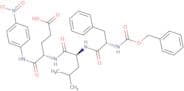
CAS 104634-10-8
:Z-PHE-LEU-GLU-PNA
Description:
Z-PHE-LEU-GLU-PNA, with the CAS number 104634-10-8, is a peptide nucleic acid (PNA) that is characterized by its ability to hybridize with complementary nucleic acid sequences. PNAs are synthetic polymers that mimic DNA or RNA but have a peptide backbone instead of a sugar-phosphate backbone, which enhances their stability against enzymatic degradation. This particular PNA sequence consists of phenylalanine (PHE), leucine (LEU), and glutamic acid (GLU) residues, contributing to its unique properties, such as increased binding affinity and specificity for target nucleic acids. Z-PHE-LEU-GLU-PNA is often utilized in molecular biology applications, including gene targeting, antisense therapy, and as a tool for studying gene expression. Its design allows for improved cellular uptake and resistance to nucleases, making it a valuable compound in research and potential therapeutic contexts. The characteristics of this PNA, including its solubility, stability, and hybridization properties, are influenced by the specific amino acid composition and the overall structure of the molecule.
Formula:C34H39N5O9
Sort by
Purity (%)
0
100
|
0
|
50
|
90
|
95
|
100
Found 2 products.
Z-Phe-Leu-Glu-pNA
CAS:Z-Phe-Leu-Glu-pNA is a synthetic substrate for proteolytic enzymes. This peptide is an optimal substrate for polymerase chain reaction (PCR) due to its high concentration of serine and reactive site. Z-Phe-Leu-Glu-pNA has been used as a synthetic substrate in the study of proteolytic enzymes, including trypsin treatment, subtilisin and chymotrypsin. This peptide has also been studied in clinical trials as a potential treatment for hormone disorders such as prostate cancer and breast cancer.Formula:C34H39N5O9Purity:Min. 95%Color and Shape:PowderMolecular weight:661.7 g/molZ-Phe-Leu-Glu-pNA
CAS:Z-FLE-pNA, a chromogenic substrate for glutamyl endopeptidases.Formula:C34H39N5O9Purity:98.00%Color and Shape:Whitish PowderMolecular weight:661.71