CAS 1047-16-1
:Quinacridone
Description:
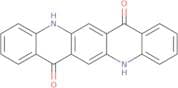
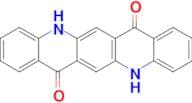
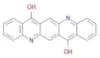
Quinacridone, with the CAS number 1047-16-1, is a synthetic organic compound belonging to the class of quinonoid pigments. It is characterized by its vibrant colors, primarily in the red to violet range, making it a popular choice in various applications, including paints, inks, and plastics. Quinacridone exhibits excellent lightfastness and chemical stability, which contributes to its durability in outdoor applications. The compound has a complex molecular structure, featuring a fused ring system that enhances its color properties. It is typically produced through a multi-step synthesis involving the condensation of aniline derivatives and subsequent oxidation. Quinacridone is also known for its non-toxic nature compared to other synthetic dyes, making it a preferred option in environmentally conscious formulations. Additionally, it has applications in the field of organic electronics, particularly in organic photovoltaic cells and organic light-emitting diodes (OLEDs), due to its semiconducting properties. Overall, quinacridone is valued for its aesthetic qualities and functional versatility across various industries.
Formula:C20H12N2O2
InChI:InChI=1S/C20H12N2O2/c23-19-11-5-1-3-7-15(11)21-17-10-14-18(9-13(17)19)22-16-8-4-2-6-12(16)20(14)24/h1-10H,(H,21,23)(H,22,24)
InChI key:InChIKey=NRCMAYZCPIVABH-UHFFFAOYSA-N
SMILES:O=C1C=2C(=CC3=C(C2)NC=4C(C3=O)=CC=CC4)NC=5C1=CC=CC5
Synonyms:- 5,12-Dihidroquino[2,3-B]Acridina-7,14-Diona
- 5,12-Dihydrochino[2,3-b]acridin-7,14-dion
- 5,12-Dihydroquino[2,3-b]acridine-7,14-dione
- 5,7,12,14-Tetrahydro[2,3-b]quinolinoacridine
- Quinacridone
- Dark violet
- Pigment Violet 19 β
- Hostaperm Red E 5B
- Monastral Violet 4R
- Sunfast Red 19
- Cinquasia Red B
- Monastral Red Y
- Quinacridone Red MC
- Linear trans quinacridone
- Pigment Violet 19
- Pigment Pink Quinacridone S
- Cinquasia Red Y-RT 759D
- Pigment Violet #19
- PV-Fast Red E5B
- Permanent Red E 5B
- Pigment Violet Quinacridone
- Hostaperm Red E 3B
- Red E 3B
- NSC 316165
- Cinquasia Red Y
- Quino[2,3-b]acridine-7,14-dione, 5,12-dihydro-
- HSDB 6136
- Cinquasia Red B
- Quinacridone Violet MC
- Permanent Red E 3B
- CI Pigment Red 122
- PV Fast Red E 5B
- Cinquasia Violet R-RT 791D
- Monastrol Red Y
- QUINACRIDONE VIOLET
- Pigment Quinacridone Red
- Cinquasia red
- PV-Fast Red E3B
- Monastral Violet R
- Paliogen Red BG
- C.I. 46500
- Permanent Magenta
- E 3B Red
- CI 73900
- Cinquasia B-RT 796D
- Monastral Red
- Pigment Violet 19 γ
- Hostaperm Red Violet ER
- QUINACRIDONE RED
- Cinquasia Violet R
- Cinquasia Red Y
- Fastogen Super Red BN
- Hostapern Red Violet ER
- Linear quinacridone
- Fastogen Super Red YE
- Monastral Red B
- Cinquasia Violet
- Sunfast Violet
- C.I. Pigment Violet 19
- PV Fast Red E 3B
- Hostaperm Red Violet ER 02
- See more synonyms
Sort by
Purity (%)
0
100
|
0
|
50
|
90
|
95
|
100
Found 6 products.
Quinacridone
CAS:Formula:C20H12N2O2Purity:>93.0%(N)Color and Shape:Red to Dark red to Dark purple powder to crystalMolecular weight:312.33Quinacridone (purified by sublimation)
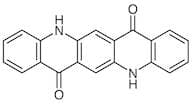
CAS:Formula:C20H12N2O2Purity:>99.0%(N)Color and Shape:Orange to Amber to Dark red powder to crystalMolecular weight:312.33Quinolino[2,3-b]acridine-7,14(5H,12H)-dione
CAS:Formula:C20H12N2O2Purity:93%Color and Shape:SolidMolecular weight:312.32155,12-Dihydroquinolino[2,3-B]Acridine-7,14-Dione
CAS:5,12-Dihydroquinolino[2,3-B]Acridine-7,14-DionePurity:98%,β type,Blue hueMolecular weight:312.32g/molQuinacridone
CAS:Quinacridone is a synthetic organic compound that belongs to the group of quinacridones. It has been shown to be chemically stable and can function as a pigment in paints. Quinacridone has been used for laser ablation, which is a technique for removing material from a surface or object by vaporizing it with an intense beam of light. This substance also has a synergic effect with other pigments such as ultramarine blue and cobalt green, and can be used to produce light emission. The compound has been found to react with sodium carbonate solution in the presence of hydroxyl groups, forming various products with different structures. Quinacridone also reacts with nitrogen atoms in the test samples, forming structural analysis. Protein data shows that this compound binds well to the protein cytochrome c oxidase subunit III (COX-III).Formula:C20H12N2O2Color and Shape:PowderMolecular weight:312.32 g/mol


![Quinolino[2,3-b]acridine-7,14(5H,12H)-dione](/_next/image/?url=https%3A%2Fstatic.cymitquimica.com%2Fproducts%2FIN%2Fthumb%2FDA003U3C.jpg&w=3840&q=75)

![5,12-Dihydroquinolino[2,3-B]Acridine-7,14-Dione](/_next/image/?url=https%3A%2Fstatic.cymitquimica.com%2Fproducts%2F54%2Fthumb%2FOR1028670.jpg&w=3840&q=75)