CAS 10470-83-4
:5,8-QUINOLINEQUINONE
Description:
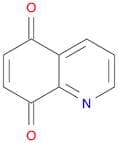
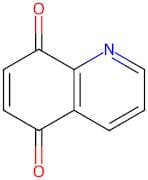
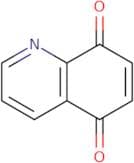
5,8-Quinolinequinone, with the CAS number 10470-83-4, is a chemical compound characterized by its unique structure, which features a quinoline backbone with two carbonyl groups at the 5 and 8 positions. This compound is part of the larger family of quinones, known for their aromatic properties and ability to undergo redox reactions. 5,8-Quinolinequinone exhibits a yellow to orange color, typical of many quinones, and is soluble in organic solvents. Its reactivity is influenced by the presence of the electron-withdrawing carbonyl groups, making it a potential candidate for various chemical reactions, including nucleophilic attacks and polymerization processes. Additionally, this compound has been studied for its biological activities, including potential antimicrobial and anticancer properties, although further research is necessary to fully understand its mechanisms of action and applications. Safety precautions should be taken when handling this compound, as with many quinones, due to its potential toxicity and reactivity.
Formula:C9H5NO2
InChI:InChI=1/C9H5NO2/c11-7-3-4-8(12)9-6(7)2-1-5-10-9/h1-5H
SMILES:c1cc2C(=O)C=CC(=O)c2nc1
Synonyms:- Quinoline-5,8-Dione
- 5,8-Qinolinequinone
Sort by
Purity (%)
0
100
|
0
|
50
|
90
|
95
|
100
Found 4 products.
5,8-dihydroquinoline-5,8-dione
CAS:5,8-dihydroquinoline-5,8-dione is a redox potential inhibitor that binds to the mitochondrial membrane. It has been shown to inhibit the mitochondrial membrane potential and therefore reduce cellular respiration. This compound also inhibits the activity of quinoline derivatives and other multidrugs. 5,8-dihydroquinoline-5,8-dione has been shown to be effective against cancer cells and potassium dichromate. 5,8-Dihydroquinoline-5,8-dione is a nitrogen heterocycle with two nitrogen atoms in its structure. The molecular modeling of this molecule shows that it can bind to metal ions such as potassium dichromate due to its electron donating properties.Formula:C9H5NO2Purity:Min. 95%Molecular weight:159.14 g/mol