CAS 10487-71-5
:2-Butenoyl chloride
Description:
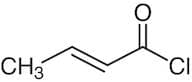
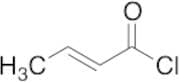
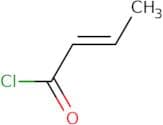
2-Butenoyl chloride, also known as crotonyl chloride, is an organic compound characterized by its structure, which features a butenoyl group attached to a chlorine atom. It is a colorless to yellowish liquid with a pungent odor, indicative of its reactivity. This compound is classified as an acyl chloride, which makes it highly reactive, particularly with water, alcohols, and amines, leading to the formation of corresponding acids and esters. 2-Butenoyl chloride is soluble in organic solvents such as ether and chloroform but reacts vigorously with moisture, releasing hydrochloric acid. It is primarily used in organic synthesis, particularly in the preparation of various chemical intermediates and in the production of polymers. Due to its reactivity, it requires careful handling and storage under an inert atmosphere to prevent hydrolysis and degradation. Safety precautions are essential when working with this compound, as it can cause severe irritation to the skin, eyes, and respiratory system.
Formula:C4H5ClO
InChI:InChI=1S/C4H5ClO/c1-2-3-4(5)6/h2-3H,1H3
InChI key:InChIKey=RJUIDDKTATZJFE-UHFFFAOYSA-N
SMILES:C(C(Cl)=O)=CC
Synonyms:- 2-Butenoyl chloride
- But-2-enoyl chloride
- Crotonic acid chloride
- Crotonoyl chloride
- β-Methylacryloyl chloride
Sort by
Purity (%)
0
100
|
0
|
50
|
90
|
95
|
100
Found 4 products.
Crotonoyl Chloride (cis- and trans- mixture)
CAS:Formula:C4H5ClOPurity:>95.0%(GC)Color and Shape:Colorless to Yellow to Orange clear liquidMolecular weight:104.53Crotonyl chloride
CAS:Crotonyl chlorideFormula:C4H5ClOPurity:98%Color and Shape: clear. almost colourless liquidMolecular weight:104.54g/molCrotonoyl Chloride
CAS:Controlled ProductFormula:C4H5ClOColor and Shape:ColourlessMolecular weight:104.53Crotonyl chloride
CAS:Crotonyl chloride is a chemical compound that contains a hydroxyl group (-OH) and an amide (-CONH). It can be used in the synthesis of epidermal growth factor. Crotonyl chloride also has the ability to inhibit the growth of cancer cells by binding to surface receptors on the cell membrane, which leads to apoptosis. It is used as a polymerase chain reaction (PCR) substrate film for sodium carbonate and chloride yields. This chemical can be synthesized using an asymmetric synthesis with nitrogen atoms, amines, and sodium carbonate.Formula:C4H5ClOPurity:Min. 95%Molecular weight:104.53 g/mol