CymitQuimica logo

CAS 104915-66-4

:

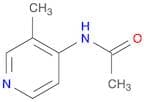
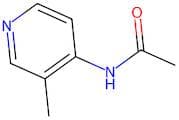
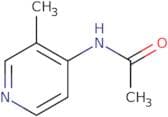
Acetamide, N-(3-methyl-4-pyridinyl)- (9CI)

Description:
Acetamide, N-(3-methyl-4-pyridinyl)-, also known by its CAS number 104915-66-4, is an organic compound characterized by the presence of an acetamide functional group attached to a pyridine ring. This compound features a methyl group at the 3-position and a nitrogen atom in the amide group, which contributes to its chemical reactivity and potential biological activity. It is typically a white to off-white solid, soluble in polar solvents such as water and alcohols, which enhances its utility in various chemical applications. The presence of the pyridine ring suggests potential interactions with biological systems, making it of interest in pharmaceutical research. Its molecular structure allows for hydrogen bonding, influencing its physical properties and reactivity. As with many nitrogen-containing heterocycles, it may exhibit diverse pharmacological effects, including antimicrobial or anti-inflammatory activities, although specific biological data would depend on empirical studies. Proper handling and safety measures should be observed due to its chemical nature.
Formula:C8H10N2O
Sort by

Purity (%)
0
100
|
0
|
50
|
90
|
95
|
100
Found 3 products.
  • Acetamide, N-(3-methyl-4-pyridinyl)- (9CI)

    CAS:
    Formula:C8H10N2O
    Purity:95%
    Color and Shape:Solid
    Molecular weight:150.1778

    Ref: IN-DA008YQ3

    1g
    167.00€
    250mg
    109.00€
  • N-(3-Methylpyridin-4-yl)acetamide

    CAS:
    N-(3-Methylpyridin-4-yl)acetamide
    Purity:95%
    Molecular weight:150.18g/mol

    Ref: 54-OR1053956

    1g
    199.00€
    250mg
    81.00€
  • N-(3-Methylpyridin-4-yl)acetamide

    CAS:
    <p>Acetamides are a class of organic compounds that are used as solvents and pharmaceuticals. They have been shown to have diastolic pressure-lowering effects, with the mechanism of action being inhibition of the enzyme activity that produces prostaglandin E2. Acetamides also have chemoattractant properties, which may be due to their ability to inhibit the production of chemokines. Acetamides are also known to exhibit antiinflammatory activity and can be used in experimental models for neurodegenerative diseases such as Alzheimer's disease. Acetamides can also lower collagen synthesis in fat cells, which may be useful for the treatment of obesity. Acetamides have been shown to bind to glucocorticoid receptors and regulate gene expression by affecting transcriptional factors such as NF-κB.</p>
    Formula:C8H10N2O
    Purity:Min. 95%
    Molecular weight:150.18 g/mol

    Ref: 3D-EEA91566

    1g
    382.00€
    10g
    1,302.00€