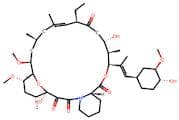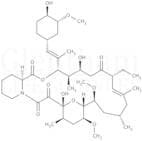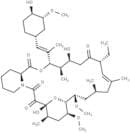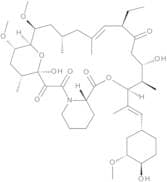
CAS 104987-12-4
:Ascomycin
Description:
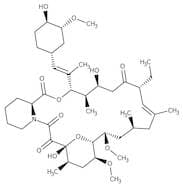
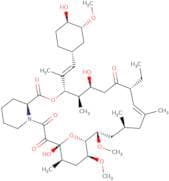
Ascomycin, with the CAS number 104987-12-4, is a macrolide antibiotic that is derived from the fermentation of certain species of fungi, particularly those in the genus *Aspergillus*. It exhibits a broad spectrum of antifungal activity, primarily targeting various strains of fungi, including *Candida* and *Aspergillus*. Ascomycin functions by inhibiting the synthesis of fungal cell walls, thereby preventing growth and replication. In addition to its antifungal properties, it has shown immunosuppressive effects, making it of interest in the context of organ transplantation and autoimmune diseases. The compound is characterized by its complex macrolide structure, which includes a large lactone ring and multiple functional groups that contribute to its biological activity. Ascomycin is typically administered in a clinical setting under strict medical supervision due to its potent effects and potential side effects. Its solubility and stability can vary depending on the formulation, influencing its pharmacokinetics and therapeutic efficacy.
Formula:C43H69NO12
InChI:InChI=1S/C43H69NO12/c1-10-30-18-24(2)17-25(3)19-36(53-8)39-37(54-9)21-27(5)43(51,56-39)40(48)41(49)44-16-12-11-13-31(44)42(50)55-38(28(6)33(46)23-34(30)47)26(4)20-29-14-15-32(45)35(22-29)52-7/h18,20,25,27-33,35-39,45-46,51H,10-17,19,21-23H2,1-9H3/b24-18+,26-20+/t25-,27+,28+,29-,30+,31-,32+,33-,35+,36-,37-,38+,39+,43+/m0/s1
InChI key:InChIKey=ZDQSOHOQTUFQEM-NURRSENYSA-N
SMILES:O(C)[C@@H]1[C@@]2(O[C@](O)([C@H](C)C1)C(=O)C(=O)N3[C@](C(=O)O[C@H](\C(=C\[C@H]4C[C@@H](OC)[C@H](O)CC4)\C)[C@H](C)[C@@H](O)CC(=O)[C@H](CC)/C=C(\C)/C[C@H](C)C[C@@H]2OC)(CCCC3)[H])[H]
Synonyms:- (3S,4R,5S,8R,12S,14R,15R,16S,18R,19R,26aS)-8-ethyl-5,19-dihydroxy-3-{(E)-2-[(1S,3R,4S)-4-hydroxy-3-methoxycyclohexyl]-1-methylethenyl}-14,16-dimethoxy-4,10,12,18-tetramethyl-5,6,8,11,12,13,14,15,16,17,18,19,24,25,26,26a-hexadecahydro-3H-15,19-epoxypyrido[2,1-c][1,4]oxazacyclotricosine-1,7,20,21(4H,23H)-tetrone
- (3S,4R,5S,8R,12S,14S,15R,16S,18R,19R,26aS)-8-ethyl-5,19-dihydroxy-3-{(E)-2-[(1R,3R,4R)-4-hydroxy-3-methoxycyclohexyl]-1-methylethenyl}-14,16-dimethoxy-4,10,12,18-tetramethyl-5,6,8,11,12,13,14,15,16,17,18,19,24,25,26,26a-hexadecahydro-3H-15,19-epoxypyrido[2,1-c][1,4]oxazacyclotricosine-1,7,20,21(4H,23H)-tetrone
- (3S,4R,5S,8R,9E,12S,14S,15R,16S,18R,19R,26aS)-8-Ethyl-5,6,8,11,12,13,14,15,16,17,18,19,24,25,26,26a-hexadecahydro-5,19-dihydroxy-3-[(1E)-2-[(1R,3R,4R)-4-hydroxy-3-methoxycyclohexyl]-1-methylethenyl]-14,16-dimethoxy-4,10,12,18-tetramethyl-15,19-epoxy-3H-pyrido[2,1-c][1,4]oxaazacyclotricosine-1,7,20,21(4H,23H)-tetrone
- (3S,4S,5S,8R,12S,14S,15R,16S,18R,19R,26aS)-8-ethyl-5,19-dihydroxy-3-{(E)-2-[(1R,3R,4R)-4-hydroxy-3-methoxycyclohexyl]-1-methylethenyl}-14,16-dimethoxy-4,10,12,18-tetramethyl-5,6,8,11,12,13,14,15,16,17,18,19,24,25,26,26a-hexadecahydro-3H-15,19-epoxypyrido[2,1-c][1,4]oxazacyclotricosine-1,7,20,21(4H,23H)-tetrone
- 12,18-Tetramethyl-,(3S-(3R*(E(1S*,3S*,4S*)),4S*,19S*,26Ar*))--10
- 15,19-Epoxy-3H-pyrido[2,1-c][1,4]oxaazacyclotricosine-1,7,20,21(4H,23H)-tetrone, 8-ethyl-5,6,8,11,12,13,14,15,16,17,18,19,24,25,26,26a-hexadecahydro-5,19-dihydroxy-3-[(1E)-2-[(1R,3R,4R)-4-hydroxy-3-methoxycyclohexyl]-1-methylethenyl]-14,16-dimethoxy-4,10,12,18-tetramethyl-, (3S,4R,5S,8R,9E,12S,14S,15R,16S,18R,19R,26aS)-
- 15,19-Epoxy-3H-pyrido[2,1-c][1,4]oxaazacyclotricosine-1,7,20,21(4H,23H)-tetrone, 8-ethyl-5,6,8,11,12,13,14,15,16,17,18,19,24,25,26,26a-hexadecahydro-5,19-dihydroxy-3-[2-(4-hydroxy-3-methoxycyclohexyl)-1-methylethenyl]-14,16-dimethoxy-4,10,12,18-tetramethyl-, [3S-[3R*[E(1S*,3S*,4S*)],4S*,5R*,8S*,9E,12R*,14R*,15S*,16R*,18S*,19S*,26aR*]]-
- 8-Ethyl-3-(2-(4-Hydroxy-3-Methoxycyclohexyl)-1-Methylethenyl)-14,16-Dimethoxy
- AAG
- Ascomycin, Streptomyces Hygroscopicus
- Ascomycin, Streptomyces Hygroscopicus Var Ascomyceticus
- Changchuanmycin
- Fk-520
- Fr 520
- Fr-900520
- Immunomycin
- See more synonyms
Sort by
Purity (%)
0
100
|
0
|
50
|
90
|
95
|
100
Found 12 products.
Ascomycin, 95%
CAS:Ascomycin, 95%; Internal standard for LC-MS/MS testing of the immunosuppressants tacrolimus, sirolimus, and everolimus.
Formula:C43H69NO12Purity:95%Color and Shape:Powder, White to pale yellowMolecular weight:792.02Ascomycin (Tacrolimus EP Impurity A)
CAS:Formula:C43H69NO12Color and Shape:White To Off-White SolidMolecular weight:792.02Ascomycin
CAS:AscomycinFormula:C43H69NO12Purity:By hplc: 100% (Typical Value in Batch COA)Color and Shape: white powderMolecular weight:792.01g/molAscomycin
CAS:Formula:C43H69NO12Purity:≥ 95%Color and Shape:White to yellow powder or solidMolecular weight:792.01Ascomycin
CAS:Ascomycin (Immunomycin)(Immunomycin, FR-900520, FK520) is an ethyl analog of tacrolimus (FK506) with strong immunosuppressant properties.Formula:C43H69NO12Purity:99.64% - 99.94%Color and Shape:White SolidMolecular weight:792.01Ascomycin
CAS:Impurity Tacrolimus Related Compound A USP
Applications A potent immunosuppressive agent and could be used as a potential therapeutic agent for autoimmune diseases.
References Matuszewski, B., et al.: Anal. Chem., 75, 3019 (2003), Taylor, P., et al.: Clin. Chem., 51, 1890(2005);Formula:C43H69NO12Color and Shape:White To Off-WhiteMolecular weight:792.01Ascomycin
CAS:Ascomycin is an immunosuppressive macrolide, which is a product derived from the fermentation of the bacterium *Streptomyces hygroscopicus*. Its mode of action involves binding to the intracellular protein FK506-binding protein (FKBP), inhibiting the calcium-dependent signal transduction pathway that is crucial for T-cell activation. This interference with the immune response is achieved through the inhibition of calcineurin, thus preventing the dephosphorylation and nuclear translocation of nuclear factor of activated T-cells (NF-AT), a necessary step in the activation of genes required for T-cell proliferation.Formula:C43H69NO12Purity:Min. 95%Molecular weight:792.01 g/molAscomycin
CAS:Ascomycin is an immunosuppressant macrolide lactone, which is derived from the soil bacterium *Streptomyces hygroscopicus*. It functions primarily by inhibiting the T-cell activation pathway. The mechanism involves binding to the immunophilin FKBP-12, forming a complex that inhibits the calcium-dependent phosphatase, calcineurin. This inhibition prevents the dephosphorylation and subsequent translocation of nuclear factor of activated T cells (NFAT), which is crucial for the transcription of interleukin-2 and other cytokines. Consequently, this suppresses the activation and proliferation of T-cells, which are essential components of the adaptive immune response.Formula:C43H69NO12Purity:Min. 95%Molecular weight:792.01 g/mol