CAS 105-50-0
:Acetonedicarboxylic Acid Diethyl Ester
Description:
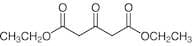
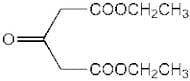
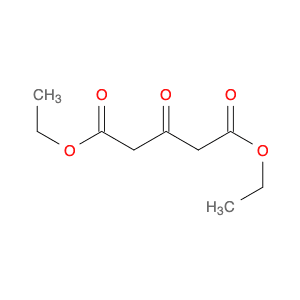
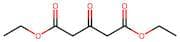
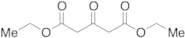
Acetonedicarboxylic Acid Diethyl Ester, also known as diethyl 3-oxoglutarate, is an organic compound characterized by its structure, which includes two ester functional groups and a ketone. It is a colorless to pale yellow liquid with a fruity odor, commonly used as a reagent in organic synthesis and as an intermediate in the production of various chemicals. The compound is soluble in organic solvents such as ethanol and ether but has limited solubility in water. Its molecular structure allows it to participate in various chemical reactions, including esterification and condensation reactions, making it valuable in the synthesis of pharmaceuticals and agrochemicals. Additionally, it exhibits moderate toxicity, necessitating careful handling and appropriate safety measures during use. The compound's reactivity and functional groups make it a versatile building block in synthetic organic chemistry, contributing to its importance in research and industrial applications.
Formula:C9H14O5
InChI:InChI=1/C9H14O5/c1-4-13-8(11)7(6(3)10)9(12)14-5-2/h7H,4-5H2,1-3H3
InChI key:InChIKey=ZSANYRMTSBBUCA-UHFFFAOYSA-N
SMILES:C(CC(OCC)=O)(CC(OCC)=O)=O
Synonyms:- 1,3-Acetonedicarboxylic Acid Diethyl Ester
- 1,3-Acetonedicarboxylicaciddiethylester Diethyl3-oxoglutarate
- 1,5-Diethyl 3-oxopentanedioate
- 3-Oxo-Pentanedioic Aci Diethyl Ester
- 3-Oxo-Pentanedioicacidiethyl Ester
- 3-Oxopentanedioic acid diethyl ester
- Acetone-1,3-dicarboxylic acid diethyl ester
- Diethyl 1,3-Acetonedicarboxylate;Diethyl 3-Oxoglutarate
- Diethyl 1,3-acetone dicarboxylate
- Diethyl 1,3-acetonedicarboxylate
- Diethyl 2-oxopropane-1,3-dicarboxylate
- Diethyl 3-ketoglutarate
- Diethyl 3-oxoglutarate
- Diethyl 3-oxopentanedioate
- Diethyl Acetylpropanedioate
- Diethyl acetone-1,3-dicarboxylate
- Diethyl acetonedicarboxylate
- Diethyl β-ketoglutarate
- Diethyl β-oxoglutarate
- Diethyl-1,3-Acetonedicarboxyalte
- Diethyl-3-oxo-pentanedionate
- Diethyl1,3-Acetonedicarboxylate
- Diethylacetone dicarboxylate
- Glutaric acid, 3-oxo-, diethyl ester
- Glutaric acid, β-oxo-, diethyl ester
- NSC 9013
- Pentanedioic acid, 3-oxo-, 1,5-diethyl ester
- Pentanedioic acid, 3-oxo-, diethyl ester
- β-Ketoglutaric acid diethyl ester
- 3-KETOGLUTARIC ACID DIETHYL ESTER
- ETHYL ACETONEDICARBOXYLATE
- ACETONEDICARBOXYLIC ACID DIETHYL ESTER
- Diethyl beta-oxoglutarate
- Butanoic acid, (ethoxycarbonyl)-3-oxo-, ethyl ester
- 3-oxo-pentanedioicacidiethylester
- 3-OXOGLUTARIC ACID DIETHYL ESTER
- Ethyl 3-oxoglutarate
- 3-OXO-PENTANEDIOIC ACID, DIETHY ESTER
- See more synonyms
Sort by
Purity (%)
0
100
|
0
|
50
|
90
|
95
|
100
Found 10 products.
Diethyl 1,3-Acetonedicarboxylate
CAS:Formula:C9H14O5Purity:>95.0%(GC)Color and Shape:Colorless to Light yellow clear liquidMolecular weight:202.21Diethyl acetone-1,3-dicarboxylate, 96%
CAS:Synthesis of 1-substituted 4-ethoxycarbonyl-5- (ethoxycarbonylmethyl) pyrazoles Diethyl acetone-1, 3-dicarboxylate reacts with N, N-dimethylforma- mide dimethyl acetal (DMFDMA) in ethanol at room temperature. Unexpected product dichotomy is produced in the Biginelli-like condensation of 2-hydroxybenFormula:C9H14O5Purity:96%Color and Shape:Clear colorless, LiquidMolecular weight:202.21Diethyl 1,3-acetonedicarboxylate
CAS:Formula:C9H14O5Purity:95%Color and Shape:LiquidMolecular weight:202.2045Diethyl 3-oxoglutarate
CAS:Diethyl 3-oxoglutarateFormula:C9H14O5Purity:95%Color and Shape: clear. colourless liquidMolecular weight:202.20g/molDiethyl 3-Oxopentanedioate
CAS:Controlled ProductApplications Diethyl 3-Oxopentanedioate is a reactant used in the synthesis of 2-(3-benzoylthioureido)-thiophene-3-carbonitrile derivatives with antimicrobial activity.
References Prabhu, P.J., et. al.: Int. J. Chem., 3, 91 (2014)Formula:C9H14O5Color and Shape:NeatMolecular weight:202.2Diethyl 3-oxopentanedioate
CAS:Formula:C9H14O5Purity:95%Color and Shape:Liquid, ClearMolecular weight:202.206Diethyl 3-oxoglutarate
CAS:Diethyl 3-oxoglutarate is a sodium salt of a diethyl ester of malonic acid. It has been shown to be cytotoxic in vitro and in vivo, but its mechanism of action is not well understood. Diethyl 3-oxoglutarate may be involved in the production of reactive oxygen species and the induction of DNA damage by alkylating DNA. The compound has also been shown to have anti-inflammatory properties, which may be due to its ability to inhibit the production of prostaglandins.Formula:C9H14O5Purity:Min. 95%Molecular weight:202.2 g/mol