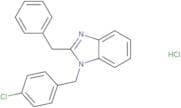
CAS 1052076-77-3
:Q94 hydrochloride
Description:
Q94 hydrochloride, identified by its CAS number 1052076-77-3, is a chemical compound that belongs to a class of substances known for their potential applications in medicinal chemistry, particularly in the field of drug development. While specific characteristics such as molecular weight, solubility, and melting point may vary, compounds of this nature typically exhibit properties that facilitate their use in biological systems. Q94 hydrochloride may act as an inhibitor or modulator of certain biological pathways, making it of interest in research related to diseases or conditions that require targeted therapeutic interventions. Its hydrochloride form indicates that it is a salt, which often enhances its stability and solubility in aqueous solutions, thus improving its bioavailability. As with many chemical substances, safety data sheets and handling guidelines should be consulted to ensure proper handling and usage in laboratory settings. Further research and characterization studies are essential to fully understand its pharmacological properties and potential applications.
Formula:C21H18Cl2N2
Synonyms:- Q-94 hydrochloride,Q94 hydrochloride
- 1-[(4-Chlorophenyl)methyl]-2-(phenylmethyl)-1H-benzimidazole hydrochloride
- Q94 hydrochloride
Sort by
Purity (%)
0
100
|
0
|
50
|
90
|
95
|
100
Found 1 products.
Q94 hydrochloride
CAS:Controlled ProductQ94 hydrochloride is a potent, selective, and orally bioavailable small molecule that inhibits the activity of the erythropoietin receptor (EPOR). It has been shown to inhibit the growth of human cancer cells in vitro and in vivo. Q94 hydrochloride is also an inhibitor of protein interactions with peptides and proteins. It is used as a research tool to study protein-protein interactions as well as receptor-ligand interactions. Q94 hydrochloride binds to EPOR with high affinity and selectivity, inhibiting its activity. This inhibition leads to a reduction in the production of red blood cells, which could be useful for treating anemia or polycythemia. The chemical structure of Q94 hydrochloride closely resembles that of the natural hormone erythropoietin, but it does not bind to erythropoietin receptors (EPRs) at all.Formula:C21H17ClN2·HClPurity:90%MinColor and Shape:PowderMolecular weight:369.29 g/mol