CAS 10521-49-0
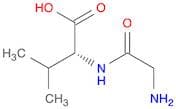
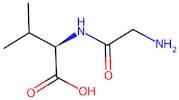
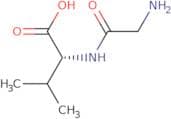
:gly-D-val
Description:
Gly-D-Val, also known as Glycine-D-Valine, is a dipeptide composed of the amino acids glycine and D-valine. It is characterized by its specific sequence, where glycine, the simplest amino acid, is linked to D-valine, the D-enantiomer of valine. This compound is typically used in biochemical research and studies related to peptide synthesis and protein structure. Gly-D-Val may exhibit unique properties due to the presence of the D-amino acid, which can influence its biological activity and stability compared to its L-counterpart. The presence of the D-amino acid can also affect the peptide's interaction with enzymes and receptors, making it a subject of interest in pharmacology and medicinal chemistry. Additionally, like many peptides, Gly-D-Val may have implications in the study of metabolic pathways and could potentially serve as a model for understanding peptide behavior in biological systems. Its solubility, stability, and reactivity can vary based on environmental conditions such as pH and temperature.
Formula:C7H14N2O3
InChI:InChI=1/C7H14N2O3/c1-4(2)6(7(11)12)9-5(10)3-8/h4,6H,3,8H2,1-2H3,(H,9,10)(H,11,12)/t6-/m1/s1
SMILES:CC(C)[C@H](C(=O)O)N=C(CN)O
Synonyms:- Glycyl-D-valine
- Glycylvaline
- (2R)-2-[(ammonioacetyl)amino]-3-methylbutanoate
Sort by
Purity (%)
0
100
|
0
|
50
|
90
|
95
|
100
Found 4 products.
(R)-2-(2-Aminoacetamido)-3-methylbutanoic acid
CAS:Formula:C7H14N2O3Purity:97%Molecular weight:174.1977(R)-2-(2-Aminoacetamido)-3-Methylbutanoic Acid
CAS:(R)-2-(2-Aminoacetamido)-3-Methylbutanoic AcidPurity:98%Molecular weight:174.20g/molH-Gly-D-Val-OH
CAS:H-Gly-D-Val-OH is a nonpolar amino acid that belongs to the group of amino acids. It is one of the 20 standard amino acids used by living cells and is found in proteins. The nitrogen atoms are located at the corners of a rectangle and are involved in hydrogen bonding. H-Gly-D-Val-OH is a component of fatty acids, which are molecules that form an important part of the human diet. Fatty acids are taken up by cells through endocytosis and metabolized within the cell cytoplasm by catabolism or anabolism. H-Gly-D-Val-OH has been shown to have kinetic properties in vitro and can be used as a ternary complex forming agent with glycine and D,L-valine when mixed with water. H Gly D Val OH also acts as a cyclic peptide, which can be synthesized from H Gly D Val OH with the help ofFormula:C7H14N2O3Purity:Min. 95%Molecular weight:174.2 g/mol