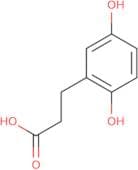
CAS 10538-47-3
:Benzenepropanoic acid,2,5-dihydroxy-
Description:
Benzenepropanoic acid, 2,5-dihydroxy- is an organic compound characterized by its aromatic structure and the presence of hydroxyl groups. It features a benzene ring attached to a propanoic acid moiety, with hydroxyl groups located at the 2 and 5 positions of the benzene ring. This compound is typically a white to off-white solid and is soluble in polar solvents due to the presence of hydroxyl groups, which can engage in hydrogen bonding. The dihydroxy substitution enhances its reactivity and potential applications in various chemical reactions, including esterification and oxidation. It may exhibit biological activity, making it of interest in pharmaceutical and biochemical research. The presence of both carboxylic acid and hydroxyl functional groups suggests potential acidity and the ability to participate in various chemical interactions. As with many organic compounds, safety data should be consulted for handling and usage, as it may pose health risks if not managed properly.
Formula:C9H10O4
Synonyms:- Hydrocinnamicacid, 2,5-dihydroxy- (6CI,7CI,8CI)
- 2,5-Dihydroxyphenylpropionic acid
- 3-(2,5-Dihydroxyphenyl)propionic acid
Sort by
Purity (%)
0
100
|
0
|
50
|
90
|
95
|
100
Found 1 products.
(2,5-Dihydroxyphenyl)propionic acid
CAS:(2,5-Dihydroxyphenyl)propionic acid is a natural compound that has been shown to inhibit integrase enzymes in vitro. The chemical structure of (2,5-dihydroxyphenyl)propionic acid is similar to that of the herbimycin antibiotics, which are also known as ansamycins. These compounds have been shown to be potential therapeutics for cancer and HIV infection. Ansamycins inhibit the activity of integrase enzymes by binding to the enzyme's active site, preventing it from carrying out its normal function. This prevents the integration of viral DNA into host cells, thus inhibiting virus replication.Formula:C9H10O4Purity:Min. 95%Color and Shape:PowderMolecular weight:182.17 g/mol