CAS 105515-33-1
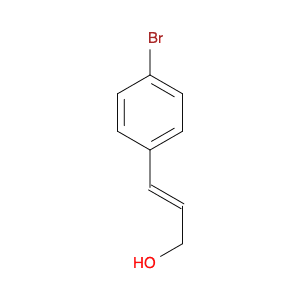
:2-Propen-1-ol, 3-(4-bromophenyl)-, (2E)-
Description:
2-Propen-1-ol, 3-(4-bromophenyl)-, (2E)-, also known by its CAS number 105515-33-1, is an organic compound characterized by its structure, which features a propenol backbone with a bromophenyl substituent. This compound is classified as an allylic alcohol due to the presence of a double bond adjacent to the hydroxyl (-OH) group. The bromophenyl group enhances its reactivity and may influence its physical properties, such as solubility and boiling point. Typically, compounds of this nature exhibit moderate polarity, making them soluble in polar solvents while being less soluble in non-polar solvents. The presence of the bromine atom can also impart unique electronic properties, potentially affecting its reactivity in various chemical reactions, including nucleophilic substitutions and additions. Additionally, the (2E)- configuration indicates the specific geometric arrangement of the substituents around the double bond, which can influence the compound's reactivity and interactions with biological systems. Overall, this compound may have applications in organic synthesis and medicinal chemistry, particularly in the development of pharmaceuticals.
Formula:C9H9BrO
Sort by
Purity (%)
0
100
|
0
|
50
|
90
|
95
|
100
Found 4 products.
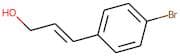
(E)-3-(4-Bromophenyl)prop-2-en-1-ol
CAS:Formula:C9H9BrOPurity:95%Color and Shape:SolidMolecular weight:213.0712(2E)-3-(4-Bromophenyl)prop-2-en-1-ol
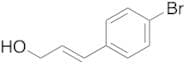
CAS:(2E)-3-(4-Bromophenyl)prop-2-en-1-ol
Purity:95%Molecular weight:213.07g/mol3-(4-Bromophenyl)-2-propen-1-ol
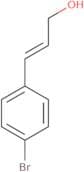
CAS:Controlled ProductApplications 3-(4-Bromophenyl)-2-propen-1-ol (cas# 105515-33-1) is a useful reagent for the preparation of aryltetralin cyclic ether lignans.
References Xiang, J. C., et al.: Angew. Chem. Int. Ed., 59, 21195 (2020)Formula:C9H9OBrColor and Shape:NeatMolecular weight:213.073-(4-Bromophenyl)-2-propen-1-ol
CAS:3-(4-Bromophenyl)-2-propen-1-ol is a biomolecule that is a stereoisomer of epoxypropane. It can be synthesized by the epoxidation of 3-bromobenzaldehyde with sodium hydroxide and tetrahydrofuran in the presence of catalysts such as FeCl3. This compound has been shown to have affinity for rat brain tissue and to inhibit the reuptake of noradrenaline, which is a neurotransmitter. The stereogenic center, which is located at the C3 position, can be substituted with other groups such as alcohols or cinnamyl. The bromohydrins formed during this reaction are nucleophiles that can also react with electrophilic compounds.Formula:C9H9BrOPurity:Min. 95%Molecular weight:213.08 g/mol