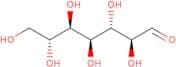
CAS 10589-31-8
:D-glycero-D-talo-Heptose
Description:
D-glycero-D-talo-heptose is a seven-carbon sugar, specifically a heptose, that belongs to the class of aldoses. It is characterized by its unique stereochemistry, which includes a specific arrangement of hydroxyl groups and a carbonyl group, contributing to its classification as a D-isomer. This sugar plays a significant role in the biosynthesis of lipopolysaccharides, which are essential components of the outer membrane of Gram-negative bacteria. The presence of D-glycero-D-talo-heptose in bacterial cell walls is crucial for maintaining structural integrity and influencing immune responses. In terms of physical properties, it is typically a white crystalline solid that is soluble in water, reflecting its polar nature due to multiple hydroxyl groups. Its chemical reactivity is similar to that of other sugars, participating in various biochemical pathways, including glycosylation reactions. Overall, D-glycero-D-talo-heptose is an important sugar in microbiology and biochemistry, contributing to our understanding of bacterial physiology and potential targets for antimicrobial strategies.
Formula:C7H14O7
Synonyms:- D-Glycero-D-Taloheptose
- Ss-D-Mannoheptose
Sort by
Purity (%)
0
100
|
0
|
50
|
90
|
95
|
100
Found 1 products.
D-Glycero-D-talo-heptose
CAS:D-Glycero-D-talo-heptose is a fluorescent probe used in fluorescence spectroscopy. It has been shown to bind to mannose and lyxose, which are carbohydrates with a structural similarity to D-glycero-D-manno-heptose. D-Glycero-D-talo-heptose undergoes dose dependent emission of light when excited at 488 nm. In addition, this compound can be used as a marker for liquid chromatography. The fluorescence of D -glycero -D -talo -heptose is quenched by the presence of ribose.Formula:C7H14O7Purity:Min. 95%Molecular weight:210.18 g/mol