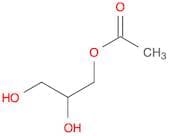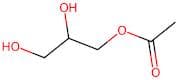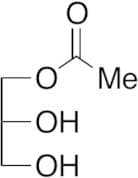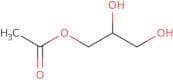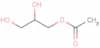
CAS 106-61-6
:1-Monoacetin
Description:
1-Monoacetin, also known as glycerol monoacetate, is an organic compound characterized by its structure as a glycerol derivative with one acetyl group. It is a colorless, viscous liquid that is hygroscopic and has a slightly sweet taste. The compound is soluble in water and organic solvents, making it versatile in various applications. 1-Monoacetin is primarily used as an emulsifier, stabilizer, and humectant in food, cosmetic, and pharmaceutical formulations. Its ability to form stable emulsions makes it valuable in the production of creams and lotions. Additionally, it can serve as a solvent and a plasticizer in various industrial applications. The compound is generally regarded as safe for consumption and use in personal care products, although it should be handled with care in industrial settings due to potential irritant properties. Overall, 1-Monoacetin is an important compound in both the food and cosmetic industries, contributing to product stability and texture.
Formula:C5H10O4
InChI:InChI=1S/C5H10O4/c1-4(7)9-3-5(8)2-6/h5-6,8H,2-3H2,1H3
InChI key:InChIKey=KMZHZAAOEWVPSE-UHFFFAOYSA-N
SMILES:C(COC(C)=O)(CO)O
Synonyms:- 1,2,3,-Propanetriol monoacetate
- 1,2,3-Propanetriol, 1-acetate
- 1,2,3-Propanetriol, 1-acetate (9CI)
- 1-Monoacetin
- Acetic acid, monoglyceride
- Acetin, 1-mono-
- Glycerine 1-acetate
- Glycerol 1-monoacetate
- Glycerol α-monoacetate
- Glyceryl 1-monoacetate
- Nsc 35010
- See more synonyms
Sort by
Purity (%)
0
100
|
0
|
50
|
90
|
95
|
100
Found 5 products.
Glycerol 1-Acetate (Technical grade)
CAS:Formula:C5H10O4Color and Shape:ColourlessMolecular weight:134.132,3-Dihydroxypropyl acetate
CAS:2,3-Dihydroxypropyl acetate (2,3-DHPA) is a glycerol derivative that has been used as an antimicrobial agent for the treatment of infectious diseases. It inhibits bacterial growth by binding to the cell wall and interfering with cell membrane permeability. 2,3-DHPA has an antibacterial efficacy of up to 1% and is active against both Gram-positive and Gram-negative bacteria. The compound is also effective at inhibiting the growth of fungi such as Candida albicans. 2,3-DHPA has been shown to act on various strains of staphylococci, which are often resistant to other types of antibiotics. This compound binds to the chitosan quaternary ammonium ion exchange resin and metal chelate resins in a concentration-dependent manner, which may be due to its hydroxyl group. 2,3-DHPA can be thermodynamically stabilized by adding CO2 gasFormula:C5H10O4Purity:Min. 95%Color and Shape:Clear LiquidMolecular weight:134.13 g/mol