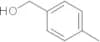
CAS 10602-04-7
:4-ETHYNYLBENZYL ALCOHOL 97
Description:
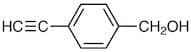
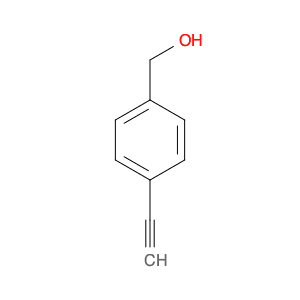
4-Ethynylbenzyl alcohol, with the CAS number 10602-04-7, is an organic compound characterized by the presence of both an ethynyl group and a benzyl alcohol functional group. This compound features a phenyl ring substituted with an ethynyl group at the para position relative to the benzyl alcohol moiety. It is typically a colorless to pale yellow liquid with a moderate boiling point and is soluble in organic solvents. The presence of the alcohol functional group allows for hydrogen bonding, which can influence its reactivity and solubility in various media. 4-Ethynylbenzyl alcohol is often utilized in organic synthesis, particularly in the preparation of more complex molecules, and may serve as an intermediate in the production of pharmaceuticals or other fine chemicals. Its reactivity can be attributed to the triple bond in the ethynyl group, making it a versatile building block in synthetic chemistry. Safety precautions should be observed when handling this compound, as it may pose health risks if ingested or inhaled.
Formula:C9H8O
InChI:InChI=1/C9H8O/c1-2-8-3-5-9(7-10)6-4-8/h1,3-6,10H,7H2
SMILES:C#Cc1ccc(cc1)CO
Sort by
Purity (%)
0
100
|
0
|
50
|
90
|
95
|
100
Found 5 products.
4-Ethynylbenzyl Alcohol
CAS:Formula:C9H8OPurity:>98.0%(GC)Color and Shape:White to Orange to Green powder to crystalMolecular weight:132.164-Ethynyl-benzenemethanol
CAS:4-Ethynyl-benzenemethanolFormula:C9H8OPurity:98%Color and Shape: light yellow liquid/ light yellow low-melting solid fused solidMolecular weight:132.16g/mol4-Ethynylbenzyl alcohol
CAS:4-Ethynylbenzyl alcohol is an organic compound that has a molecular weight of 170.4 g/mol and a density of 1.1 g/cm3. It is synthesized by reacting acetophenone with sodium metal in the presence of ethanol and sodium ethoxide. The terminal alkyne groups are responsible for its high reactivity, which can be seen through its fluorescence properties. 4-Ethynylbenzyl alcohol has been shown to inhibit the growth of human liver cancer cells in vitro, making it a potential palliative treatment for liver cancer. This compound has also been shown to have reactive sites on its surface, which make it useful for surface modification techniques such as kinetic or imaging techniques. 4-Ethynylbenzyl alcohol has helical structure with hydrogen bonding interactions between adjacent molecules that stabilize the molecule's 3D structure.Formula:C9H8OPurity:Min. 95%Color and Shape:White To Yellow To Brown SolidMolecular weight:132.16 g/mol