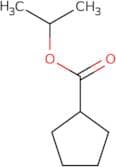
CAS 106083-73-2
:1-Methylethyl cyclopentanecarboxylate
Description:
1-Methylethyl cyclopentanecarboxylate, with the CAS number 106083-73-2, is an organic compound characterized by its ester functional group. This compound features a cyclopentanecarboxylic acid moiety, where a methylethyl group is attached to the carbon chain. Its molecular structure contributes to its unique physical and chemical properties, including its potential as a solvent or intermediate in organic synthesis. Typically, esters like this one exhibit pleasant, fruity odors and are often used in flavoring and fragrance applications. The compound is likely to be a colorless to pale yellow liquid at room temperature, with moderate volatility and solubility in organic solvents. Its reactivity may include hydrolysis under acidic or basic conditions, leading to the formation of the corresponding carboxylic acid and alcohol. Safety data should be consulted for handling and storage, as with all chemical substances, to ensure proper precautions are taken due to potential irritant properties or environmental impacts.
Formula:C9H16O2
InChI:InChI=1S/C9H16O2/c1-7(2)11-9(10)8-5-3-4-6-8/h7-8H,3-6H2,1-2H3
InChI key:InChIKey=KDEHXGMNPBCMKK-UHFFFAOYSA-N
SMILES:C(OC(C)C)(=O)C1CCCC1
Synonyms:- Cyclopentanecarboxylic acid, 1-methylethyl ester
- Isopropyl cyclopentanecarboxylate
- 1-Methylethyl cyclopentanecarboxylate
Sort by
Purity (%)
0
100
|
0
|
50
|
90
|
95
|
100
Found 1 products.
Propan-2-yl cyclopentanecarboxylate
CAS:Propan-2-yl cyclopentanecarboxylate is an inorganic compound that inhibits the pericyclic reaction of dienolate and cyclopentadiene. It has been shown to bind to tyrosine kinase, which is a protein involved in many cellular processes such as cell growth, proliferation, differentiation, and survival. The inhibitory activity of this compound was found to be mediated by its benzamide function. Propan-2-yl cyclopentanecarboxylate has been used as a pesticide for controlling weeds and pests on agricultural crops. It can also be used as an intermediate for the synthesis of other compounds such as imidazopyrazine or carbocycles.Formula:C9H16O2Purity:Min. 95%Molecular weight:156.22 g/mol