CAS 106412-36-6
:N-BOC-CYCLOHEXAMIDE
Description:
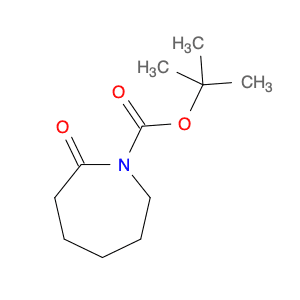
N-BOC-CYCLOHEXAMIDE, with the CAS number 106412-36-6, is a chemical compound characterized by the presence of a tert-butyloxycarbonyl (BOC) protecting group attached to a cyclohexamide structure. This compound is typically used in organic synthesis, particularly in the field of peptide chemistry, where the BOC group serves as a temporary protective group for amines. The BOC group is known for its stability under a variety of conditions, making it advantageous for protecting functional groups during multi-step synthesis. N-BOC-CYCLOHEXAMIDE is generally a solid at room temperature and exhibits moderate solubility in organic solvents such as dichloromethane and dimethylformamide. Its reactivity can be influenced by the presence of the BOC group, which can be removed under acidic conditions to yield the corresponding amine. The compound's structure contributes to its utility in various synthetic pathways, particularly in the preparation of more complex molecules in medicinal chemistry and drug development. Safety data should be consulted for handling and storage, as with all chemical substances.
Formula:C11H19NO3
InChI:InChI=1S/C11H19NO3/c1-11(2,3)15-10(14)12-8-6-4-5-7-9(12)13/h4-8H2,1-3H3
InChI key:InChIKey=GJZYNYJIBDCRFC-UHFFFAOYSA-N
SMILES:C(OC(C)(C)C)(=O)N1C(=O)CCCCC1
Synonyms:- 1-(tert-Butoxycarbonyl)-1-azacycloheptan-2-one
- N-Boc-ε-caprolactam
- 1H-Azepine-1-carboxylic acid, hexahydro-2-oxo-, 1,1-dimethylethyl ester
- 7-Oxoazepane-1-carboxylic acid tert-butyl ester
- N-tert-Butoxycarbonylhexahydro-2H-azepin-2-one
- N-Boc-epsilon-caprolactam
- N-BOC-CYCLOHEXAMIDE
- 1-Boc-2-oxoazepane
Sort by
Purity (%)
0
100
|
0
|
50
|
90
|
95
|
100
Found 4 products.
tert-Butyl 2-oxoazepane-1-carboxylate
CAS:tert-Butyl 2-oxoazepane-1-carboxylatePurity:98%Molecular weight:213.28g/molN-Boc-µ-caprolactam
CAS:N-Boc-µ-caprolactam is a heterocyclic compound that is synthesized through the palladium-catalyzed coupling of boronic acids and vinyl phosphates. This compound can be converted to a variety of heteroaryl compounds using the Suzuki reaction, which involves the addition of an organometallic reagent to an unsaturated bond. The nitrogen atom in this molecule can also react with metal catalysts to form nitrogen-containing compounds. N-Boc-µ-caprolactam has been shown to be effective for palladium-catalyzed coupling reactions with various boronic acids and acetylenes.Formula:C11H19NO3Purity:Min. 95%Molecular weight:213.27 g/mol