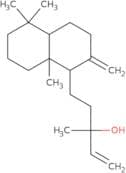
CAS 106631-38-3
:α-Ethenyldecahydro-α,5,5,8a-tetramethyl-2-methylene-1-naphthalenepropanol
Description:
α-Ethenyldecahydro-α,5,5,8a-tetramethyl-2-methylene-1-naphthalenepropanol, identified by its CAS number 106631-38-3, is a synthetic organic compound primarily used in the fragrance industry. This substance is characterized by its complex molecular structure, which includes a naphthalene core and multiple alkyl substituents, contributing to its unique aromatic properties. It is typically a colorless to pale yellow liquid with a pleasant, floral scent, making it suitable for use in perfumes and personal care products. The compound is known for its stability and resistance to oxidation, which enhances its longevity in formulations. Additionally, it exhibits moderate volatility, allowing it to impart fragrance effectively. As with many synthetic fragrances, it is essential to consider its safety profile, including potential skin sensitization or irritation, and regulatory guidelines governing its use in consumer products. Overall, this compound exemplifies the intricate design of synthetic fragrances, balancing aesthetic appeal with functional properties.
Formula:C20H34O
InChI:InChI=1S/C20H34O/c1-7-19(5,21)14-11-16-15(2)9-10-17-18(3,4)12-8-13-20(16,17)6/h7,16-17,21H,1-2,8-14H2,3-6H3
InChI key:InChIKey=CECREIRZLPLYDM-UHFFFAOYSA-N
SMILES:CC12C(C(C)(C)CCC1)CCC(=C)C2CCC(C=C)(C)O
Synonyms:- Labda-8(20),14-dien-13-ol
- Labda-8(20),14-dien-13-ol(7CI)
- α-Ethenyldecahydro-α,5,5,8a-tetramethyl-2-methylene-1-naphthalenepropanol
- 1-Naphthalenepropanol, α-ethenyldecahydro-α,5,5,8a-tetramethyl-2-methylene-
- 1-Naphthalenepropanol, alpha-ethenyldecahydro-alpha,5,5,8A-tetramethyl-2-methylene-
- 8(17)14-Labdadien-13-ol -
- 8(17)14-Labdadien-13-ol - Picea sitchensis (sitka spruce)
Sort by
Purity (%)
0
100
|
0
|
50
|
90
|
95
|
100
Found 1 products.
8(17)14-Labdadien-13-ol - Picea sitchensis (sitka spruce)
CAS:8(17)14-Labdadien-13-ol is a labdane diterpenoid, a specific type of terpenoid compound. It is derived from the Sitka spruce, scientifically known as Picea sitchensis. This compound is notable for its antifungal properties, making it a focal point in studies examining natural plant defense mechanisms. The mode of action involves the inhibition of fungal growth by disrupting fungal cell membranes or interfering with essential fungal enzyme systems, although the precise mechanisms may vary with different fungal targets.Formula:C20H34OPurity:Min. 95%Molecular weight:290.48 g/mol